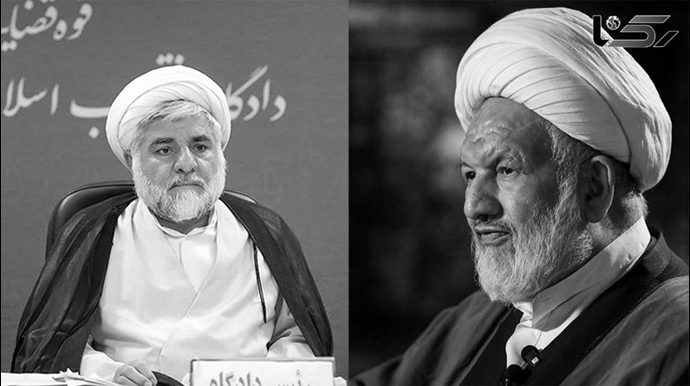
Two senior judges notorious for their roles in Iran’s systemic human rights abuses, Ali Razini and Mohammad Moghiseh, were killed in their Tehran offices early Saturday morning. An infiltrator within the judiciary reportedly carried out the attack, fatally shooting the judges before taking his own life as security forces approached.
The deaths of Razini and Moghiseh have reignited discussions about their controversial pasts and the enduring scars of their actions on Iran’s political landscape. Both judges were key figures in the 1988 massacre of political prisoners—an event regarded as one of the darkest chapters in Iran’s modern history. Over 30,000 political prisoners, primarily members of the People’s Mojahedin of Iran (PMOI/MEK), were executed in a systematic purge ordered by Supreme Leader Ruhollah Khomeini.
Ali Razini, who led Branch 41 of Iran’s Supreme Court, played a central role in the massacre as a member of the “Death Committees” responsible for sending dissidents to their deaths in minutes-long trials. Razini later admitted in a 2016 interview to personally interrogating prisoners and ensuring harsh sentences, including the execution of university students, to deter dissent. He unapologetically defended his actions, framing them as measures necessary to protect the regime.
Mohammad Moghiseh, known by the alias “Naserian,” was equally infamous. His involvement in the Death Committee at Gohardasht Prison saw him expedite executions, including those of disabled prisoners. Moghiseh’s career extended well beyond 1988; he continued to oversee politically motivated trials and was implicated in the torture of detainees. In 2019, he sentenced opposition figure Abdullah Ghasempour to death and imprisoned three of his relatives.
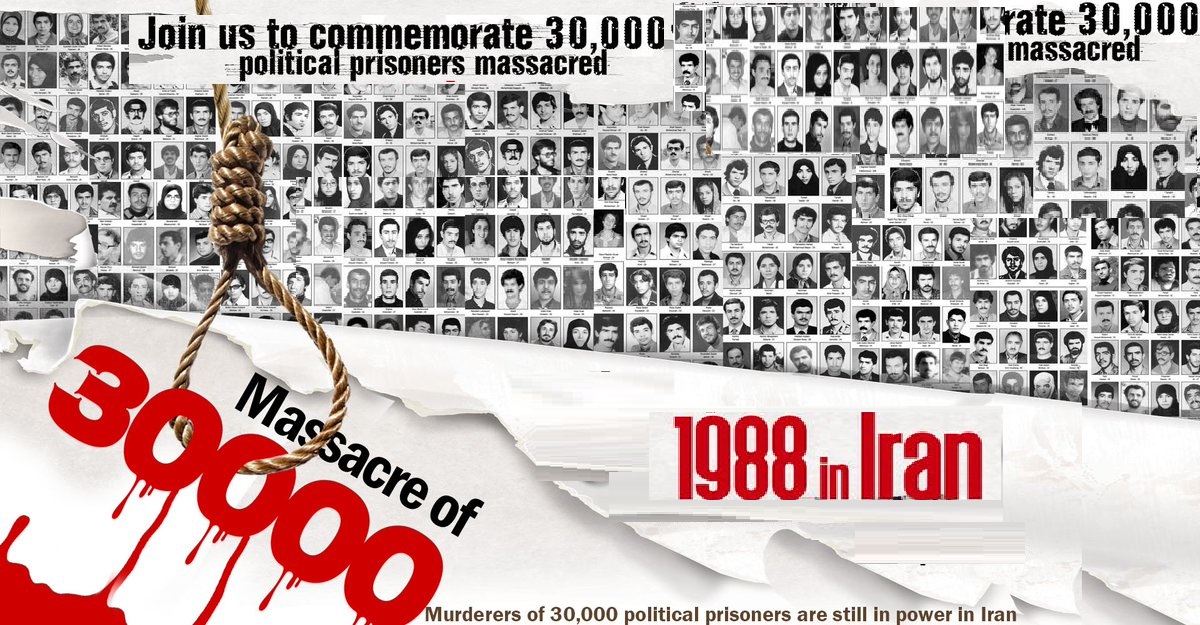
The international community has long condemned both Razini and Moghiseh for their roles in the 1988 massacre and subsequent human rights violations. They were sanctioned by the European Union, the United Kingdom, and the United States for their actions, which organizations like Amnesty International have labeled crimes against humanity.
While the motive behind Saturday’s attack remains unclear, the killings have sparked mixed reactions. Critics of the Iranian regime have hailed the event as a symbolic reckoning, while government officials denounce it as a destabilizing act of violence. As investigations unfold, the incident underscores Iran’s tumultuous history and the unresolved quest for accountability in its judiciary.

MEK Iran (follow us on Twitter and Facebook), Maryam Rajavi’s on her site, Twitter & Facebook, NCRI (Twitter & Facebook), and People’s Mojahedin Organization of Iran – MEK IRAN – YouTu