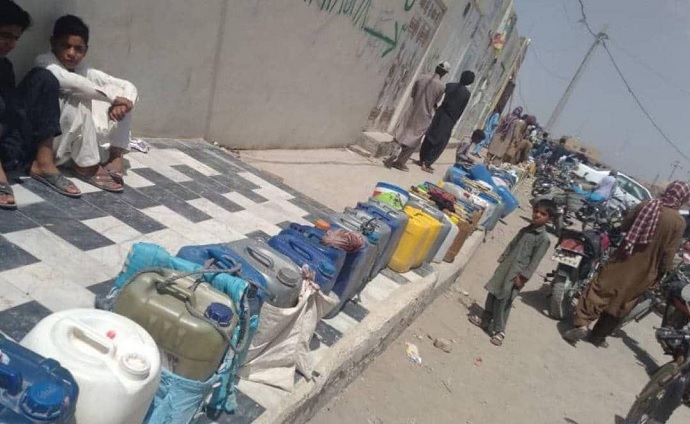
The city, already grappling with temperatures soaring above 45 degrees Celsius, has been devoid of water supply for several days.
Echoing through the streets were chants and slogans against the current regime, reflecting the deep-seated discontent amongst the citizens.
In the wake of the waterless summer, the crisis has caused an alarm in the Majlis, Iran’s parliament. On July 22, parliament member Reza Arianpur voiced concerns over the societal tension escalating due to the water crisis, especially in Golestan province. His fellow parliamentarian, Gholamreza Montazeri, shared similar apprehensions, warning against water tension morphing into social unrest.
The plight of the people extends far beyond Divandarreh and its neighboring cities. Eghtesaad 24, a state-run website, reported on March 27 that over 300 cities are under water stress, and more than 8,000 villages rely on water supplied by tankers.
Water scarcity has led to alarming imbalances, with Isfahan province having a deficit of 13 billion cubic meters, equivalent to 20 times the size of Zayandeh Rud river.
The intensifying water crisis is amongst the numerous challenges the country has been facing under President Ebrahim Raisi. Two years into his tenure, the crises have only multiplied. On July 24, Mohammad Hassan Asafari, another member of parliament, strongly criticized Raisi’s governance and policies, which have further strained the farming community.
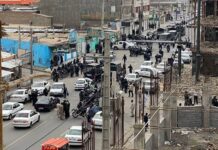
July 31—Divandarreh, western #Iran
Locals hold large rally in protest to the constant water outages that have lasted for several days.#IranProtestspic.twitter.com/AWJm0HOfY6— People's Mojahedin Organization of Iran (PMOI/MEK) (@Mojahedineng) August 1, 2023
As Raisi’s third year in power approaches, the state-run Hammihan newspaper questioned the predicament the country finds itself in and warned of the potential collapse of the regime if the management of these crises doesn’t improve.
Critics argue that Raisi’s presidency, initially seen as a guarantee for the survival of the regime, has not only been ineffective in curbing inflation and the crises of housing, unemployment, and water shortage but has also opened the doors to a potential nationwide uprising.
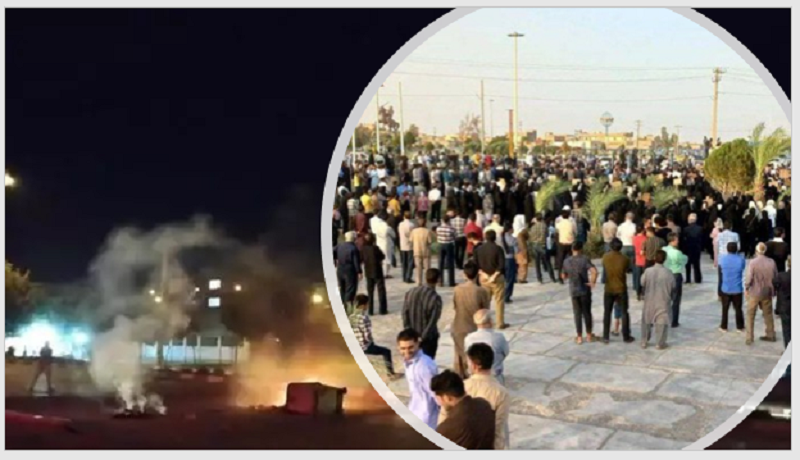
August 1—Zabol, southeast #Iran
Locals hold large rally, protesting severe water shortages and outages that is ruining their lives.#IranProtests pic.twitter.com/nlOA7rfML3— People's Mojahedin Organization of Iran (PMOI/MEK) (@Mojahedineng) August 1, 2023
There is a growing fear within the regime that the mounting public anger and discontent could lead to its downfall, hinting at the alarming severity of the nation’s crises.

MEK Iran (follow us on Twitter and Facebook), Maryam Rajavi’s on her site, Twitter & Facebook, NCRI (Twitter & Facebook), and People’s Mojahedin Organization of Iran – MEK IRAN – YouTu