Given the inherent corruption within the regime, especially under the Supreme Leader’s Beyt and the Revolutionary Guards’ conglomerates, many observers are skeptical about the regime’s intentions behind this public disclosure.
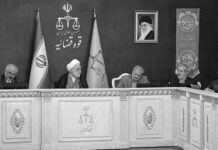
Mohammad Mosaddegh Kahnamoui, a significant figure in the judiciary for decades, held various pivotal positions. Most notably, he was the first deputy prosecutor general during Sadegh Larijani’s tenure and the head of the Administrative Justice Court during President Ebrahim Raisi’s era. Currently, he serves as the “first deputy of the head of the judiciary” under Gholamhossein Mohseni Ejei.
Interestingly, during his tenure as the legal deputy, Kahnamoui once proposed restricting the children of specific regime officials from studying abroad, a proposal that was never greenlit.
While #IranProtests continue to call out the Iranian regime's corruption and plundering of national wealth, a damning report about $5.25B of embezzlement is exposing #Iran's entire ruling establishment.https://t.co/0qt8ocmtZa
— NCRI-FAC (@iran_policy) August 23, 2022
According to the Tasnim News Agency, the corruption case links back to Mohammad Rostami Safa, the Rostami Safa industrial group owner, to whom the Kahnamoui sons’ case was referred about eight months ago.
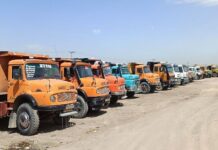
Rostami Safa, who once was lauded as an “economic hero” by some media outlets, is now under investigation for financial misconduct. His industrial group, which commenced operations in the 2000s, spans multiple sectors, from steel to food. Given the monopolistic nature of the regime’s economy, his success without high-level connections would be impossible.
In a recent report by the Mizan News Agency, while multiple reports were published on Safa’s trial, no mention was made of the involvement of the judiciary’s first deputy’s sons. The same agency earlier reported on Safa’s 15-year prison sentence, again omitting any mention of the Kahnamoui connection.
#Iran Regime's Embezzlement Case Obscures True Criminals
The Iranian Regime’s Judiciary has announced what could be its largest embezzlement case ever at 6.6 billion Euros as part of Khamenei’s call to remove corruption in the country.https://t.co/pA4tzXHxbV #FreeIran pic.twitter.com/cGNV1TQFRP— NCRI-FAC (@iran_policy) March 12, 2019
It’s not unprecedented for corruption cases involving high-ranking officials or their kin to be brought to light in Iran. However, in most instances, detailed information is withheld from the public. The legal system often appears to serve the state’s interests rather than delivering justice.
For instance, Gholamhossein Karbaschi, Tehran’s former mayor, was imprisoned in 1998 for financial corruption, but his real purpose seemed to sideline former president Rafsanjani. Similarly, the case of Saeed Mortazavi shows the power play behind trials and appointments in state media.
Babak Zanjani's Astronomical Theft With Complicity of the #Iran Regime's Leaders. https://t.co/hlTuoEy4sw pic.twitter.com/JfPHOhEddh
— NCRI-FAC (@iran_policy) January 11, 2017
The recent arrest of Akbar Tabari, the judiciary’s former executive deputy, and his subsequent early release seem more like a political strategy to pave the way for Ebrahim Raisi than a genuine crackdown on corruption.
In essence, the clerical regime frequently manipulates corruption cases for political advantage, sidelining rivals or reinforcing power structures. The recent arrest of a top judiciary official’s sons is likely another act in this theater of political manipulation. The Iranian society, increasingly discontented, now loudly proclaims, “Down with Khamenei.”
Senior #Iran Regime Judiciary official criticizes low hand amputation rates for thieves
Iran Regime’s Attorney-General said that the low numbers of hand amputation punishments for thieves in Iran as a result of human rights condemnations was “unfortunate”.https://t.co/7OkAUvdYoO pic.twitter.com/gXriN6Cqpd— NCRI-FAC (@iran_policy) January 17, 2019

MEK Iran (follow us on Twitter and Facebook), Maryam Rajavi’s on her site, Twitter & Facebook, NCRI (Twitter & Facebook), and People’s Mojahedin Organization of Iran – MEK IRAN – YouTu