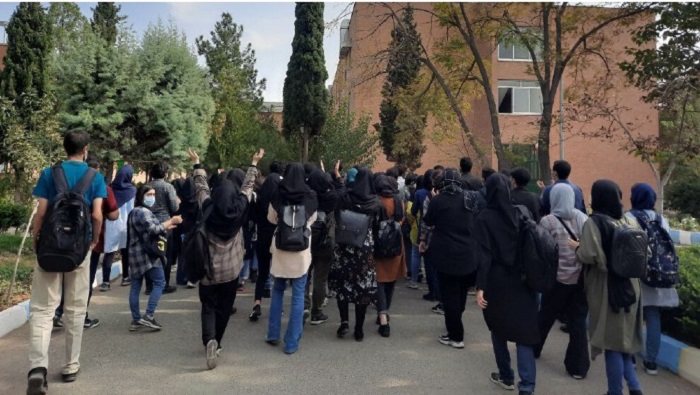
In a speech directed towards parents and educators, he commented, “Allowing children to be deeply involved in a communicative environment without necessary upbringing may warp their thoughts, morals, and actions. There are malicious elements aiming to mold our children’s perspectives and behavior in line with their own motives.”
Though Raisi refrained from specifying who these “malicious elements” are, Friday prayer speakers across the country illuminated his concerns. In Ilam Province, a speaker handpicked by the regime’s Supreme Leader Ali Khamenei emphasized the necessity for educators to “highlight truths against the perverse thoughts inundating the youth to ensure that those opposed to the revolution cannot influence students.”
In Tabriz, another speaker opined on the beginning of the academic term, pointing out that current worries arise from the cultural aftermath of last year’s disturbances. “It’s essential to acknowledge these concerns realistically and strategize accordingly,” he advised.
On a related note, the state-run Moj news agency reported on September 21 that the Minister of Education has proclaimed a change in the administration of 20,000 schools. Furthermore, plans to “transform” 7,000 schools are underway, with changes in 5,000 of them slated for this academic year.
Further emphasizing this anxiety, the Director General of the University Jihad Protection declared, as per the state-run ISNA news agency on September 12, that there’s a looming threat from adversaries aiming at all societal sections, especially students. “The disruptions were primarily instigated by the [People’s Mojahedin of Iran (PMOI/MEK)],” he stated.
A noticeable upswing in security measures targeting academic centers underscores the regime’s concerns. Even local “coffee shops” adjacent to universities are now under heightened scrutiny.
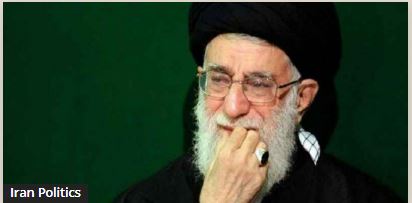
Billed as the “Second Cultural Revolution”, these protective strategies are spearheaded by the National Security Council, with leadership from Ahmad Vahidi, previously the head of the notorious IRGC Quds Force and the incumbent interior minister. Collectively, these maneuvers reveal Khamenei’s profound apprehension regarding possible upheavals, especially within the younger demographic in educational establishments.

MEK Iran (follow us on Twitter and Facebook), Maryam Rajavi’s on her site, Twitter & Facebook, NCRI (Twitter & Facebook), and People’s Mojahedin Organization of Iran – MEK IRAN – YouTu