In this backdrop, the Iranian regime’s involvement and its motives have come under scrutiny, with recent statements from Iranian officials shedding light on a more profound and disturbing strategy.
Javad Enayat, the governor of Iran’s South Khorasan province, in a recent speech, highlighted a correlation between Iran’s internal stability and regional conflicts. He stated, “Whenever there are disturbances in Iran, conflicts in Yemen, Palestine, Lebanon, Iraq, and other resistance frontlines are absent. Conversely, stability within Iran signals an uptick in these regions’ conflicts.”
Further reinforcing this perspective, Mohammad Taghi Osanloo from the Islamic Revolutionary Guard Corps (IRGC) emphasized Iran’s extended influence, noting that Iranian-backed forces are active in Yemen, Lebanon, Syria, and Palestine. This sentiment was echoed in a state television broadcast on November 24.
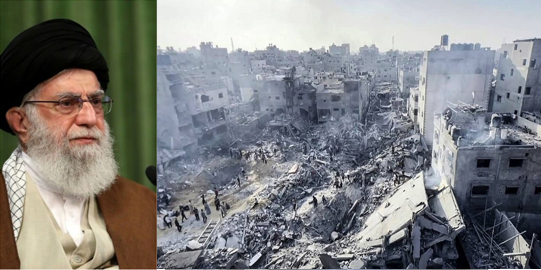
Esmaeil Khatib, Iran’s Minister of Intelligence, starkly outlined warmongering as a tool to preempt domestic uprisings. Speaking at a conference, he underscored the regime’s focus on a “global war” as a strategy to maintain power. This tactic, as reported by the Mizan News Agency on November 11, aims at averting potential uprisings through external conflicts.
Khatib also boasted about Iran’s regional and global influence, asserting that Iran is not just a dominant regional power but also has a significant global presence. This was stated during a television interview.
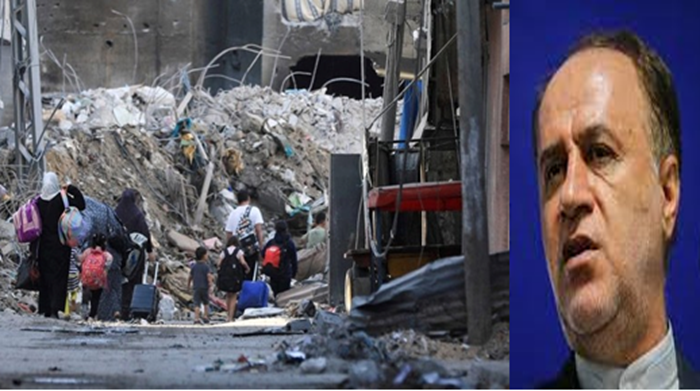
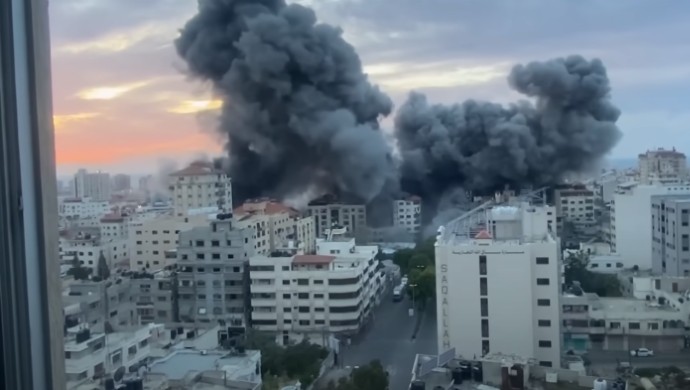
These statements have prompted a reevaluation of Iran’s role in the Gaza conflict. It appears that the regime is exploiting the Palestinian issue not as a genuine concern, but as a means to fortify its internal power and suppress dissent.
This exploitation of the Gaza situation is, in fact, acknowledged by some regime-affiliated newspapers, suggesting a broader awareness of the regime’s true intentions.
Recognizing the IRGC as a terrorist organization and ending the policy of appeasement could be crucial steps in restoring peace and stability in the region. The resolution of this crisis, it seems, lies in supporting the Iranian people and their resistance movement in their quest to overthrow a regime that prioritizes its survival over the well-being of its own people and those in the surrounding regions.

MEK Iran (follow us on Twitter and Facebook), Maryam Rajavi’s on her site, Twitter & Facebook, NCRI (Twitter & Facebook), and People’s Mojahedin Organization of Iran – MEK IRAN – YouTu