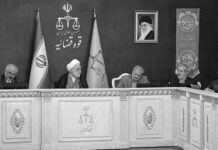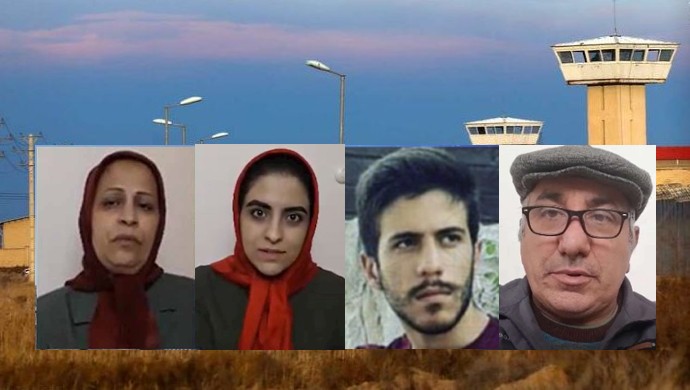
On December 2, the Iranian judiciary handed down harsh sentences to four political prisoners: Zahra Safaei, 61, and her children, Parastoo Moeini, 23, and Mohammad Masoud Moeini, 24, along with Kamran Rezaei-Far, 58. Each received a five-year prison term for allegedly collaborating with the PMOI, undermining national security, and engaging in anti-regime activities. The court based its verdict on the defendants’ private conversations, online activities, and reports from the Intelligence Ministry and interrogators.
Zahra Safaei has a long history of political imprisonment, dating back to the 1980s when she served eight years for her support of the PMOI. She faced incarceration again in 2006 and was most recently arrested with her daughter Parastoo in 2019, released in February 2023, and rearrested in September. Parastoo, after her release from solitary confinement in May 2020, was denied the opportunity to continue her education and barred from re-enrolling in university following her release in 2023.
The Safaei family’s legacy of political resistance traces back to Haj Hassan Ali Safaei, Zahra’s father, a notable Tehran Bazaar merchant and political prisoner executed in 1981 for his support of the PMOI. Kamran Rezaei-Far’s ordeal began in January 2020 with his arrest for alleged PMOI connections. Initially released on heavy bail, he was rearrested in June 2020 and sentenced to death in September 2021.
Another political prisoner, Maysam Dehbanzadeh, was recently transferred to Evin Prison to serve a six-year sentence. His charges include “assembly and conspiracy with the intent to commit a crime against national security” and communication with the PMOI. He faces additional restrictions, including a ban from residing in Tehran and neighboring provinces and a prohibition on leaving the country.
Amid these developments, reports highlight the dire conditions of several political prisoners, including Assadollah Hadi, Mir Yousef Younesi, and Ali Moezi. These prisoners suffer from critical health issues but are denied necessary medical care. Ali Moezi, a 70-year-old PMOI supporter, is currently enduring severe health problems without access to medical treatment. Assadollah Hadi and Mir Yousef Younesi, both with a history of imprisonment for supporting the PMOI, face similar neglect.
This wave of repression coincides with a dramatic increase in executions across Iran. In just the past month, over 100 individuals, including eight political prisoners, have been executed. This surge in capital punishment follows the onset of the war in Gaza, indicating a possible correlation.
Despite these severe measures, the regime remains fearful of another uprising. Protests continue across Iran, fueled by widespread dissatisfaction with corruption, economic mismanagement, and the suppression of freedoms. Officials within the regime openly express concerns about the potential for a new explosion of social unrest, acknowledging that without addressing the underlying societal issues, another nationwide revolt is inevitable.

MEK Iran (follow us on Twitter and Facebook), Maryam Rajavi’s on her site, Twitter & Facebook, NCRI (Twitter & Facebook), and People’s Mojahedin Organization of Iran – MEK IRAN – YouTu