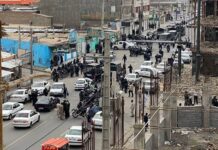
The deluge has led to significant infrastructural damage, particularly affecting transportation routes and agricultural sectors.
The provinces of Isfahan, Ilam, Bushehr, Chaharmahal and Bakhtiari, South Khorasan, Khuzestan, Fars, Kerman, Kermanshah, Kohgiluyeh and Boyer-Ahmad, Markazi, Hormozgan, and Hamadan are among the hardest hit. In South Khorasan, the flooding has blocked several transportation pathways, while in Shabestar County, the inundation has resulted in extensive damage to roads and property.
In Tehran, the capital’s traffic management is struggling with disruptions, including restricted access to parts of the city like the Khavaran Expressway due to rainfall and mudslides. The Tehran North Freeway was also temporarily closed due to similar issues but has since reopened, according to Mehdi Safaei, head of road and transportation in Chalous.
#Iran News in Brief
State officials' #hypocrisy who rush into muddy waters to fake sympathy has triggered nationwide anger towards the regime that is responsible for the negligence that devastated the country’s infrastructure and caused so much destructionhttps://t.co/Dk3kiLTfKt pic.twitter.com/SoDEjyDljR— NCRI-FAC (@iran_policy) July 30, 2022
Hossein Zafari, spokesperson for the regime’s Crisis Management Organization, detailed the rescue operations undertaken in response to the crisis. “In places like Ahvaz and Ilam, floods have trapped residents, necessitating rescue operations which have thankfully been successful,” said Zafari. He also noted that Dezful City in Khuzestan Province recorded a staggering 107 millimeters of rainfall, illustrating the intensity of the storm system.
The Iranian Meteorological Organization has warned of another wave of heavy rainfall expected to strike the northwestern, western, and northern regions of Iran starting Sunday, raising concerns about further flooding and damage.
The agricultural sector, which is vital to Iran’s economy, has suffered dramatically. Masoud Asadi, head of the Agricultural Trade Union in Khuzestan Province, reported that over 100,000 hectares of wheat fields were ready for harvest but now face up to fifty percent loss due to the floods. “This is a significant blow not just to the farmers but also to our national food security,” Asadi expressed.
#Iran: Corrupt Leaders Mismanaged Water Resources for 40 Yearshttps://t.co/h9i9t3KsWW #IranFloods #FreeIran pic.twitter.com/QsnoxM06fA
— NCRI-FAC (@iran_policy) April 1, 2019
Moreover, the infrastructure has not been spared. The CEO of Khuzestan Water and Power Organization, Gholamreza Gholami, reported increased output from Dez Dam to manage the floodwaters, although this has led to further challenges including damaged rural roads and erosion of agricultural lands.
Experts argue that there is a critical need for improved crisis management and infrastructure planning to mitigate the effects of such natural disasters in the future.
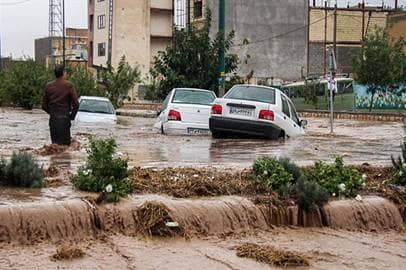
Meanwhile, as the country braces for more rainfall, the immediate focus remains on rescue and recovery efforts to support the affected populations and stabilize the key sectors impacted by this calamity.

MEK Iran (follow us on Twitter and Facebook), Maryam Rajavi’s on her site, Twitter & Facebook, NCRI (Twitter & Facebook), and People’s Mojahedin Organization of Iran – MEK IRAN – YouTu