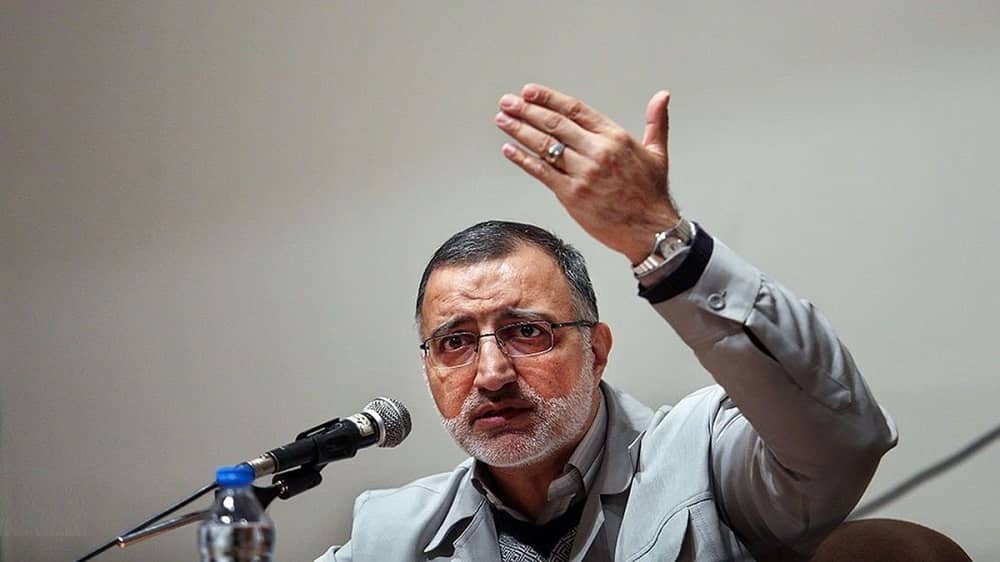
Over six years, his commitment saw him participating in fifteen operations, leaving him 50% disabled by regime standards. His military prowess eventually led to him becoming the deputy commander of the Mohammad Rasul-Allah division, pivotal in ensuring the regime’s security in Tehran.
Zakani’s leadership abilities were further showcased when he headed the Student Basij Organization from 1998 to 2002, a tenure lauded by regime officials. His role in quelling the July 1999 Tehran University dormitory protests cemented his reputation as a staunch regime loyalist.
Transitioning to politics and media, Zakani founded Jahan News and the weekly Panjereh, influencing Iranian journalism. Despite his ambitions, his presidential runs in 2013 and 2017 were thwarted by the Guardian Council’s disqualifications.

His career has not been without controversy. In 2017, Zakani was convicted of spreading false information, receiving a sentence converted to a fine, a decision upheld by the Supreme Court. His personal life also drew scrutiny, especially his daughter’s education and childbirth in Switzerland, which led to his grandchild’s dual citizenship, raising questions about his adherence to the values he publicly espoused.
Politically, Zakani represented Qom in the Islamic Consultative Assembly until 2021 and served as head of the Parliament’s Research Center. His notable role included chairing the special parliamentary commission to review the Joint Comprehensive Plan of Action (JCPOA) in 2015, where he critically analyzed the deal with international bodies.
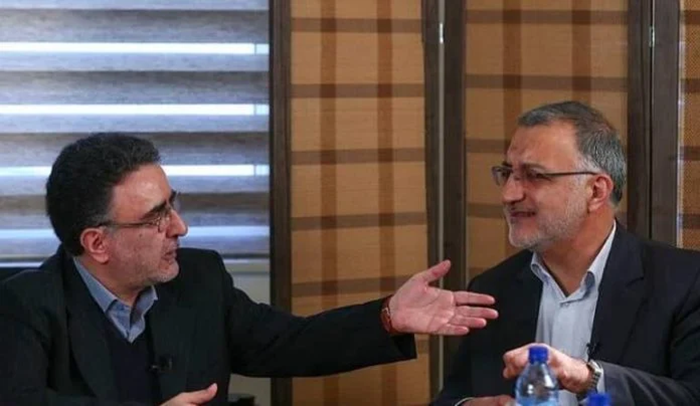
In 2021, Zakani’s third presidential bid saw him withdraw in favor of Ebrahim Raisi, resulting in his appointment as Mayor of Tehran. His tenure has been marred by several controversies. The continuation of exploitative waste management schemes, land allocations to Mahan Air, and discrepancies in municipal funds have plagued his administration. Notably, a 20 trillion toman corruption scandal further tainted his mayoralty.
Zakani’s policies have also sparked public dissent. Gender segregation in parks and suppression brigades following the 2022 protests reflect his authoritarian stance. Controversial decisions like demolishing parts of Qeytariyeh Park for mosque construction and opaque contracts with Chinese firms for electric bus imports have added to public discontent.
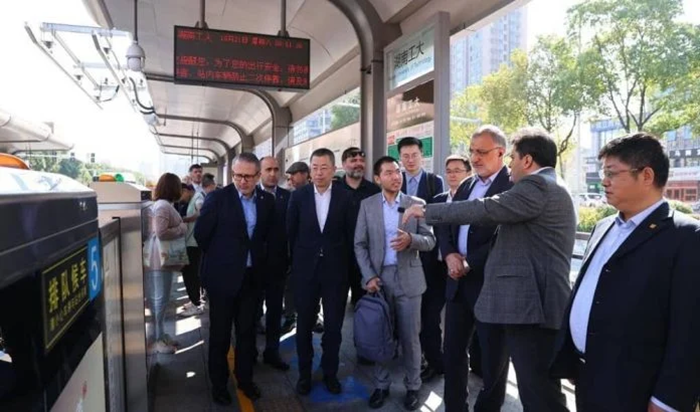
Internationally, Zakani’s visit to Belgium in 2023 incited protests, culminating in an apology from the Belgian Foreign Minister. Domestically, his stance against the People’s Mojahedin Organization of Iran (PMOI/MEK) through exhibitions and televised debates highlights his alignment with regime tactics to undermine opposition groups. As he navigates the challenges of his political career, the legacy of his actions continues to evoke strong reactions both within Iran and internationally.

MEK Iran (follow us on Twitter and Facebook), Maryam Rajavi’s on her site, Twitter & Facebook, NCRI (Twitter & Facebook), and People’s Mojahedin Organization of Iran – MEK IRAN – YouTu