The Iranian regime, led by Supreme Leader Ali Khamenei, now finds itself in a precarious position, struggling to rally its disillusioned supporters. Khamenei has made fervent appeals for voter participation to salvage the regime’s credibility, prompting the organization of debates and discussions aimed at creating an illusion of change and renewal.
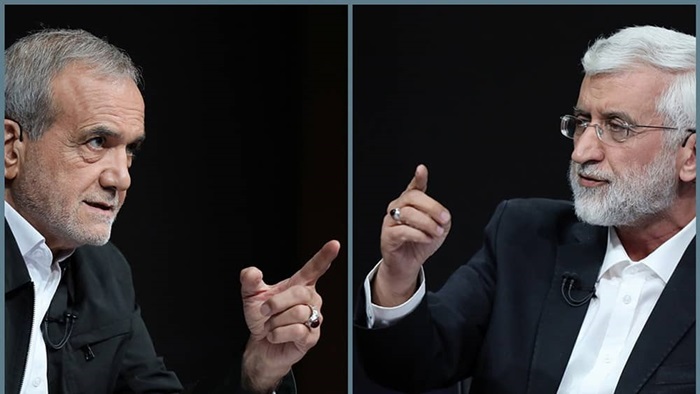
The election has reached a critical juncture with the final debate on July 2 between the remaining candidates, Massoud Pezeshkian and Saeed Jalili, who are vying to succeed President Ebrahim Raisi. The debate, broadcast live, was marked by intense exchanges, with both candidates aggressively questioning each other’s qualifications and integrity. The fiery confrontation centered on Iran’s economic woes, with both contenders accusing each other of incompetence and unfulfilled promises.
Khamenei Admits Historic Boycott in #Iran’s Sham Elections, Begs for Voter Turnouthttps://t.co/oNu4IeNV64
— NCRI-FAC (@iran_policy) July 3, 2024
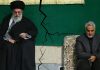
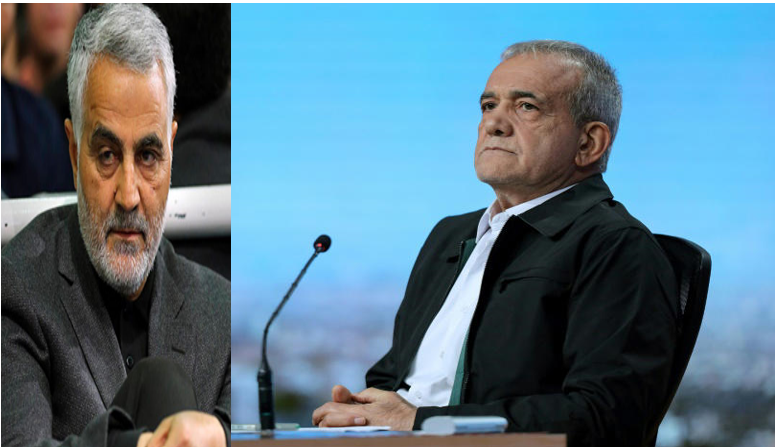
Emphasizing Soleimani’s legacy as a national hero, Pezeshkian asserted, “If our youth follow his path, many of the country’s problems can be resolved with his vision.”The debate quickly shifted focus to Iran’s economic challenges and foreign policy.
Pezeshkian defended his stance on the 2015 nuclear deal, clarifying his commitment to the Supreme Leader’s policies and the legal framework set by Parliament. His comments were aimed at countering accusations of opposing a strategic law regarding the deal. “It is impossible for us not to execute the law,” he stated, emphasizing the need for a unified approach to resolve issues with international agreements.
Jalili, a staunch critic of previous administrations, accused Pezeshkian and his allies of failing to deliver on economic promises. He lambasted past leaders, claiming, “You have been in power for 40 years and still act like victims.” He highlighted his achievements in increasing oil exports and foreign investments, countering Pezeshkian’s criticism of his economic policies.
The debate exposed deep rifts within the regime, with both candidates engaging in personal attacks. Pezeshkian questioned Jalili’s management experience, while Jalili criticized Pezeshkian’s tenure as Minister of Health. The heated discourse did little to inspire public confidence, instead revealing the true nature of the regime-approved candidates.
Despite state media’s efforts to portray the debates as dynamic and engaging, the exchanges failed to galvanize public interest. For many Iranians, the debates underscored the futility of participating in an election seen as a facade, leading to calls for a widespread boycott as a form of protest against the clerical dictatorship.
#Iran’s Regime Prepares to Rig Presidential #Election Results in Crisis Management Strategyhttps://t.co/RPzVhxEd5b
— NCRI-FAC (@iran_policy) June 16, 2024
The election, intended to demonstrate the regime’s democratic facade, has instead highlighted its struggles to maintain legitimacy amid growing public disillusionment and calls for change. As election day approaches, the regime faces an uphill battle to convince a skeptical populace to participate in what many view as a sham electoral process.

MEK Iran (follow us on Twitter and Facebook), Maryam Rajavi’s on her site, Twitter & Facebook, NCRI (Twitter & Facebook), and People’s Mojahedin Organization of Iran – MEK IRAN – YouTu