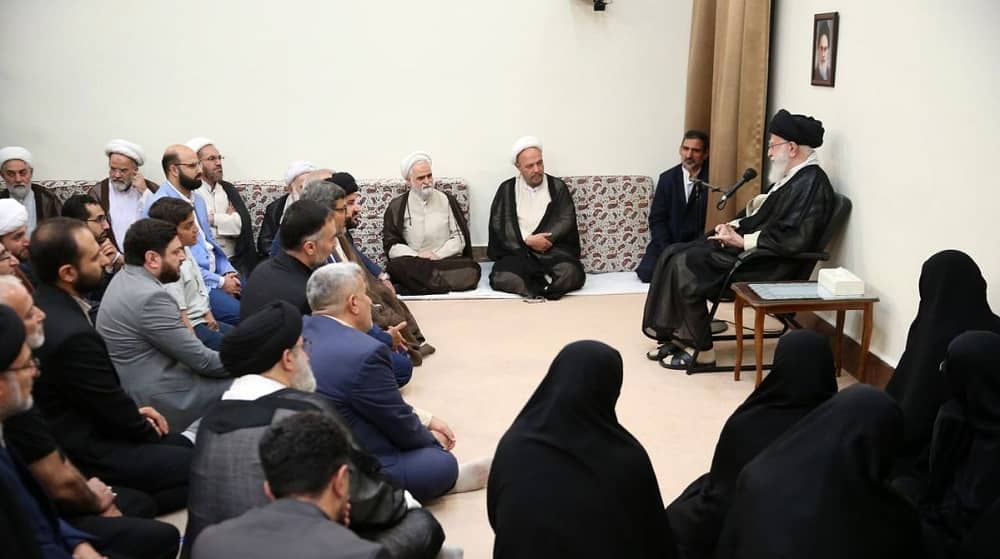
“In the first stage of the elections, the people’s participation was less than what we expected and predicted,” he remarked, adding that all initial estimates had been substantially higher.
Khamenei’s remarks came amid widespread acknowledgment of the public’s overwhelming boycott of the election, a sentiment reflected by both supporters and critics of the regime. He attempted to mitigate the implications of the boycott, stating, “It is a completely wrong assumption to think that those who did not vote in the first round are against the state.”
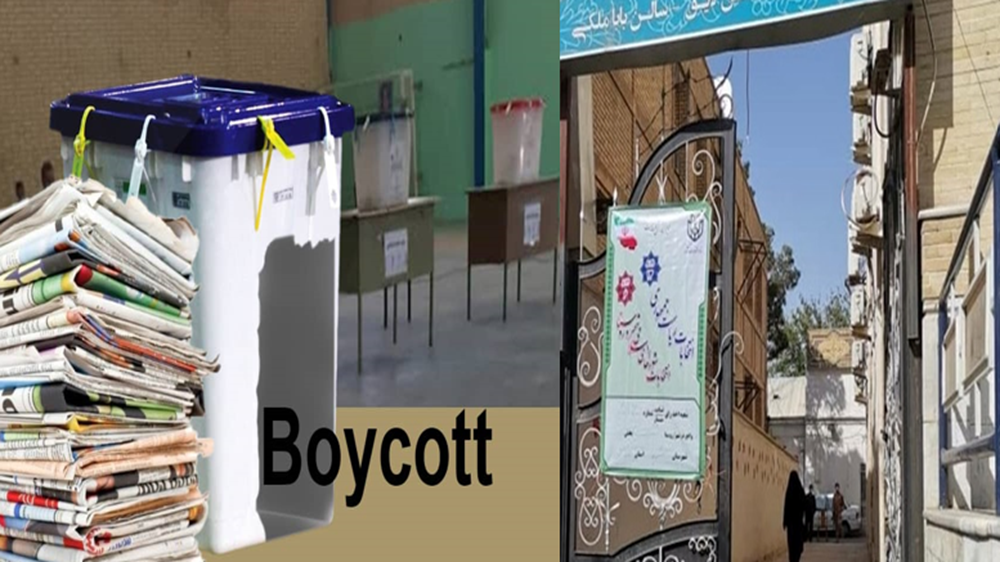
The elections held on June 28 were closely monitored by the Social Headquarters of the People’s Mojahedin of Iran (PMOI/MEK), which oversaw over 14,000 polling stations. Their field observations indicated that despite extensive instances of fraud, fewer than 7.4 million people, or about 12% of eligible voters, participated. This pointed to a staggering 88% boycott rate, reflecting the Iranian populace’s desire for significant political change and the overthrow of the current regime.
#Iran’s Regime Prepares to Rig Presidential #Election Results in Crisis Management Strategyhttps://t.co/RPzVhxEd5b
— NCRI-FAC (@iran_policy) June 16, 2024
Khamenei urged participation in the upcoming Friday elections in his appeal to both his supporters and the disillusioned within his ranks. “We have repeatedly said: that people’s participation is a support for the system, a source of pride. The second stage of the elections is important,” he emphasized, urging those loyal to Islam and the Islamic Republic to vote.
Khamenei expressed hope that the second stage would see a more enthusiastic and pride-worthy turnout. Traditionally, Khamenei would declare victory and celebrate high participation rates, making this acknowledgment of dissent particularly striking. He conceded, “There may be some who do not like the system at all,” but maintained that these individuals were free to express their opinions.
State-affiliated media echoed the precarious state of the regime. The daily Farhikhtegan, owned by Khamenei’s advisor Ali Akbar Velayati, critiqued the debates between candidates Saeed Jalili and Massoud Pezeshkian, noting their failure to address sensitive issues and engage the electorate effectively. The paper described the debates as mere posturing meant to boost participation.
Hassan Dehbashi, a former state media employee and now a critic, pointed out the limited influence of key government figures and questioned the impact of electing a new president. He highlighted the control exercised by various foundations over the economy and other sectors, suggesting that the choice of president might make little difference.
In response to the boycott, the regime has intensified efforts to drive voter turnout. This includes closing parliament and seminaries to allow clerics and parliament members to campaign vigorously. The head of the parliament’s internal affairs commission announced a three-week closure of parliament to focus on the electoral campaign.
Khamenei’s Latest Attempt to Dictate Outcome of #Iran’s Sham Presidential #Electionhttps://t.co/WCAg2OdEhg
— NCRI-FAC (@iran_policy) June 26, 2024
As the second stage of elections approaches, the regime’s ability to rally support remains uncertain. Khamenei’s uncharacteristic acknowledgment of dissent underscores the significant challenges facing the clerical establishment in Tehran.

MEK Iran (follow us on Twitter and Facebook), Maryam Rajavi’s on her site, Twitter & Facebook, NCRI (Twitter & Facebook), and People’s Mojahedin Organization of Iran – MEK IRAN – YouTu