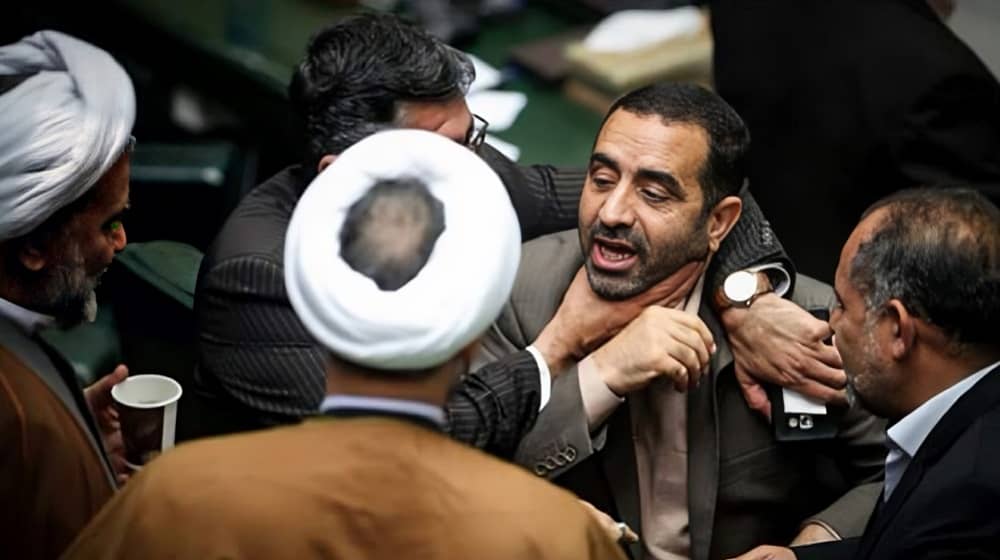
The rifts are evident in state-controlled media, reflecting the growing disarray and factional disputes that could further destabilize the political landscape.
The state-run website Rouydad 24 has shed light on the intensifying factional strife, particularly within the group aligned with Supreme Leader Ayatollah Khamenei. It reported a significant split following Pezeshkian’s victory, pinpointing the blame on Saeed Jalili and his associates, such as Hamid Rasaei, Mohsen Mansouri, and Amirhossein Sabeti.
The supporters of Mohammad Bagher Ghalibaf, the current parliament speaker and a defeated presidential candidate, accused Jalili’s camp of stubbornness and refusal to step down, leading to their collective failure.
Ghalibaf’s official channel criticized Jalili’s faction for disseminating false information about an alleged meeting between Ghalibaf and a key figure from the “Resistance Front.” The channel stated, “The insistence of state loyalists for Jalili to withdraw was due to Ghalibaf’s higher standing in polarizing surveys and the potential for creating a fear-driven dichotomy against Jalili by the opposition, which indeed happened. However, Jalili ignored these clear reasons, resulting in the defeat of the revolutionary front.”
NCRI Editorial: #Iran’s Sham #Election Exposes Regime’s Fragility and People’s Resolvehttps://t.co/1CnrcQinZv
— NCRI-FAC (@iran_policy) July 8, 2024
Amirhossein Sabeti, a senior advisor to Jalili, countered these claims on his Telegram channel, asserting that Jalili had more popular support and should have stayed in the race. He emphasized that Jalili’s votes were significantly higher than Ghalibaf’s and criticized Ghalibaf for not stepping aside, which he believes could have secured a first-round victory for Jalili.
The Maktoubat channel, supportive of Jalili, accused Ghalibaf of failing to fully mobilize support for Jalili. Mohammad Saeed Ahadian, an advisor to Ghalibaf, drew parallels to the 2013 election loss and questioned the involvement of IRGC Quds Force commander Esmail Qaani in candidate negotiations.
Other regime loyalists like Abbas Salimi Namin have expressed concern that the conflict between Ghalibaf and Jalili supporters is significantly lowering the quality of political discourse in the country. Social media remarks, such as those by Mohamad Mehdi Hemmat, echoed this sentiment, blaming Jalili’s obstinacy for the defeat.
In #Iran’s Sham Presidential Election, the People Won and #Khamenei Losthttps://t.co/2SjElsj9ZK
— NCRI-FAC (@iran_policy) July 7, 2024
The newspaper Farhikhtegan recently criticized Jalili’s campaign for miscalculating electoral support, particularly overestimating rural votes. Allegations of electoral misconduct, including the distribution of money and aid in rural areas, were highlighted by Mohammad Javad Zarif and Masoud Pezeshkian. Ali Aghazadeh, head of Pezeshkian’s election campaign for the Etedal Party, also reported similar incidents, accusing Jalili’s team of negotiating with governors and village chiefs to secure votes.
Saberin News, close to the IRGC, blamed Jalili for disregarding high-ranking officials’ advice, while Jalili’s supporters accused the Guardian Council of manipulating the election in favor of the reformists by approving Pezeshkian’s candidacy. These internal divisions expose the regime’s fractures and raise questions about its future stability and ability to navigate the social and international.

MEK Iran (follow us on Twitter and Facebook), Maryam Rajavi’s on her site, Twitter & Facebook, NCRI (Twitter & Facebook), and People’s Mojahedin Organization of Iran – MEK IRAN – YouTu