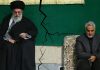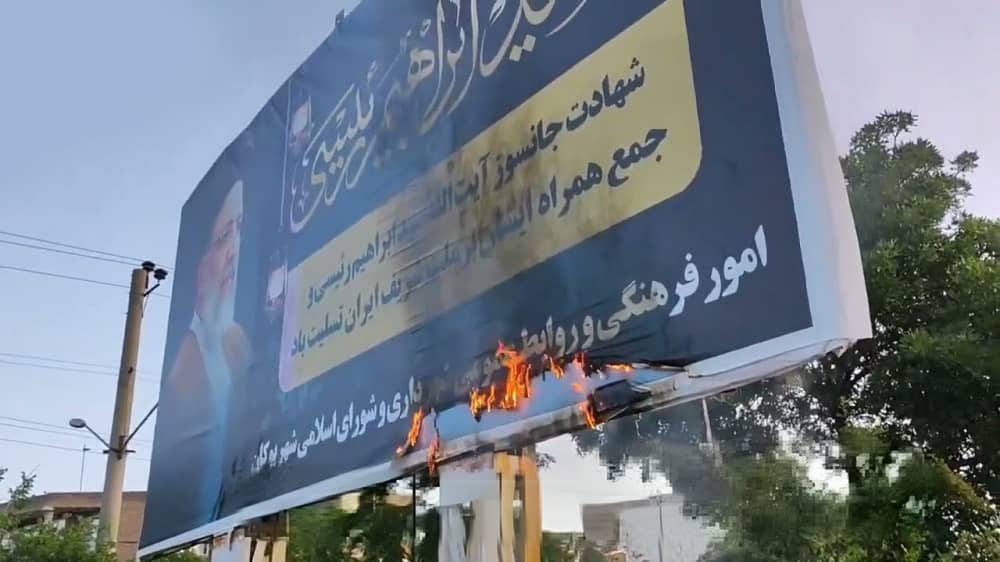
This costly endeavor, both materially and politically, forced Iran’s Supreme Leader, Ali Khamenei, to retreat from his goal of consolidating power.
In the past five consecutive elections, Khamenei faced massive boycotts from both the populace and factions within his regime labeled as “reformists” and “moderates.” This time, to avoid another international embarrassment and the potential disintegration of his regime, he was compelled to grant significant concessions and a share of power to former allies and current arch-rivals.
Attempting to project strength, Khamenei ignored numerous domestic and international reports of an unprecedented election boycott. He boldly claimed, “The dear people, with a sense of responsibility, turned out in large numbers, creating a lively and passionate scene, filling the ballot boxes in two rounds with over 55 million votes.”
Masoud Pezeshkian, the least threatening figure from Khamenei’s rival faction allowed to participate in this theatrical presidential race, spared no opportunity to display his loyalty. During the campaign, he donned the uniform of the Islamic Revolutionary Guard Corps (IRGC) for photo ops and repeatedly paid homage to Quds Force commander Qasem Soleimani and former Supreme Leader Ruhollah Khomeini. Pezeshkian unequivocally opposed any deviation from Khamenei’s directives.
The clerical regime in #Iran is approaching the elections amidst broad societal disenchantment. Officials and state media anticipate record-high election boycotts compared to any other year. pic.twitter.com/J0HLl554pt
— NCRI-FAC (@iran_policy) February 14, 2024
Now, Khamenei’s fractured regime faces a dense array of internal, regional, and international crises that it can neither ignore nor adequately address. The faction loyal to Khamenei, now splintered by the electoral defeat, is blaming each other for this significant loss. As self-styled “opposition,” they are poised to obstruct Pezeshkian’s efforts to form a government and manage the executive branch amid numerous crises. Stocked with bitter memories of previous administrations, IRGC-affiliated media have predictably dubbed the new government the “third Rouhani government.”
Iran’s society, increasingly vocal, demands freedom of expression, internet access, dress code liberalization, the release of political prisoners, economic equity, and countless other rights. The looming specter of uprisings weighs heavily on both Pezeshkian and Khamenei, with significant boycotts of the recent elections serving as a stark reminder.
Regionally, countries have no patience for Tehran’s interventions. Should the regime persist in missile expansionism and sectarian warmongering, it risks further isolation. Internationally, if it does not scale back its nuclear ambitions, arms shipments to Ukraine, or support for terrorism, it will face a more resolute approach from Washington, a tougher government in Canada post-IRGC designation, and new leadership in the UK and EU.
Khamenei faces a critical choice: continue with retreats, weakening his regime and risking new uprisings, or persist with his current stance, sacrificing Pezeshkian and his supporters, continuing his confrontation with both Iranian society and the world, and accepting the consequent repercussions. Either way, Khamenei’s grip on power appears increasingly tenuous, and the fate of his regime hangs in the balance.

MEK Iran (follow us on Twitter and Facebook), Maryam Rajavi’s on her site, Twitter & Facebook, NCRI (Twitter & Facebook), and People’s Mojahedin Organization of Iran – MEK IRAN – YouTu