Despite some characterizations of Pezeshkian as a reformist, a closer examination of his political history and actions suggests a firm alignment with the core principles of Iran’s current regime.
Pezeshkian, who previously served as the Minister of Health under Mohammad Khatami, has a long record of adherence to the regime’s strict ideologies. His supporters argue that he brings experience and a steady hand to the presidency, while critics contend that his leadership signals a continuation of repressive policies.
“The portrayal of Masoud Pezeshkian as a reformist is a myth that crumbles under scrutiny,” says political analyst Afsaneh Maleki. “His consistent support for the regime’s most suppressive policies and his alignment with Supreme Leader Ali Khamenei illustrate his hardline stance.”
Reasons Behind #Khamenei’s Forced Approval of Masoud Pezeshkian in #Iran’s Sham Electionhttps://t.co/OC0zjoxuLn
— NCRI-FAC (@iran_policy) July 11, 2024
Pezeshkian’s rise comes amid a backdrop of widespread public discontent and significant political unrest. The recent elections saw a reported boycott by a large segment of the Iranian population. According to the People’s Mojahedin of Iran (PMOI/MEK), only 9% of eligible voters participated, starkly contrasting the regime’s inflated figures claiming over 40% turnout.
In his previous roles, Pezeshkian has shown unwavering loyalty to the regime’s directives. During the Iran-Iraq War, he managed medical teams at the front lines while serving as an IRGC combatant, blending his professional expertise with military loyalty. His tenure as Minister of Health was marked by his involvement in controversial actions, such as the cover-up of the death of Iranian-Canadian photojournalist Zahra Kazemi.
Who is Masoud Pezeshkian: Minister, MP, and Eternal Conformist Serving #Iran’s Regimehttps://t.co/tyzNKzlnqT
— NCRI-FAC (@iran_policy) June 16, 2024
Pezeshkian’s stance on women’s rights is particularly indicative of his ideological leanings. In a 2017 interview, he admitted to enforcing strict dress codes on women even before the official mandatory hijab policy was introduced. “I issued a directive that required women to adhere to these guidelines,” he stated, underscoring his long-standing commitment to the regime’s restrictive social policies.
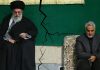
His alignment with the IRGC and praise for figures like Qassem Soleimani further cement his position within the regime’s hardline faction. “I consider Qassem Soleimani to be the pride of our nation,” Pezeshkian remarked in a 2024 interview, illustrating his support for the regime’s aggressive regional policies.
Pezeshkian vs. Mokhber: Infighting Intensifies Over Last-Minute Appointments in #Iranhttps://t.co/tUCzzuRwUX
— NCRI-FAC (@iran_policy) July 12, 2024
Despite international hopes for moderation in Iran’s policies, Pezeshkian has made it clear that he intends to maintain the status quo. “We are not going to write a new program,” he declared. “The general policies of the Supreme Leader are clear.”
As Iran faces significant internal and external pressures, Pezeshkian’s presidency is expected to follow a path of continued repression and resistance to reform. The international community remains wary, recognizing that the new leadership under Pezeshkian is likely to perpetuate the regime’s established practices rather than usher in meaningful change.
#Iran News:
Regime’s President-elect Pezeshkian Reaffirms Support for #Hezbollah and Regional Terrorismhttps://t.co/fCdhmbAyx7— NCRI-FAC (@iran_policy) July 9, 2024
“Any expectation that Pezeshkian will steer Iran towards reform is misguided,” concludes Maleki. “His presidency represents a consolidation of power around the existing regime, with all its associated repressive and militaristic policies.”

MEK Iran (follow us on Twitter and Facebook), Maryam Rajavi’s on her site, Twitter & Facebook, NCRI (Twitter & Facebook), and People’s Mojahedin Organization of Iran – MEK IRAN – YouTu