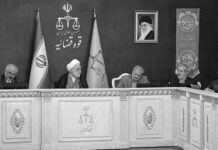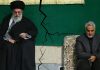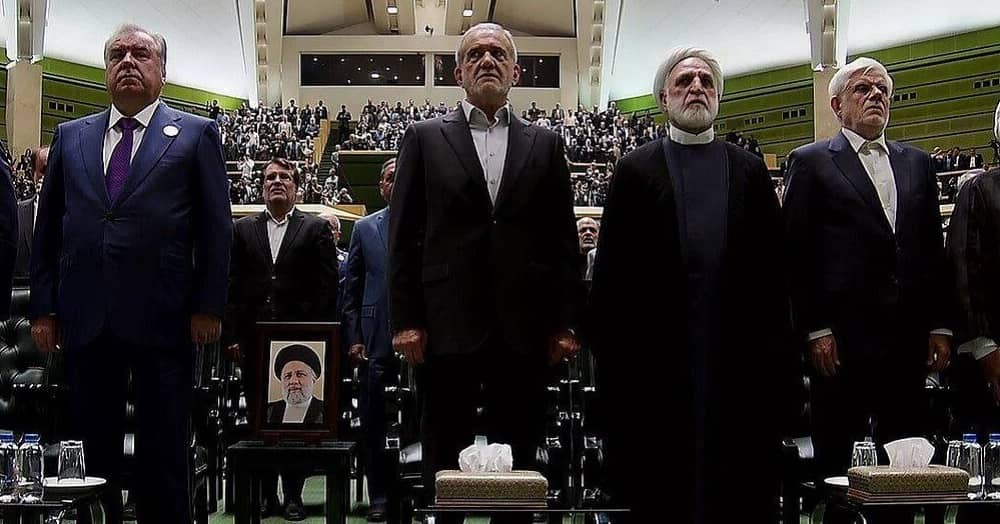
This event marks a significant political transition following the sudden and tragic death of former President Ebrahim Raisi. During the ceremony, Parliament Speaker Mohammad Bagher Ghalibaf commended Supreme Leader Ali Khamenei’s crisis management skills.
He stated, “The tragic and sudden martyrdom-like departure of our late President, martyr Raisi, and his esteemed companions was a renewed test for the sacred Islamic Republic on the global stage. Under the wise leadership of the noble Leader of the Revolution, it once again became a symbol of stability and political-military power in Islamic Iran.”
Ghalibaf also underscored the importance of adhering to Khamenei’s directives, emphasizing the need for internal consensus and alignment with the Supreme Leader’s policies. “We consider the success of the new government as our own and the system’s success, in line with the explicit guidance of the noble Leader of the Revolution. Repeated assertions by the respected President on the necessity of internal consensus and adherence to the Supreme Leader’s policies serve as the best common ground for understanding and cooperation,” Ghalibaf added.
Amidst Intense Factional Conflicts, #Iranian Regime’s Supreme Leader Appoints New Presidenthttps://t.co/3CcXoOJhYM
— NCRI-FAC (@iran_policy) July 28, 2024
In his speech, Ghalibaf also highlighted Khamenei’s stance on maintaining regional stability and relations with autocratic allies, asserting, “We will keep the door of dialogue open with others, while not allowing our nation’s dignity and national interests to be compromised. Our neighbors and countries that have helped us in difficult times are our priority.”
Masoud Pezeshkian, in his inaugural address, paid homage to the regime’s founder Ruhollah Khomeini, Qasem Soleimani, and Ebrahim Raisi. Acknowledging the regime’s dire situation and public dissatisfaction, he emphasized the need for reform and unity. “With the grace of the benevolent Lord, the wisdom of the Supreme Leader, and the intelligent vote of the people, the 14th presidential term has opened a new opportunity for Iran and the world,” Pezeshkian stated.
Despite these assurances, Pezeshkian’s recent remarks reveal contradictions, highlighting the regime’s critical situation. Although his campaign promised to revive the JCPOA, lift sanctions, and expand international relations, the Supreme Leader’s media portrayed Pezeshkian as a loyalist to Khamenei, emphasizing continuity with Raisi’s administration.
Decoding #Khamenei’s Remarks While Appointing #Iranian Regime’s New Presidenthttps://t.co/Z18UCQ1MMq
— NCRI-FAC (@iran_policy) July 29, 2024
Pezeshkian’s first actions as president included reaffirming Tehran’s support for extremist militant groups, which drew attention on social media due to the sparse attendance of international officials at his inauguration. The lackluster presence of global delegations suggests skepticism about significant policy changes under Pezeshkian’s leadership.
As he prepares to present his general program and proposed ministers to Parliament within two weeks, Pezeshkian faces increasing internal disputes over strategic direction. The regime is currently navigating multiple domestic, regional, and international crises, making his tenure one of significant challenge and scrutiny.

MEK Iran (follow us on Twitter and Facebook), Maryam Rajavi’s on her site, Twitter & Facebook, NCRI (Twitter & Facebook), and People’s Mojahedin Organization of Iran – MEK IRAN – YouTu