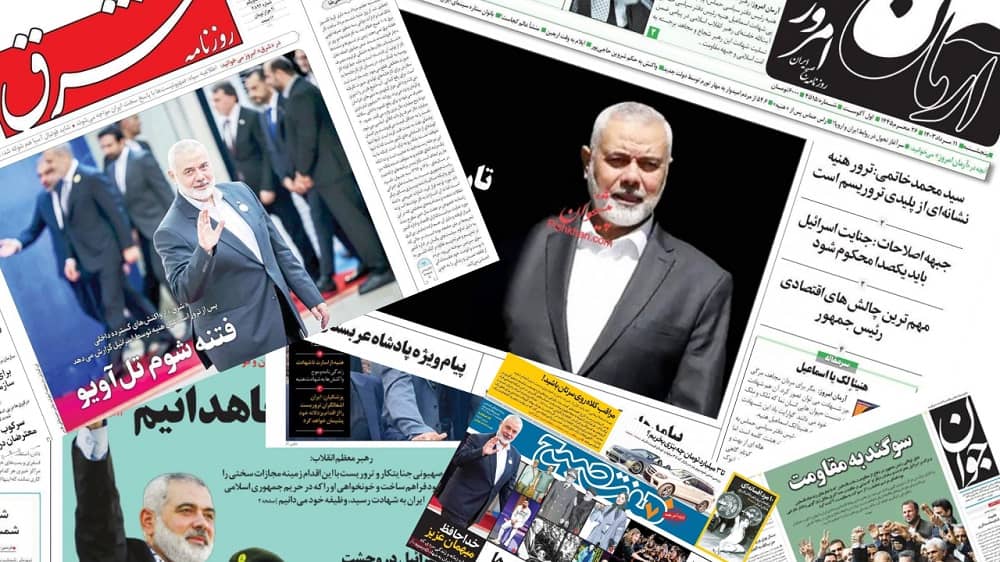
The regime’s media outlets and state officials in Tehran have been grappling with the implications of these targeted killings, which they attribute to internal espionage and infiltrators. On August 1, the state-run newspaper Jomhouri Eslami emphasized the severity of infiltration within Iran’s ranks, suggesting that the assassination of Haniyeh was likely due to internal espionage.
The newspaper highlighted the ability of Israel to launch a missile into a heavily guarded area in Tehran as a significant indicator of internal spies, which they referred to as “Iranian Eli Cohens.” The publication called for a comprehensive purge of Iran’s intelligence and security sectors to root out these infiltrators.
Crisis and War in the Middle East: The Roots and Solutions https://t.co/wtwbqxsCxY "The pressing question now is why #Iran chose to foster this crisis in the region…Equally significant is the exploration of potential solutions to this crisis." #FreeIran2024
— Alireza Jafarzadeh (@A_Jafarzadeh) January 2, 2024
Similarly, Khabar Online raised alarms about the presence of spies in sensitive institutions, questioning who had access to Haniyeh’s movements and schedules. The need for a thorough investigation into these infiltrators and traitors was strongly advocated. Ham-Mihan, another state-run newspaper, echoed these sentiments, pointing out the unclear circumstances of the assassination and questioning the effectiveness of the defense system in preventing such precise targeting.
The regime’s media has also resurfaced statements from former intelligence officials to underscore the extent of internal infiltration. Ali Younesi, a former intelligence minister, lamented the rise of espionage attributed to internal rivalries and the establishment of parallel intelligence organizations.
Former President Mahmoud Ahmadinejad’s remarks were also brought to the forefront, where he questioned the integrity of the intelligence community, pointing out the alarming possibility of an Israeli spy within the highest echelons of counter-espionage. Ahmadinejad called for a thorough investigation to uncover the network of spies.
The assassination of Ismail Haniyeh has not only heightened security concerns but also added to the political complexities within Iran. Mohsen Mirdamadi, a former member of parliament, emphasized the need to identify and eliminate the infiltrators to effectively respond to Israel. Meanwhile, Ahmad Zeidabadi, a regime-affiliated media activist, described the situation as “complicated and dire,” highlighting the difficult choices Iran faces in its ongoing conflict with Israel.
Watch a 7 min recap of:
Crisis and War in the #MiddleEast: The Roots and Solutions
Understanding the #Iranian regime’s Goals in the Crisis pic.twitter.com/oikos96Kxu— NCRI-FAC (@iran_policy) January 2, 2024
The Iranian regime has not overlooked the internal threats and has been vigilant in warning about the potential consequences. The Tasnim News Agency cautioned against rumors and lies spread by what they termed as “hypocrites,” aiming to shift the focus of condemnation away from Israel and incite internal conflicts.
Similarly, Mashregh News, affiliated with the IRGC’s intelligence organization, accused the People’s Mojahedin of Iran (PMOI/MEK) of using psychological warfare tools to influence social media and disrupt the newly established government.
Oct 8- Ebrahim Hosseini, Khamenei’s rep. in Fardis: “Using the #internet and satellite networks, the enemy has recruited soldiers in every one of our houses…we abandoned the people, then we tell them to shut up and not to protest.”
6/9— NCRI-FAC (@iran_policy) October 9, 2022
As Tehran grapples with these assassinations and their implications, the internal strife and accusations of espionage underscore the fragile state of Iran’s security and political landscape.

MEK Iran (follow us on Twitter and Facebook), Maryam Rajavi’s on her site, Twitter & Facebook, NCRI (Twitter & Facebook), and People’s Mojahedin Organization of Iran – MEK IRAN – YouTu