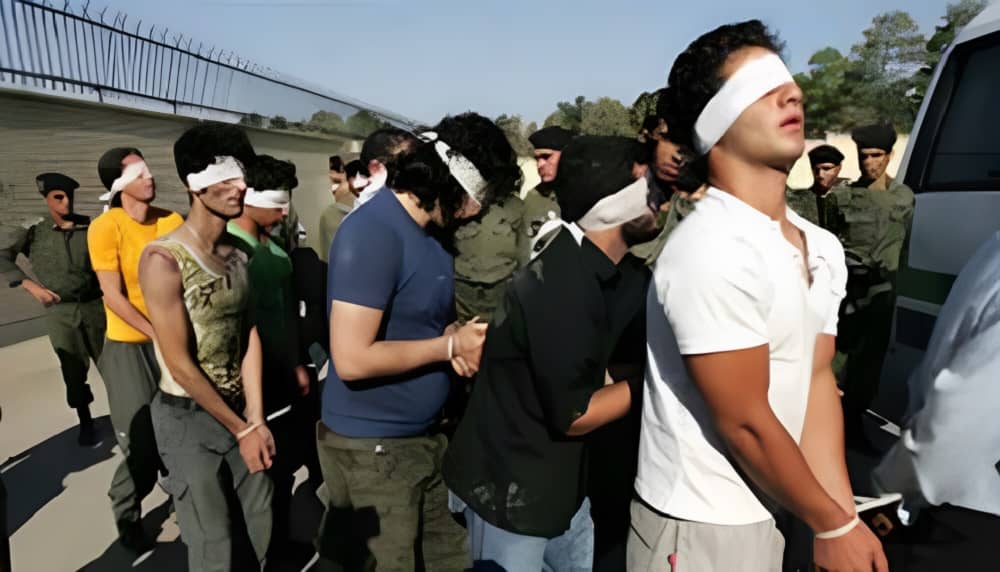
The wave of executions underscores the regime’s escalating repression as Massoud Pezeshkian, Iran’s newly appointed president, prepares to unveil his cabinet. The victims, including seven Sunnis, were hanged in a single day, highlighting the regime’s increasingly precarious yet ruthless hold on power.
These executions were part of a broader pattern of repression. Just a day earlier, on August 6, four more prisoners—Aminollah Naroui, Hamzeh Garavand, Azad Abdollahi, and Akbar Gohari—were executed. On August 3, Naghi Ghorbani, Reza (Hamid) Rostami, and Javad Amiri met the same fate in Shiraz’s Adel Abad prison. These incidents illustrate Supreme Leader Ali Khamenei’s brutal approach to silencing dissent amid growing domestic and international crises.
Khamenei has once again committed a heinous act by shedding the blood of the courageous detained protester, #RezaRasaei. This is yet another chapter in the extensive record of Khamenei's tyranny and crimes.
The execution of this political prisoner in the early days of the… pic.twitter.com/Lv4U5Oywls— Maryam Rajavi (@Maryam_Rajavi) August 6, 2024
The human rights situation in Iran further deteriorated on August 6 when Reza Rasaei, a 35-year-old political prisoner from Kermanshah province, was executed in Dizel Abad prison. Rasaei, arrested during the November 2022 uprising, endured severe torture that left him with critical injuries.
Despite international appeals for his release, he was sentenced to death, a year in prison, and 74 lashes by Kermanshah’s Criminal Court, accused of involvement in the death of an IRGC Intelligence chief.
This surge in executions coincides with Pezeshkian’s controversial rise to power following the disputed July 2024 elections. Despite the regime’s portrayal of Pezeshkian as a moderate, the crackdowns have intensified.
According to Iran Human Rights Monitor (Iran HRM), July 2024 saw a staggering 53 executions, a sharp increase from the 10 recorded in June. Notably, the executions of women surged fivefold, with five female prisoners put to death, including Mahmoudi Nia, who was forced into marriage and later accused of murdering her fiancé.
The regime’s brutality extends beyond the gallows. Recently, videos surfaced showing morality police violently assaulting two teenage girls for allegedly violating hijab regulations. One of the victims, only 14 years old, still bears the physical scars of the attack. These incidents have sparked outrage and calls for international intervention. The Women’s Committee of the National Council of Resistance of Iran (NCRI) has urged the UN and human rights organizations to condemn these acts and hold the regime accountable.
Here is a horrifying video showing the moment when two teenage girls were arrested by the Iranian regime's agents under the pretext of "improper veiling."
Watching this video makes our hearts feel heavy.
One of the girls is only 14. The agents slammed her head against an… pic.twitter.com/BAUBWPBhmC
— Women's Committee NCRI (@womenncri) August 6, 2024
Under Pezeshkian’s leadership, the regime continues its harsh domestic repression while maintaining support for regional proxy forces, reflecting the enduring strategies set by Supreme Leader Khamenei. Despite leadership changes, the regime remains steadfast in its approach to maintaining control through violence and oppression.

MEK Iran (follow us on Twitter and Facebook), Maryam Rajavi’s on her site, Twitter & Facebook, NCRI (Twitter & Facebook), and People’s Mojahedin Organization of Iran – MEK IRAN – YouTu