The escalating tensions highlight deep fractures within the clerical dictatorship, undermining its already fragile foundation. The faction loyal to Supreme Leader Ali Khamenei, known as the “Principlists,” has launched a scathing attack on Pezeshkian and his appointments.
Hossein Shariatmadari, editor-in-chief of the hardline Kayhan newspaper, has been at the forefront of this criticism. Guided by the Supreme Leader’s office, Kayhan has published a series of articles lambasting Pezeshkian’s choices, accusing them of being unqualified and even traitorous.
In an article titled “Beware of Them Who Muddy the Waters!” Shariatmadari suggests that Pezeshkian’s inner circle includes individuals allegedly collaborating with foreign intelligence services, with histories of corruption and anti-regime activities. He asserts, “The views and perspectives of many of Pezeshkian’s associates are not just different but fundamentally contradictory to his own in several basic principles. This discrepancy in practice could render Pezeshkian ineffective.”
Power Struggles Intensify as New #Iranian Regime President Appoints Divisive Figures to Key Positionshttps://t.co/tjr2wj7ZKc
— NCRI-FAC (@iran_policy) August 5, 2024
Shariatmadari’s relentless criticism underscores the Principlists’ resistance to any deviation from their rigid, authoritarian vision. He particularly targets figures like Mohammad Javad Zarif, the former Foreign Minister, known for his attempts to negotiate with the West.
Adding to the complexity, former Speaker of Parliament and current Khamenei aide, Gholam-Ali Haddad-Adel, warns Pezeshkian against opting for “undesirable figures” in his cabinet. He cautions, “If Pezeshkian himself decides on the cabinet, there will be no problem in Parliament; but if he is given a list to take to Parliament, this will cause trouble.”
Economic issues further complicate the situation. The regime’s propaganda machine tries to portray the outgoing administration of Ebrahim Raisi as having left the country in a robust economic state, likening it to a “saddled horse” ready for Pezeshkian to ride. However, reports from other state-affiliated media suggest a starkly different reality.
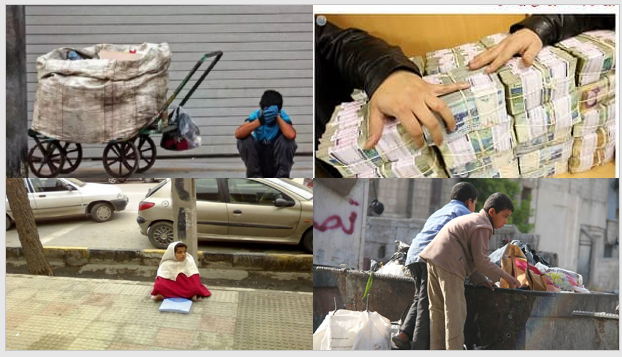
The financial strain is exacerbated by controversial budget allocations. In a move sparking outrage, the new government has allocated substantial funds for the Arbaeen pilgrimage, diverting resources from crucial economic needs. Rival factions within the regime argue that such expenditures are irresponsible, especially given the country’s dire financial situation.
Abbas Abdi, a former interrogator turned media activist, predicts these internal conflicts will intensify as Pezeshkian’s administration takes shape. He notes the legislative body, driven by personal and regional interests, will likely become a significant obstacle, further destabilizing the government. Abdi comments, “We have 300 representatives, each pursuing personal and regional interests, often disregarding national welfare. This situation is a major obstacle to Iran’s development.”
Internal Tensions and Economic Crisis in #Iran amid Feud over High-Profile Appointmentshttps://t.co/RxHEgwYfFV
— NCRI-FAC (@iran_policy) August 2, 2024
Economic experts like Farshad Momeni add to the grim outlook, highlighting the regime’s unsustainable financial practices. He reveals a grim reality of hidden debts and continuous money printing, which only deepens the country’s economic woes. Momeni states, “In Raisi’s era, one of the dirtiest lies officials told was that they no longer tampered with the Central Bank, while in reality, they were taking indirect loans from banks.”

MEK Iran (follow us on Twitter and Facebook), Maryam Rajavi’s on her site, Twitter & Facebook, NCRI (Twitter & Facebook), and People’s Mojahedin Organization of Iran – MEK IRAN – YouTu