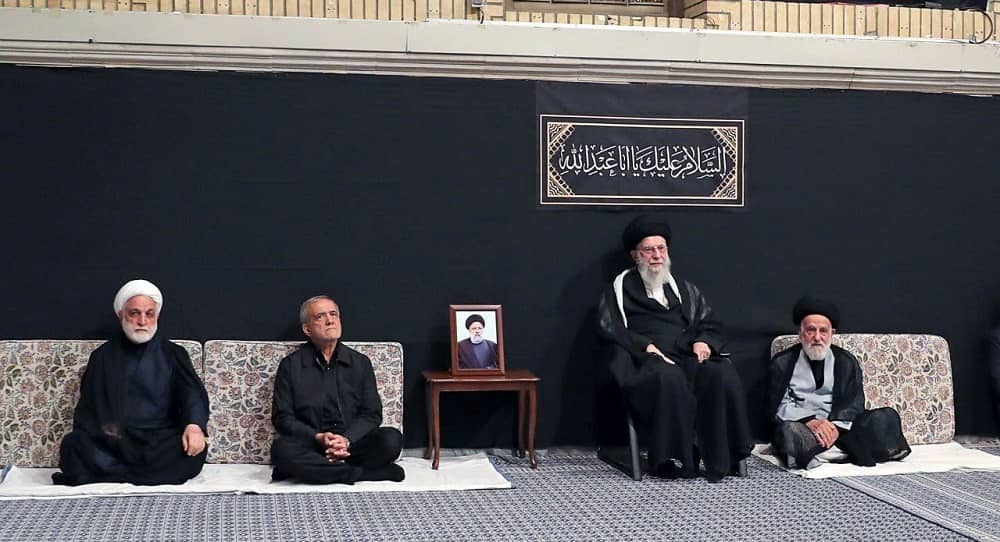
Pezeshkian candid remarks underscored the deepening divisions and the challenges of governance in a country already beset by economic hardships and external pressures. President Pezeshkian openly questioned the reasons behind public dissatisfaction, lamenting the unfulfilled promises and the lack of unity within the government. “Why are the people dissatisfied with us? We keep making promises, but then we contradict ourselves behind their backs.
If I know I can’t deliver, I shouldn’t falsely promise the people,” he stated. He further criticized the sidelining of capable individuals in favor of those seeking power, hinting at a power struggle that has only worsened the situation.
The political climate in Tehran was further inflamed by a controversial statement from Gholamreza Fayyazi, a member of the Assembly of Experts, who questioned the religious legitimacy of former President Mohammad Khatami and branded another former President, Ali Akbar Hashemi Rafsanjani, as “accursed.”
Tensions Boil Over in #Iran’s Regime as Pezeshkian Makes Cabinet Pickshttps://t.co/EH4YiIYhWb pic.twitter.com/MEBpBaSNFF
— NCRI-FAC (@iran_policy) August 6, 2024
This rhetoric has sparked outrage, with cleric Fazel Meybodi warning of the potential for politically motivated violence. Meybodi’s concerns hark back to the politically charged assassinations of the 1990s, raising alarms about the dangers of extremist rhetoric.
Adding to the already volatile atmosphere, Ebrahim Fayyaz Zahed, a member of the government’s strategic council, revealed that the recent assassination of Ismail Haniyeh has disrupted Pezeshkian’s efforts to finalize his cabinet.
This delay has further highlighted the challenges Pezeshkian faces in forming a government that can appease all factions within the regime. The influence of Supreme Leader Ali Khamenei remains pivotal, with Pezeshkian’s deputy in parliamentary affairs, Shahram Dabiri, confirming that cabinet appointments will require Khamenei’s approval.
#Khamenei’s Influence and Media Battles Mark Pezeshkian’s Cabinet Selection Turmoil in #Iranhttps://t.co/CBhsRtyMDA
— NCRI-FAC (@iran_policy) July 26, 2024
The internal discord is compounded by Iran’s dire economic situation. Hossein Raghfar, an economist, expressed his concerns following a meeting with Pezeshkian, criticizing past governments for policies that have prioritized capital interests over the welfare of the people. Raghfar warned that the continuation of these policies, including whispers of a unified exchange rate, could lead to mass protests, unlike anything seen before.
As Iran grapples with these internal and external challenges, the future of Pezeshkian’s government and the country’s stability remains uncertain. The growing divide within the regime, coupled with economic woes, paints a grim picture of Iran’s immediate future.

MEK Iran (follow us on Twitter and Facebook), Maryam Rajavi’s on her site, Twitter & Facebook, NCRI (Twitter & Facebook), and People’s Mojahedin Organization of Iran – MEK IRAN – YouTu