This marks a continuation of Tehran’s longstanding attempts to assert its influence in Washington, a strategy that has evolved significantly over the years. Newly uncovered documents, released in June, have highlighted the sophisticated methods employed by the Iranian regime to shape public opinion in the West, particularly through media manipulation.
According to a report by The Washington Post, these documents reveal that leaders of a U.S.-targeted online news site received payments from Iranian government media outlets. This case underscores how Tehran leverages media channels to disseminate its narratives, aiming to sway public perception and political outcomes in the United States.
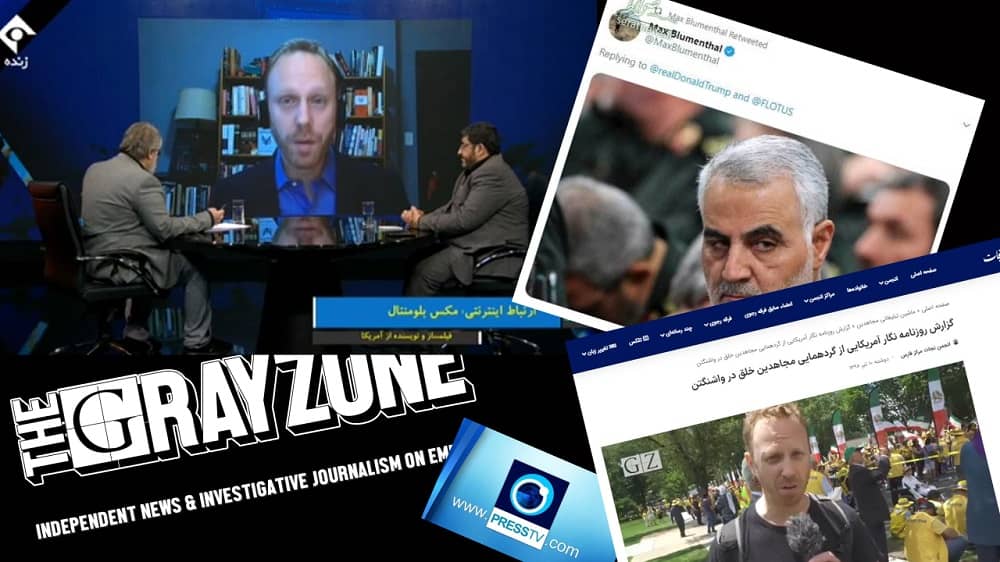
A key example of this influence operation involves hacked emails and documents from the Iranian state-funded Press TV, which disclosed payments to a writer now serving as an editor for Grayzone, a Washington-based media outlet. The payments were made while the writer contributed to Russia’s Sputnik news outlet, showcasing a troubling intersection of foreign influence operations.
One of the main goals of the Iranian regime's four-decade demonization campaign against the #MEK has been to spread the narrative that the MEK is a fringe group, a cult with no popular base inside Iran.#IranRevolution pic.twitter.com/TrV6YhGBBQ
— NCRI-FAC (@iran_policy) February 9, 2023
Grayzone’s coverage, particularly its focus on Iran’s opposition, aligns closely with Tehran’s agenda. The outlet has shown a special interest in the People’s Mojahedin of Iran (PMOI/MEK), a prominent Iranian dissident group advocating for regime change. Tehran has long sought to discredit the PMOI, and Grayzone’s content has frequently echoed this narrative. For instance, during the widespread protests in Iran in 2022, Grayzone’s Max Blumenthal attempted to shift the narrative away from the protesters’ demands by suggesting that the West, particularly through the PMOI, was orchestrating a regime change agenda.
Blumenthal’s portrayal of the PMOI as a “regime change cult” mirrors Tehran’s own rhetoric, further fueling concerns about the influence of foreign powers on U.S. media. This alignment is evidenced by the frequent citation of Grayzone’s work in Iranian state media, with many of their articles translated into Persian to bolster Tehran’s narrative.
Press TV a Branch of #Iran Regime for Money Laundering and Demonization Against #MEK and the Iranian Resistance https://t.co/JNZnKMqd3F
— NCRI-FAC (@iran_policy) February 14, 2022
The Iranian regime’s use of foreign reporters to advance its political and intelligence goals is not new. The National Council of Resistance of Iran (NCRI) has repeatedly exposed such operations, revealing how journalists have been manipulated to serve Tehran’s interests. This includes instances where reporters have published misleading or defamatory content about Iranian dissidents, often at the behest of Iranian agents.
Tehran’s influence extends beyond traditional media, relying on so-called experts and organizations in the West that, while seemingly independent, often operate in alignment with Iran’s geopolitical interests. These entities obscure their true affiliations, making it difficult to discern genuine journalism from covert propaganda.
As the 2024 U.S. elections approach, the issue of foreign influence, particularly from Iran, remains a significant concern. The ongoing efforts by Tehran to manipulate media and public opinion in the West underline the need for vigilance and a critical examination of the sources of information shaping public discourse.