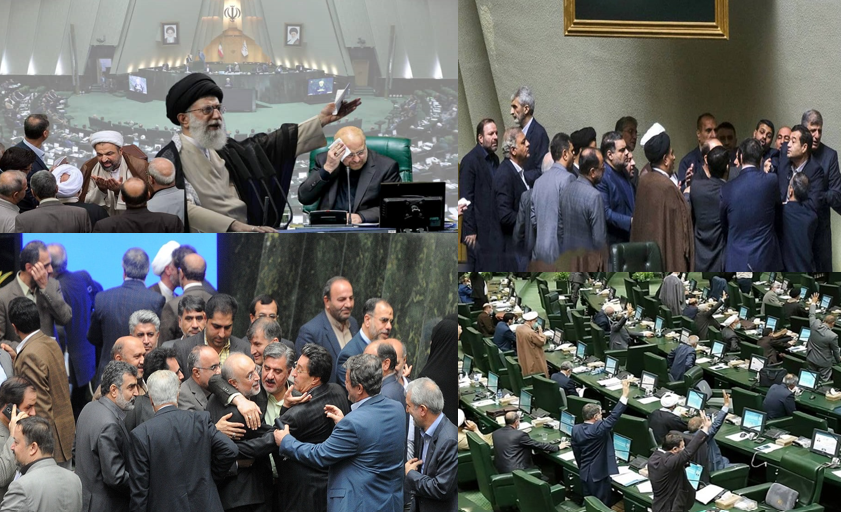
This revelation has cast a shadow over the legitimacy of the entire regime, from Khamenei himself to the Parliament, the President, and even the electoral process. The confession has caused an uproar among fervent supporters of the Supreme Leader, highlighting the concerns of the Iranian Resistance about the absolute control exerted by the mullahs’ regime.
This incident underlines the Iranian Resistance’s stance that the country’s governance institutions, from Parliament and government to the judiciary and electoral processes, are mere facades, lacking genuine independence or democratic function. The Resistance argues that these entities exist only to serve the interests of the ruling elite, orchestrated under the tight control of Khamenei and his inner circle.
Reflecting on the impact of Pezeshkian’s statement, the regime-affiliated Kayhan newspaper, known as Khamenei’s mouthpiece, responded with visible concern. On August 22, Hossein Shariatmadari, the managing editor of Kayhan, criticized Pezeshkian’s comments, stating, “Your false claim yesterday was met with widespread support from the sworn enemies of the state.” This admission suggests that even within the regime, there is an acknowledgment that Pezeshkian’s remarks have caused significant reputational damage.
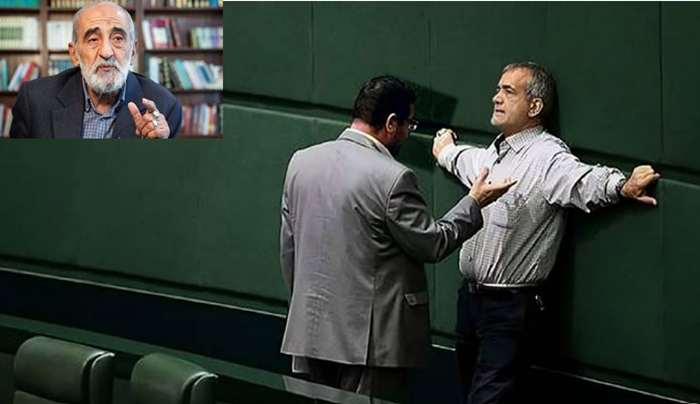
The regime’s official line, reiterated by Kayhan, attempts to justify the Supreme Leader’s influence by citing constitutional duties related to foreign policy and defense. It claims that Khamenei’s coordination with ministers in specific portfolios is a long-standing practice.
Despite these justifications, Kayhan’s reporting reveals contradictions.
The statement from Khamenei’s office highlights that at least seven ministries are directly appointed by the Supreme Leader. This raises questions about the true extent of Pezeshkian’s claim, particularly regarding the appointment of the Minister of Roads and Urban Development.
In a bid to contain the fallout, Kayhan urged Pezeshkian to retract his statements, suggesting he “block the enemy’s exploitation.” Other regime figures also joined in the damage control efforts. MP Malek Shariati criticized Pezeshkian’s use of Khamenei’s name to influence parliamentary votes, warning of the negative implications for both Parliament and the President.
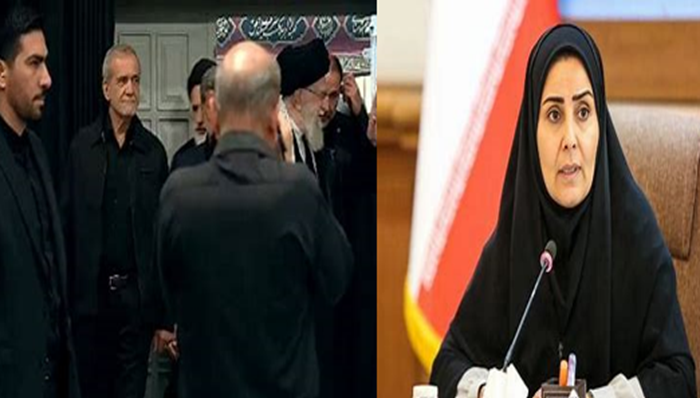
Meanwhile, a spokesman for the Parliament’s Security Commission dismissed the tactic as ineffective. The controversy has exposed deep fissures within the Iranian regime, underscoring the challenges it faces in maintaining its image and authority.
As the regime’s contradictions become more apparent, the Iranian Resistance’s claims about the hollow nature of the regime’s democratic institutions gain further traction. The ongoing turmoil suggests a regime struggling to keep its grip on power, with every attempt at damage control only deepening the crisis.