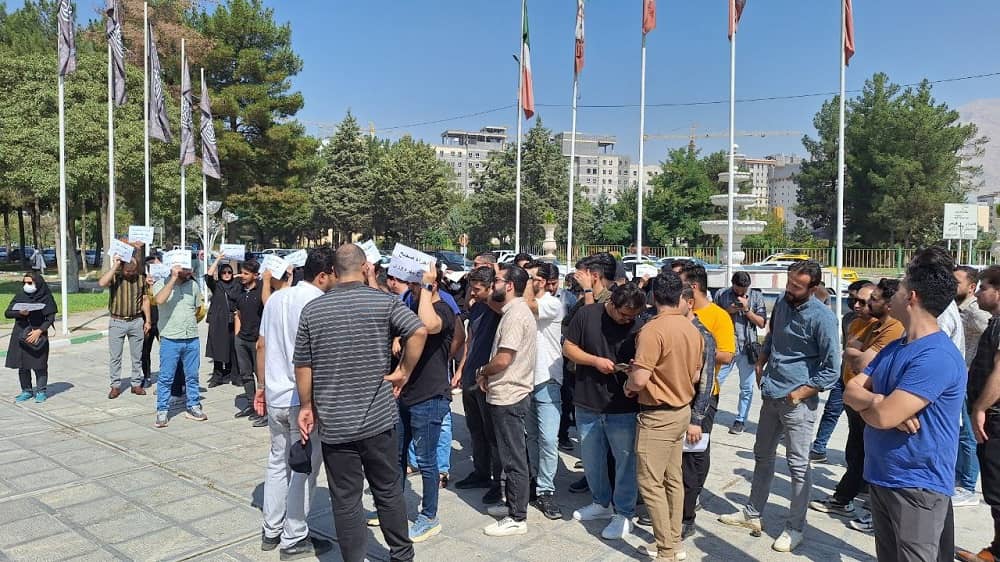
On Monday, August 26, a wave of demonstrations swept through the country, reflecting the deepening discontent that has taken root among various groups, from nurses and retirees to municipal workers and farmers.
Tehran, the nation’s capital, has become a focal point of tension, particularly within the healthcare sector. Nurses, who have been at the forefront of the protests, are demanding better wages and improved working conditions.
The government’s response has been swift and severe, with several prominent nurses reportedly arrested. The crackdown in Tehran underscores the government’s increasing intolerance of dissent, especially among healthcare professionals who have been vocal about their grievances.
August 26—Rasht, northern Iran
Retirees of Telecommunication Company of Iran resume weekly protest rallies, demanding higher pensions and other basic rights.
"Lying manager, what happened to your promises!" protesters chant#IranProtestspic.twitter.com/rHJAIpPvw9— People's Mojahedin Organization of Iran (PMOI/MEK) (@Mojahedineng) August 26, 2024
In southern Iran, Kangan has emerged as another hotspot of unrest. Nurses at Khomeini Hospital have continued their strike, citing low wages and subpar working conditions as key issues.
The Kangan Cement Factory workers, now on the 28th day of their strike, are also demanding payment of unpaid wages and better labor conditions. The persistence of these protests illustrates the determination of workers to secure their rights despite the looming threat of governmental reprisal.
August 26—Bushehr, southern Iran
Employees of the Fajr Jam Gas Refining Company hold protest rally in front of the company's headquarters to reiterate their demands for better wages and working conditions.#IranProtests pic.twitter.com/Gfg2CJsyrM— People's Mojahedin Organization of Iran (PMOI/MEK) (@Mojahedineng) August 26, 2024
In northern Iran, Gorgan’s nurses staged a rally outside the Golestan University headquarters, pressing for fair compensation and enhanced working conditions. Their movement has garnered the support of various labor unions, further highlighting the widespread dissatisfaction within the healthcare sector across the region.
Meanwhile, in Kermanshah, both nurses and healthcare workers gathered outside the governor’s office, calling for better wages and working conditions. The city also saw a protest by retirees of the Telecommunications Company of Iran (TCI), who demanded adjustments to their pensions to align with the rising cost of living.
August 26—Shiraz, southern Iran
Healthcare workers rally in front of the provincial governorate as regime authorities continue to ignore their demands for higher wages and better working conditions.#IranProtestspic.twitter.com/seaeyDRgUV— People's Mojahedin Organization of Iran (PMOI/MEK) (@Mojahedineng) August 26, 2024
The southern city of Shiraz joined the wave of protests, with healthcare workers demonstrating outside the provincial governorate. Their demands echoed those heard across the country: wage increases and better working conditions for healthcare professionals.
In Isfahan, farmers and retirees took to the streets, with farmers protesting against severe water shortages affecting their crops, while TCI retirees demanded fair pensions and benefits. Similar grievances were voiced in Tabriz, Urmia, and Sanandaj, where TCI retirees held protests demanding better pensions.
August 26—Kermanshah, western Iran
Nurses and healthcare workers continue their protest rallies, demanding higher wages and better working conditions.#IranProtestspic.twitter.com/cOh45LarzR— People's Mojahedin Organization of Iran (PMOI/MEK) (@Mojahedineng) August 26, 2024
Municipal workers in Ilam and Zahedan, along with those in other cities, rallied over unpaid wages and poor working conditions, reflecting the widespread economic strain felt across the country.
These nationwide protests reveal the growing dissatisfaction among the Iranian populace as economic hardships deepen and social policies fail to address their needs.
August 26—Kermanshah, western Iran
Nurses rally in front of the provincial governorate to reiterate their demands for higher wages, changes to overtime work hours, and better working conditions.#IranProtests pic.twitter.com/v7sm0smMe1— People's Mojahedin Organization of Iran (PMOI/MEK) (@Mojahedineng) August 26, 2024
Despite the government’s efforts to suppress dissent, the voices of Iran’s working class, retirees, and farmers continue to rise, demanding immediate attention and action from the authorities.