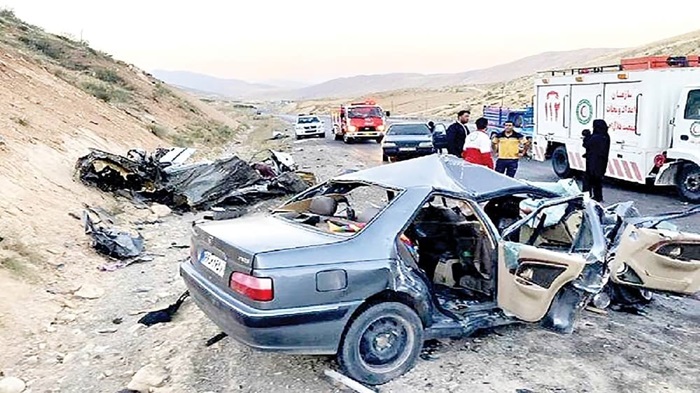
Additionally, around 1,000 individuals suffer injuries in these accidents every day, with approximately 100 becoming permanently disabled. The ripple effect of these accidents is devastating, with over 200 families plunging into severe economic hardship and poverty daily.
In a statement released on Tuesday, September 3, via the state-run ISNA news agency, Mohebbi pointed to poor vehicle quality and inadequate road infrastructure as primary contributors to this crisis.
He emphasized the particularly low quality of domestically produced vehicles, which fail to meet essential safety standards. “Last year, around 20,045 people lost their lives in road accidents,” Mohebbi stated, underscoring the severity of the issue. He further noted that road infrastructure in Iran is insufficient, exacerbating the problem.
#Iran News in Brief
A report dated October 16 by the state-run newspaper “Donyaye Eghtesad” concerning traffic #accident victims in Iran revealed that in on year, the number of fatalities resulting from traffic accidents on the roads amounted to 19,490 individuals.… pic.twitter.com/Q8knbwwlfi— NCRI-FAC (@iran_policy) October 16, 2023
While Mohebbi acknowledged that 32 organizations are responsible for preventing traffic accidents in Iran, he criticized most for failing to perform their duties. He specifically mentioned that only the Ministry of Roads and the police are actively working to mitigate traffic accidents, urging other institutions to fulfill their legal obligations to reduce the staggering number of fatalities.
The situation has deteriorated significantly in recent years. After a period of decline, road fatalities began to rise again in early 2021. By 2023, the number of deaths had surged to 20,045—the highest since the early 2010s. This resurgence in fatalities comes after a brief period in 2020, during the COVID-19 pandemic when road deaths fell to 15,396 due to reduced traffic.
#Iran News in Brief
Hassan Momeni, Head of the regime's Traffic Police, warned of a drastic rise in road accidents in Iran. Shockingly, over 20,000 lives were lost just last year.https://t.co/KfvLvoHSVk pic.twitter.com/z1MlohkiI1— NCRI-FAC (@iran_policy) November 21, 2023
The scale of the problem is further highlighted by the 2023 statistics, which reported that 391,069 people were either killed or injured in road accidents. Men accounted for 275,800 of these casualties, while 115,269 were women. Provinces like Tehran, Khorasan Razavi, Isfahan, Fars, and Khuzestan reported the highest rates of casualties, revealing the widespread nature of this issue across the country.
The economic impact is equally troubling. Kamal Hadianfar, head of the regime’s Traffic Police, estimated that each road death costs Iran approximately 8.3 billion tomans. With around 20,000 deaths last year, the total economic loss reached a staggering 166 trillion tomans, excluding the costs associated with injuries and disabilities.
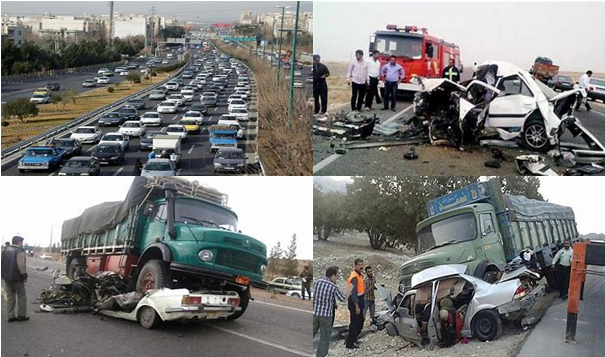
Poor oversight of domestic car production and widespread corruption in maintaining road infrastructure have turned Iran’s roads into some of the most dangerous in the region. The regime’s focus on military and geopolitical priorities over public welfare has left the country’s infrastructure in a state of disrepair, putting countless lives at risk.