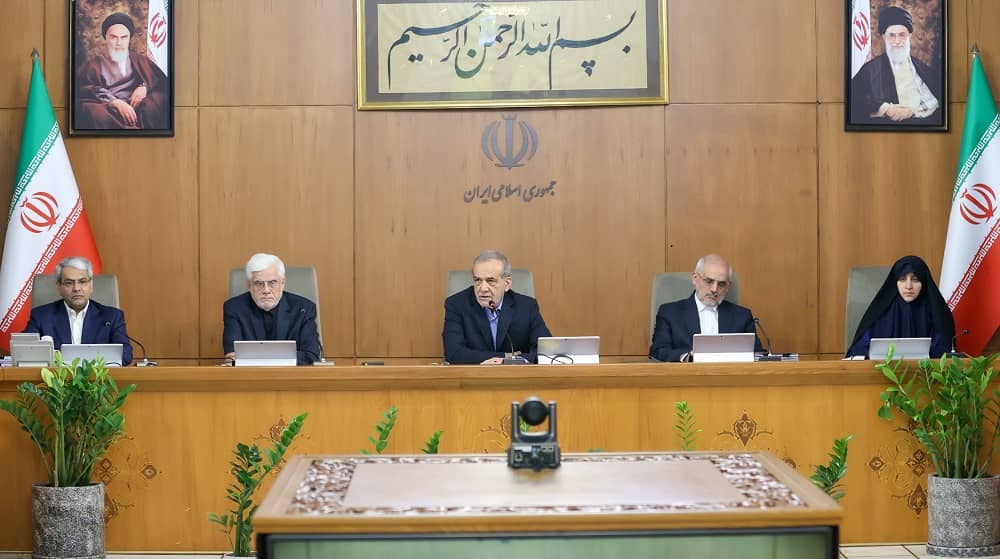
The deep divisions within the state leadership continue to intensify, raising concerns about the government’s stability and ability to navigate the country’s pressing challenges.
Key figures close to Khamenei have openly expressed their dissatisfaction. Ahmad Alamolhoda, the Friday prayer leader in Mashhad and a prominent Khamenei representative, issued a public warning to Pezeshkian during a speech on August 30. He emphasized that Pezeshkian must strictly adhere to the Supreme Leader’s directives.
Alamolhoda stated, “Obedience and following the leadership indicate loyalty to the leadership position.” His remarks highlight the growing mistrust and tension within the ruling clerical class. Economic woes remain a central point of contention, with Abdolnaser Hemmati, the new Minister of Economy, pushing back against claims that the administration inherited a stable economy.
#Pezeshkian’s Hardline Approach Is a Recipe for More Uprisings in #Iranhttps://t.co/nSJ2JyUYAX
— NCRI-FAC (@iran_policy) August 30, 2024
On August 31, Hemmati pointed out the alarming economic indicators: 40% inflation, an exchange rate of 60,000 tomans, and unemployment rates of 12-13%. His comments reveal a growing rift between factions, as Hemmati distances himself from the economic turmoil.
Another contentious issue is the potential return of former Foreign Minister Mohammad-Javad Zarif to Pezeshkian’s cabinet. Hamid Rasaee, a hardline parliamentarian, warned on social media that Zarif’s reinstatement would violate the law, calling for Pezeshkian to face severe consequences if this appointment goes forward. However, state media outlets like Ham Mihan reported that Zarif’s return is being orchestrated behind the scenes, with high-level negotiations already underway.
Meanwhile, hardline representatives have refused to endorse several of Pezeshkian’s proposed ministers, despite the Supreme Leader’s reported approval. The state-run Kayhan newspaper accused the new government of appointing individuals who lacked commitment to the regime’s foundational principles. It expressed concern that these appointments would lead to inefficiency and unrest, drawing comparisons to the controversial Rouhani administration. As the political climate becomes increasingly fraught, Pezeshkian has yet to present a clear plan to address the nation’s challenges.
#MasoudPezeshkian’s Economic Policies: A Catalyst for Unrest and Uprising in #Iranhttps://t.co/8rJDXtdQSp
— NCRI-FAC (@iran_policy) August 29, 2024
His first public address, delivered on August 31, offered little in terms of concrete solutions. Instead, Pezeshkian repeatedly expressed gratitude to Khamenei, further cementing the perception that his government is more focused on maintaining loyalty than delivering results. With tensions escalating, Pezeshkian’s ability to navigate these internal power struggles will be crucial in determining the future of his government and its capacity to address Iran’s ongoing crises.