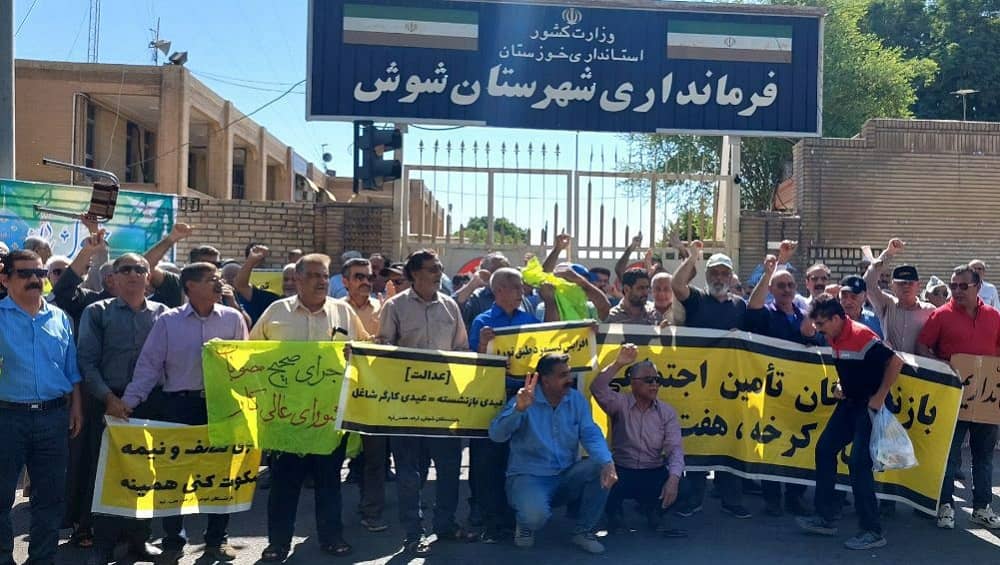
On September 8, demonstrations spread across multiple cities, uniting retirees, workers, nurses, and farmers in demanding better living conditions and improved wages. In Tehran, retirees from the steel industry rallied for increased pensions and access to basic services.
Despite laws mandating pension hikes, the government has yet to meet its obligations, leaving many pensioners struggling to survive amid soaring inflation. This protest was echoed in several cities, including Shush, Isfahan, Ahvaz, and Kermanshah, where Social Security Organization retirees voiced similar grievances.
Chants like “The budget goes to freeloaders” reflected the growing frustration among pensioners, who feel abandoned by the regime as they grapple with rising costs of living.
September 8—Tehran, Iran
Retirees of the steel industry resume protest rallies as the regime continues to refrain from raising their pensions, as required by its own laws.#IranProtestspic.twitter.com/JRRb7Shu1y— People's Mojahedin Organization of Iran (PMOI/MEK) (@Mojahedineng) September 8, 2024
Industrial workers also took to the streets. In Northern Iran, employees from the Anzali Shemsh Industrial Complex protested management policies, including the demand to pledge against participating in future demonstrations, which they condemned as a violation of their rights.
Similarly, in Kerman, nearly 2,000 workers at the Barez Tire Factory continued their strike, demanding higher wages and protesting steep tax deductions. Factory management has dismissed the strike as illegal, further fueling labor unrest across the country.
In Eastern Iran, a Baluch citizen was violently beaten by a police officer, causing outrage and amplifying the Baluch community’s longstanding grievances about discrimination and police brutality.
September 8—Kermanshah, western Iran
Retirees and pensioners of the Social Security Organization resume protest rallies, demanding higher pensions and other basic needs.
"The budget goes to freeloaders," protesters chant#IranProtestspic.twitter.com/xqNyiM4aFx— People's Mojahedin Organization of Iran (PMOI/MEK) (@Mojahedineng) September 8, 2024
Farmers in Dezful added their voices to the outcry, protesting inadequate fuel rations for their agricultural machinery. With fuel shortages affecting their ability to work, these farmers face mounting economic pressure.
Meanwhile, healthcare workers in Kashan resumed protests at Taghavi Hospital, demanding better pay and working conditions. Despite their critical role in battling COVID-19 and other health crises, nurses say the government has unrecognized their efforts.
The protests have also sparked tensions between citizens and authorities. In Shiraz, retired military and education workers protested outside the Fars Province Governor’s Office, demanding legal recognition of their property rights.
September 8—Isfahan, central Iran
Retirees of the steel industry resume protest rallies, demanding higher pensions as they struggle to make ends meet in the deteriorating economic conditions.#IranProtestspic.twitter.com/KftFQ0IxNa— People's Mojahedin Organization of Iran (PMOI/MEK) (@Mojahedineng) September 8, 2024
As these demonstrations gain momentum, it is clear that Iran is facing a period of escalating unrest. The protests, driven by economic hardships and calls for justice, reflect a broader discontent with the regime’s handling of the country’s crises. Citizens from various sectors are uniting in their demands for meaningful reform, signaling a critical juncture for Iran’s government.