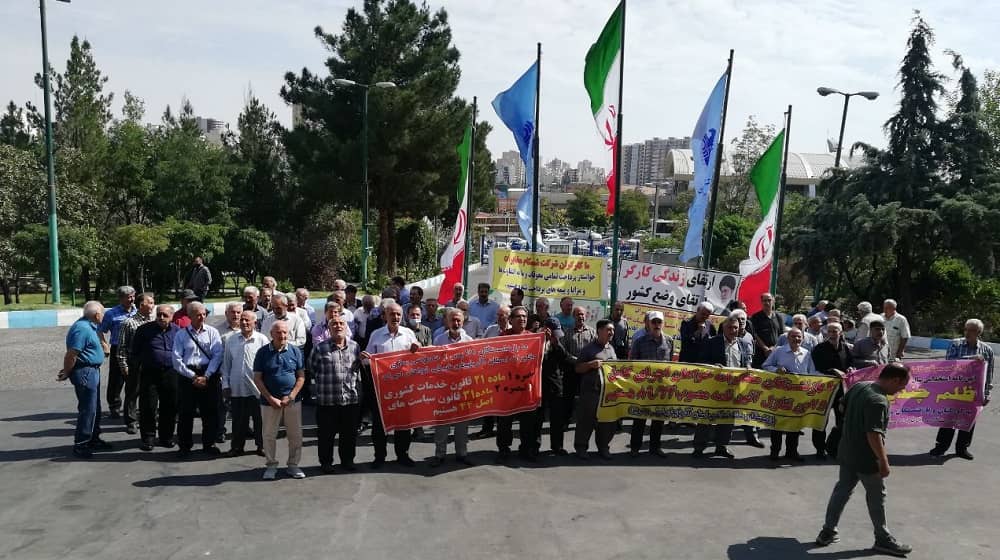
These demonstrations underscore the growing dissatisfaction among Iranians, who are grappling with inflation and decades of mismanagement. In Tehran, retirees from the education sector gathered in front of the Program and Budget Organization, protesting against low pensions and the government’s neglect of their basic needs.
Similarly, retirees from the Telecommunications Company of Iran (TCI) rallied in several cities, including Ahvaz, Sanandaj, Tabriz, and Urmia, demanding higher pensions to cope with rising living costs. The protesters highlighted the government’s failure to follow through on promised pension adjustments, which have left many struggling to make ends meet.
September 16—Tehran, Iran
Retired teachers and employees of the education sector rally in front of the Program and Budget Organization, protesting low pensions and lack of basic needs.#IranProtestspic.twitter.com/agEulaBJRh— People's Mojahedin Organization of Iran (PMOI/MEK) (@Mojahedineng) September 16, 2024
In Isfahan, families of autistic patients organized a demonstration outside the Welfare Organization. They called for greater financial and medical support from the government, emphasizing the challenges they face due to inadequate resources for autism care.
Workers from the Petrochemical Terminals and Storage Facilities in Mahshahr also joined the protests, voicing concerns over employment status changes, unpaid benefits, and unfair bonus deductions.They called for the implementation of a job classification plan for contract workers and full payment of benefits under their PetroCard program.
September 16—Urmia, northwest Iran
Retirees and pensioners of the Telecommunications Company of Iran rally in front of the provincial headquarters of TCI to protest low pensions and poor living conditions. #IranProtestspic.twitter.com/NnWLUAbRNI— People's Mojahedin Organization of Iran (PMOI/MEK) (@Mojahedineng) September 16, 2024
The oil and gas sector saw further unrest, with workers from Mahshahr and Boushehr protesting unfulfilled contract obligations, unfair pay deductions, and demands for the implementation of employment contracts. Employees from the Fajr Jam Gas Refinery in Boushehr also marched, chanting for fair treatment and the cancellation of illegal wage deductions.
Across Kurdistan, including Meriwan, Bijar, and Sanandaj, citizens rallied in solidarity with broader demands for justice and reform. The protests coincided with the anniversary of the 2022 uprising following the killing of Mahsa Amini, marking a significant expression of dissent against the regime.
September 16—Tabriz, northwest Iran
Retirees of the Telecommunications Company of Iran (TCI) resume rallies to protest low pensions and lack of response by the government.#IranProtestspic.twitter.com/oi1hgU6i2i— People's Mojahedin Organization of Iran (PMOI/MEK) (@Mojahedineng) September 16, 2024
These protests reflect deepening anger over economic hardship and government mismanagement. Citizens from various sectors—retirees, contract workers, and vulnerable families—are demanding fair treatment and accountability. With the regime continuing to ignore their grievances, the protests are expected to persist, highlighting the growing divide between the Iranian people and their leadership.