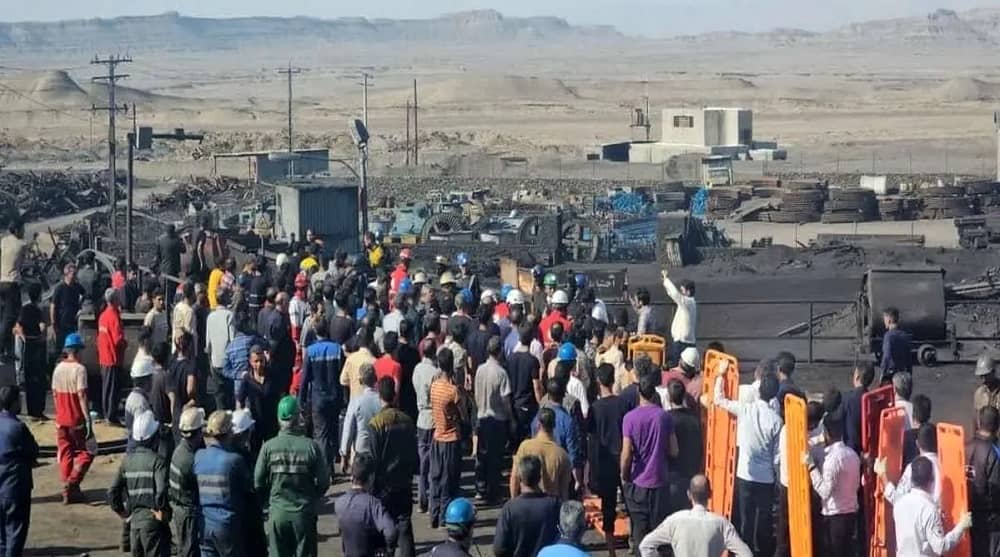
The incident highlights yet another failure of the Iranian regime to prioritize worker safety, particularly in the perilous mining sector. As rescue efforts continue, with 24 workers still trapped underground, the nation grapples with a preventable disaster that underscores the systemic neglect of labor conditions in Iran.
Official reports indicate that the explosion was triggered by a sudden release of methane gas within two tunnels. While no fire or collapse ensued, the miners were suffocated due to the toxic fumes. The workers, many of whom were left without adequate emergency measures, perished under circumstances that critics claim could have been avoided with proper safety protocols in place.
#Iran News in Brief
An explosion in the Tazarah #coal mine in the northern part of Shahroud County, northern Semnan province, has caused a minimum of six deaths. Currently, there is no precise information available about the full extent of the casualties or the number of injured… pic.twitter.com/iIBIzZVvqN— NCRI-FAC (@iran_policy) September 4, 2023
South Khorasan Governor Mohammad-Javad Ghanat confirmed the rising death toll, with 17 injured miners transported to local hospitals. However, the regime’s response has been criticized as insufficient, with vague promises of investigations that have done little to address the growing public outrage.
The toxic conditions, worsened by lingering gas, have made rescue operations increasingly difficult. Over 40 specialized rescue teams are working in the 750-meter tunnels, but progress remains slow. Iran’s mining industry has a long history of accidents, and the Madanjou explosion mirrors previous disasters, such as the 2017 Zemestan-Yurt mine collapse that claimed 43 lives.
#Iran: Mine Incident Fatalities Reaches 43. #IranElections2017 https://t.co/xeBB43NV5a pic.twitter.com/hcrHwWIY48
— NCRI-FAC (@iran_policy) May 10, 2017
Despite repeated incidents, the regime has consistently failed to implement meaningful safety reforms. Critics argue that the increasing number of mining fatalities reflects the government’s lack of interest in enforcing safety regulations. In 2023 alone, 2115 workplace-related deaths were reported in Iran, an alarming 11.3% increase compared to the previous year.
Many are questioning the sincerity of government officials, including President Masoud Pezeshkian, who, while in New York, offered condolences and ordered a superficial investigation. Labor activists and regime critics emphasize that numerous warnings about unsafe conditions, particularly concerning methane leaks and poor ventilation, have gone unheeded.
#Iran: Mine Incident Fatalities Reaches 43. #IranElections2017 https://t.co/xeBB43NV5a pic.twitter.com/hcrHwWIY48
— NCRI-FAC (@iran_policy) May 10, 2017
This tragedy has once again brought to light the harsh realities faced by Iran’s labor force. Miners work under life-threatening conditions for low wages, with little to no government protection. In the absence of independent labor unions, workers lack the means to advocate for their rights, leaving them vulnerable to future tragedies unless systemic changes are implemented.