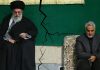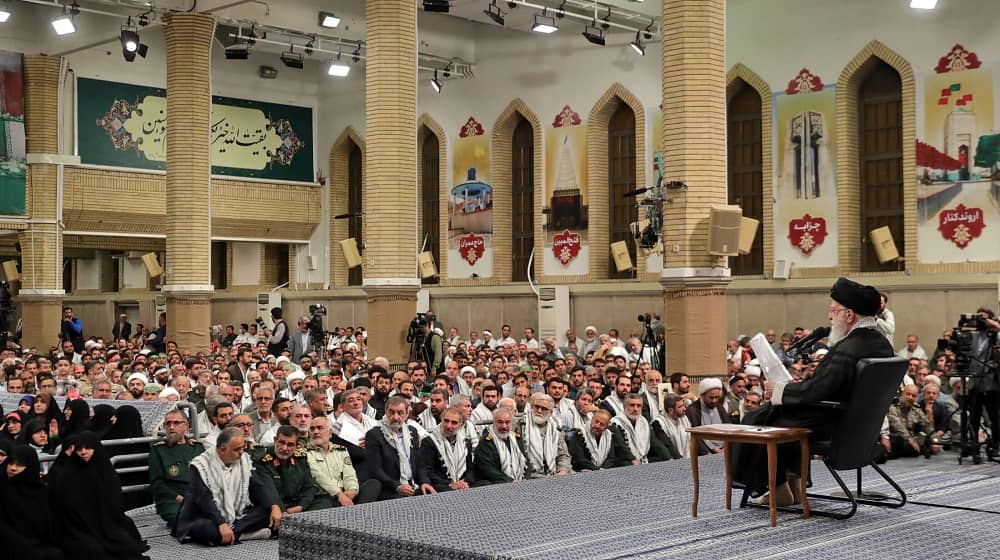
His remarks focused on the ideological and political importance of the conflict, justifying not only the war’s continuation but also the broader ambitions of Iran’s clerical regime. Instead of reflecting on the human and economic toll, Khamenei praised the war effort, describing it as a defense not only of Iran but of Islam itself.
In his speech to a group identified by state media as “veterans and defenders of the Sacred Defense,” Khamenei asserted that the younger generation must understand the true essence of the war. He noted, “This was not just about defending our borders, but about defending Islam. The battlefield was a place of worship.” His comments appeared to endorse his predecessor, Ruhollah Khomeini’s, decision to extend the conflict and hinted at broader regional ambitions that went beyond the defense of Iran.
The Iran-Iraq War, lasting from 1980 to 1988, claimed millions of lives and caused significant damage to both nations. Remarkably, Iran remains the only country to annually commemorate the start of a devastating war, highlighting its ideological motivations.
Khamenei attempted to downplay the responsibility of then-Iraqi leader Saddam Hussein, instead focusing on the role of global powers, particularly the U.S. and Soviet Union, in fueling the conflict. According to him, “The Islamic Republic was an intolerable element for them, and they couldn’t accept our revolution and the new way of thinking.”
Decoding #Khamenei’s Remarks While Appointing #Iranian Regime’s New Presidenthttps://t.co/Z18UCQ1MMq
— NCRI-FAC (@iran_policy) July 29, 2024
Khamenei’s speech also touched on more sensitive issues, including the use of child soldiers. He described young boys forging documents to participate in the war and framed their actions as a matter of religious devotion. This attempt to reframe the exploitation of children as heroic has drawn criticism both domestically and abroad.
Beyond reflecting on the war, Khamenei defended Tehran’s current regional interventions and missile programs, positioning them as a continuation of revolutionary principles. He claimed that accusations against Iran for its missile and drone programs stem from a broader rejection of Iran’s influence in the region, rather than concern for international norms.
Khamenei’s speech also addressed mounting domestic dissent, with many Iranians criticizing the regime’s increasing isolation. He dismissed accusations of Iran’s isolation, emphasizing the regime’s alliances with countries that account for “more than half of the world’s population.”
#Khamenei’s Key Appointment of Mokhber Completes the Puzzle for Perpetual Rule Over #Iranhttps://t.co/ygH9DYmy9B
— NCRI-FAC (@iran_policy) September 25, 2024
Despite his efforts to project strength, Khamenei’s speech revealed deeper concerns about the regime’s future. As he justified Tehran’s controversial policies, his rhetoric aimed to reassure his base amid growing internal unrest and international criticism of the regime’s human rights abuses and nuclear ambitions.

MEK Iran (follow us on Twitter and Facebook), Maryam Rajavi’s on her site, Twitter & Facebook, NCRI (Twitter & Facebook), and People’s Mojahedin Organization of Iran – MEK IRAN – YouTu