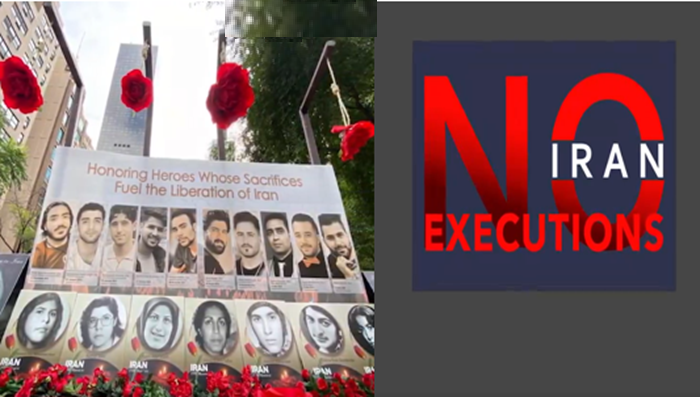
This comes in response to a surge in executions, including 264 since Massoud Pezeshkian assumed the presidency. On October 10, the same day as the World Day Against the Death Penalty, a series of coordinated attacks targeted regime facilities in multiple cities, underscoring the escalating resistance within Iran.
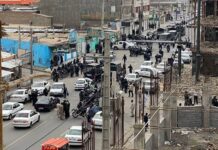
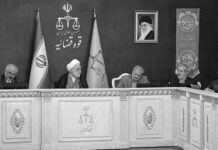
Key regime structures were hit, including the judiciary building in Shiraz, the disciplinary office in Arak, and the Revolutionary Court in Harsin. Additional attacks occurred at the intelligence police headquarters in Qazvin, the Khomeini Foundation’s executive offices in Tehran and Kerman, and other oppressive centers in Yasuj.
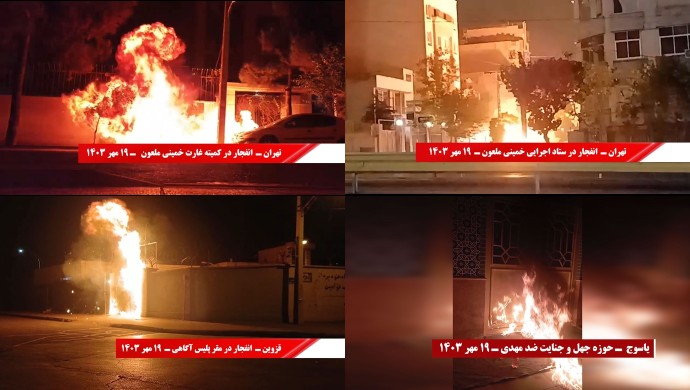
In Fahraj, Kerman, youth launched Molotov cocktails at an IRGC Basij base known for its role in suppressing women. In Zahedan, they attacked the intelligence unit and a Basij base linked to the Islamic Revolutionary Guard Corps (IRGC). Meanwhile, Tehran saw the torching of a Basij base and banners of former regime president Ebrahim Raisi, dubbed the “Executioner of Tehran.”
In Mashhad, propaganda banners glorifying the Iran-Iraq war were set ablaze, and in Tehran, a banner of Hezbollah leader Hassan Nasrallah was also burned. These actions reflect a broader sentiment of rejection towards the regime’s aggressive foreign policy and its support for terrorism.
They highlighted the horrific conditions endured by inmates, who face routine death sentences in sham trials, often without a defense. The prisoners emphasized that they live under constant threat, watching fellow inmates being executed weekly. Their statement underscores the inhumane treatment under Iran’s theocratic regime, where prisoners’ rights are non-existent.
For over 37 weeks, prisoners in 22 facilities across Iran have staged strikes on Tuesdays, advocating for the end of executions. On the eve of the World Day Against the Death Penalty, they issued a call to action, urging the global community, human rights organizations, and Amnesty International to pressure Iran’s rulers to halt these unjust executions.
Internationally, the “No to Execution” campaign has garnered substantial support. More than 1,500 prominent figures from 78 countries, including former presidents, prime ministers, UN officials, human rights experts, and Nobel laureates, have signed a statement calling for an end to executions in Iran.
This global movement aligns with the campaign led by Maryam Rajavi, the president-elect of the National Council of Resistance of Iran (NCRI), who has consistently advocated for the abolition of the death penalty. Her Ten-Point Plan for Iran’s future, which includes the elimination of executions, has gained international recognition.
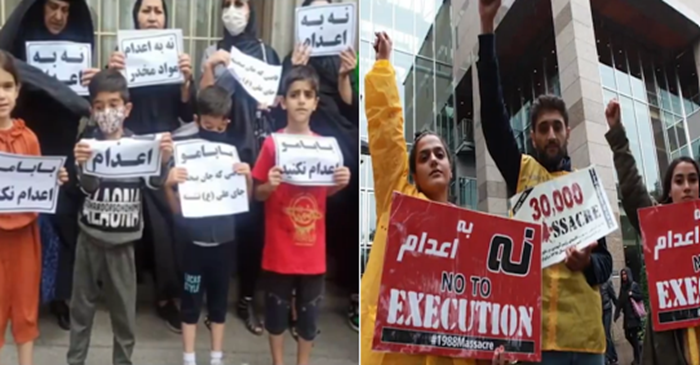
Protest gathering of the families of prisoners sentenced to death in front of the Judiciary in Tehran and Bandar Abbas#StopExecutionsInIran #قیام_جواب_اعدام#نه_به_اعدام pic.twitter.com/5FjhJwbGee
— Navid (@Navid2019) May 18, 2023
Rajavi reiterated her call at the International Jurists’ Conference in Paris on August 24, 2024, where she emphasized the political motives behind Iran’s executions. According to her, these acts serve to instill fear and suppress potential uprisings. The executions, therefore, are inherently political and must be recognized as such by the global community.
At a recent conference at the Parliamentary Assembly of the Council of Europe, Rajavi urged the international community to support the “No to Execution” campaign and hold Iranian regime leaders accountable for genocide and crimes against humanity.
This ongoing global effort aims to put increased pressure on the Iranian government to end its brutal policies and abolish the death penalty.

MEK Iran (follow us on Twitter and Facebook), Maryam Rajavi’s on her site, Twitter & Facebook, NCRI (Twitter & Facebook), and People’s Mojahedin Organization of Iran – MEK IRAN – YouTu