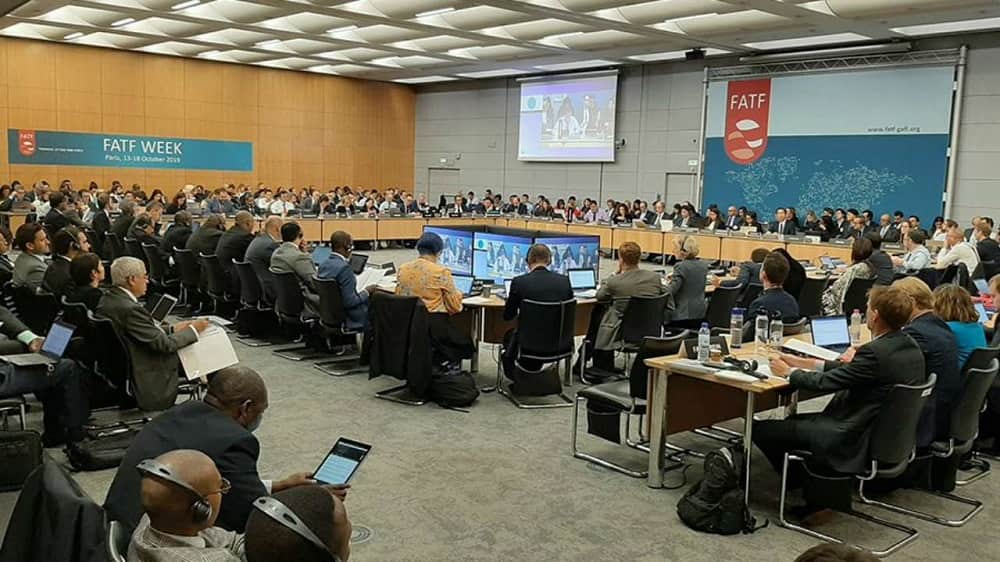
The FATF, an international body established to oversee financial standards, strongly urged countries to apply stringent countermeasures against Iran, which it deems a major risk to the global financial system.
The organization emphasized that this blacklist status will not be lifted until Iran fully implements measures to curb terrorism financing, including ratifying critical conventions such as the Palermo Convention and the Convention on the Suppression of Terrorist Financing.
Since 2016, the regime in Iran has pledged to address its strategic financial vulnerabilities, but according to the FATF, “Iran’s failure to enact the Palermo and Terrorist Financing Conventions in line with FATF standards” has stalled progress. This prolonged inaction, FATF claims, “poses an escalating risk to international finance.”
In its recent statement, FATF reiterated, “Countries should require increased supervisory examination for branches and subsidiaries of financial institutions based in Iran; introduce enhanced reporting mechanisms of financial transactions; and impose rigorous audit requirements on financial groups with affiliates in Iran.”
Kayhan Newspaper Reminds #Pezeshkian Who Holds the Final Say on FATF in #Iranhttps://t.co/5LzgiQ9p97
— NCRI-FAC (@iran_policy) September 20, 2024
FATF’s call for countries to remain cautious with Iranian dealings reinforces its 2020 mandate that Iran adopt comprehensive reforms. These include removing legal exemptions that prevent the classification of certain Iranian-backed groups as terrorist entities and ensuring that its financial systems implement strict customer due diligence.
The decision impacts Iran’s access to international banking channels, as global institutions are now advised to sever financial ties to reduce exposure to risks associated with Iran. This continued blacklisting, FATF stated, highlights the “terrorist financing risk emanating from Iran.”
The global agency also noted that “effective countermeasures” should be applied until Tehran addresses the “serious deficiencies identified in its action plan,” a document that has been stalled in the Iranian political system for years.
#Iran News: #FATF Identifies High-Risk Jurisdictions, Iran’s Regime Remains on Blacklisthttps://t.co/4Hz4yXx5Fa pic.twitter.com/ZISjK76JnN
— NCRI-FAC (@iran_policy) June 28, 2024
The FATF reiterated its position that the Iranian regime must achieve full compliance: “If Iran ratifies the Palermo and Terrorist Financing Conventions in line with FATF standards, the FATF will decide on the next steps.” Until then, the FATF stressed, Iran “will remain on the list of High-Risk Jurisdictions,” as the nation’s stance continues to threaten “the international financial system.”