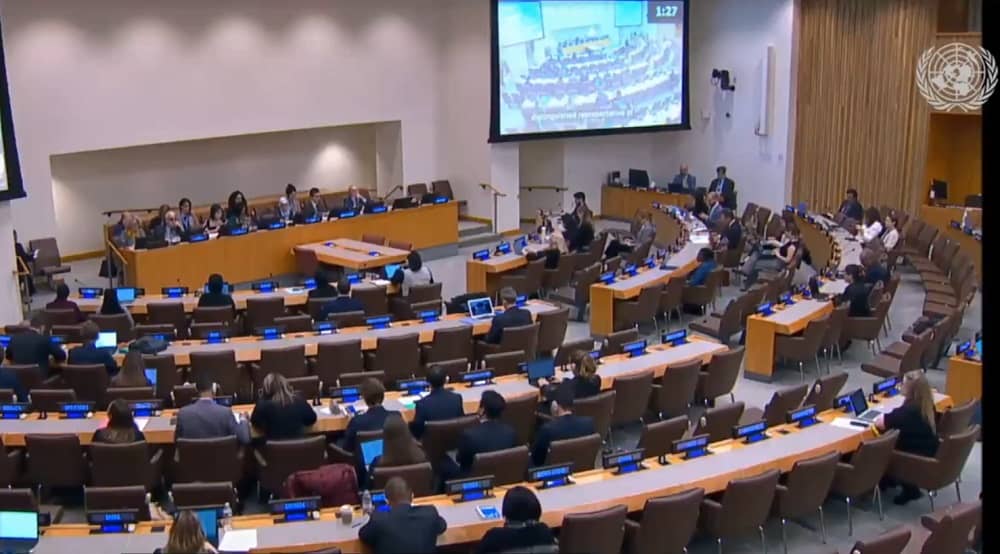
The session followed a report by UN Special Rapporteur Mai Sato, whose findings spotlighted severe rights violations and emphasized Iran’s disregard for universal human rights principles.
Sato’s report condemned Iran’s extensive use of the death penalty, especially targeting ethnic and religious minorities, juveniles, and women. She argued that sanctions cannot justify Iran’s internal repression and highlighted the regime’s continuous restrictions on civil liberties, including arbitrary arrests, torture, and internet shutdowns. She also called for women’s freedom to choose their attire without fear of punishment. “The solution to tension cannot simply be subjecting human rights to cultural and religious preferences,” she emphasized, underlining the importance of universal human rights.
#Iran: must prioritize women’s rights, the right to life, and improve transparency, says UN expert @drmaisato . In her first report, she highlights the alarming increase in executions and the deteriorating #humanrights situation for women and girls.https://t.co/RcrIryMaw3 pic.twitter.com/rUU8rLYILb
— UN Special Procedures (@UN_SPExperts) November 1, 2024
The European Union and its allies echoed Sato’s critique, condemning the Iranian regime’s execution rates, discrimination, and repressive measures against women and minorities. Countries including France, the Czech Republic, and the United Kingdom criticized Iran’s systemic targeting of activists and protesters under national security laws, with a particular focus on the rise in death sentences for female activists.
“We are seriously concerned about the apparent new trend of sentencing female activists to death,” a Czech representative stated, urging Iran to cease using capital punishment as a tool to silence dissent.7444
Congrats to @drmaisato on her first ID at Third Committee including laying out a clear vision for the next 6 years of the mandate. Iran’s offer of providing ‘information’ is promising. @BirkbeckUoL @impactiran https://t.co/aUKcqGCtlU
— Ahmed Shaheed (@ahmedshaheed) November 2, 2024
The U.S. condemned Iran’s cross-border targeting of opposition figures and surveillance activities abroad, highlighting incidents of arbitrary detention and the violent suppression of peaceful protesters. Meanwhile, Australia condemned the oppressive treatment of women and journalists, emphasizing harsh prison conditions and restrictions on freedom of expression.
Other voices from Iceland, Switzerland, and Norway urged Iran to end the death penalty, respect civic freedoms, and cooperate with international human rights bodies. Ukraine, while condemning Iran’s internal repression, linked it to Iran’s support of Russia’s conflict in Ukraine, noting the Iranian regime’s provision of drones to Russia, which has exacerbated civilian casualties.
UN Special Rapporteur on the situation of human rights in Iran @drmaisato speaks at the Third Committee, 38th plenary meeting – General Assembly, 79th session pic.twitter.com/kEY7UTx0LT
— IRAN HRM (@IranHrm) November 1, 2024
Canada and Ireland added their voices, calling on Iran to protect freedom of belief and expression and urging the regime to permit unrestricted access for UN investigators. The session highlighted a shared global stance, with nations demanding that Iran uphold its obligations under international human rights standards.
Observers point out that despite attempts to frame President Pezeshkian as a moderate, the surge in executions and suppression under his rule signals that the regime remains committed to repression as a means of control, marking little progress toward reform.

MEK Iran (follow us on Twitter and Facebook), Maryam Rajavi’s on her site, Twitter & Facebook, NCRI (Twitter & Facebook), and People’s Mojahedin Organization of Iran – MEK IRAN – YouTu