The demonstrations underline the country’s deepening economic crisis, with citizens calling out the government for its failure to fulfill longstanding promises and respond to widespread economic hardship.
In Yazd, protests broke out among nurses from several hospitals, including Sadoughi, Rahnamoun, and Afshar. Their demands centered on higher wages and improved working environments, with protests intensifying as Nurses Day approaches in Iran. The timing reflects widespread frustration within the healthcare sector, where stagnant pay and difficult working conditions remain unaddressed by the government.
November 4—Yazd, central Iran
Nurses at Sadoughi, Rahnamoun, Afshar, and other hospitals continue protests as the government refrains from addressing their demands for better wages and working conditions.#IranProtestspic.twitter.com/lqNedNPQbP— People's Mojahedin Organization of Iran (PMOI/MEK) (@Mojahedineng) November 4, 2024
Similarly, nurses in Zanjan and Bushehr took to the streets with similar grievances, seeking compensation that reflects the risks and demands of their work. In Zanjan, outrage spiked after the recent arrest of Moharram Ali Ramazani, a prominent nursing representative, during a Nurses Day event. His detention has fueled solidarity and anger among healthcare workers, who view the arrest as a retaliatory move by authorities unwilling to address legitimate complaints.
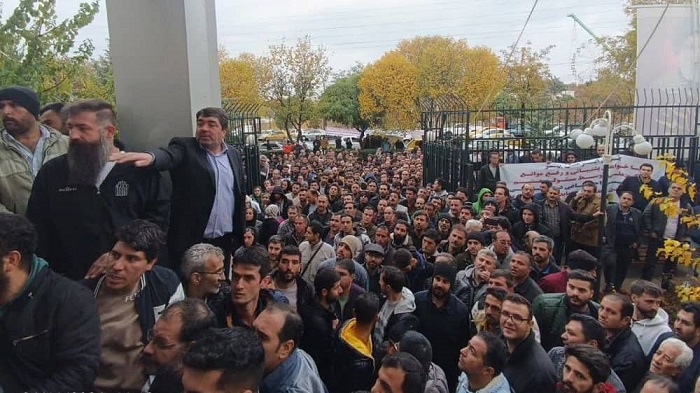
Retirees and pensioners from the Telecommunications Company of Iran joined the movement, with protests reported in cities including Isfahan, Shiraz, Kermanshah, Bijar, Bandar Abbas, Ilam, and Tabriz. Demonstrators chanted, “This much injustice, no nation has seen,” pointing to deteriorating living conditions as pension adjustments continue to lag behind rising inflation. In Ahvaz, retirees further expressed solidarity with detained workers, highlighting the interconnected struggles of Iran’s aging workforce.
November 4—Iran
Retirees and pensioners of the Telecommunications Company of Iran in Isfahan, Kermanshah, Bijar, and Shiraz rally to protest low pensions and poor living conditions. #IranProtestspic.twitter.com/ARIp2Wdeo9— People's Mojahedin Organization of Iran (PMOI/MEK) (@Mojahedineng) November 4, 2024
The capital, Tehran, saw retired employees of the Islamic Republic of Iran Broadcasting (IRIB) protesting near the Balar Mosque, citing economic hardships and calling for pension reforms. The gathering of retirees from a state-run organization reflects widespread frustration that transcends public and private sectors.
Workers in Ilam also rallied for contract reform within the Electricity Company, emphasizing inadequate pay and low job security. Meanwhile, in Zanjan, creditors of the state-run Maskan Melli housing company protested over prolonged delays in promised housing projects. Some creditors have waited over five years for homes they had paid substantial deposits on, adding financial strain to the already mounting frustrations.
November 4—Ilam, western Iran
Official and contract workers of Ilam Electricity Company rally to protest poor living conditions, low wages, and bad contract conditions.#IranProtests pic.twitter.com/JmhmBbsAgi— People's Mojahedin Organization of Iran (PMOI/MEK) (@Mojahedineng) November 4, 2024
Across Iran, these widespread demonstrations signal increasing pressure on the government to address longstanding economic grievances. Healthcare workers, retirees, and contract employees continue to voice their demands, highlighting a growing divide between citizens’ needs and the government’s inaction. While authorities have attempted to downplay these issues, the persistence and scale of these protests underscore a significant crisis affecting nearly every sector of Iranian society.

MEK Iran (follow us on Twitter and Facebook), Maryam Rajavi’s on her site, Twitter & Facebook, NCRI (Twitter & Facebook), and People’s Mojahedin Organization of Iran – MEK IRAN – YouTu