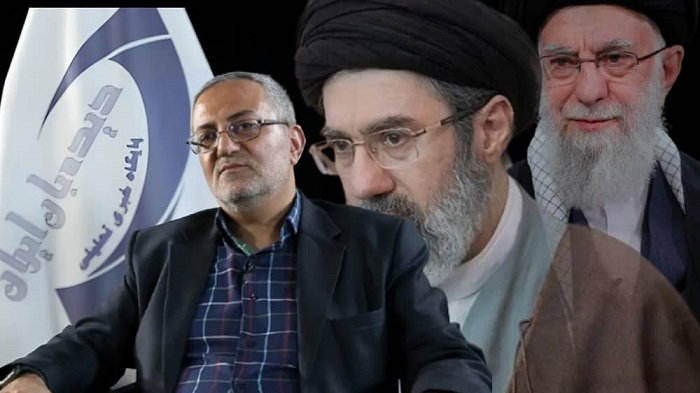
His recent accusations, which echo his decade-old disclosures, target influential officials within Iran’s ruling class. Notably, Palizdar’s praises for Mojtaba Khamenei, son of Supreme Leader Ali Khamenei, suggest a calculated narrative. This rhetoric portrays Mojtaba as the one capable of cleansing Iran’s corruption-riddled system, raising questions about Iran’s future leadership and the regime’s underlying motives.
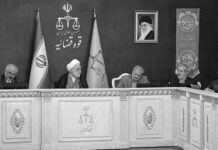
In 2008, Palizdar made headlines by accusing prominent Iranian figures, including former judiciary head Mohammad Yazdi, ex-President Rafsanjani, and top clerics, of widespread corruption. His allegations led to a prison sentence but also sparked speculation over his role within the regime, particularly after his early release. A decade later, Palizdar’s recent media appearance revisits similar accusations against now-deceased or politically sidelined officials. This time, however, he operates with impunity, unafraid of repercussions.
Khamenei’s Circle and the Complex Incoherent World of Iran’s Power Strainhttps://t.co/WZ6tJu2lo8
— NCRI-FAC (@iran_policy) May 9, 2023
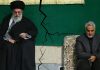
Palizdar’s latest claims specifically call out figures like Rafsanjani’s family, alleged to have exploited import taxes, and Gholam-Ali Haddad-Adel, linked to corrupt land deals. He accuses the late cleric Mahmoud Hashemi Shahroudi’s family of seizing gold mines for personal gain. Yet, conspicuously absent from his accusations is any direct criticism of Supreme Leader Khamenei. Instead, Palizdar lauds Mojtaba as a potential reformer, a figure with the “spirit to confront corruption.” His statements suggest that Mojtaba, unlike other elite figures, could restore integrity within the regime.
The timing of these remarks aligns with growing speculation about Iran’s succession. Recently, Mojtaba Khamenei halted his advanced religious teachings, describing it as a personal choice. Analysts, however, view this move as strategic, positioning him for greater leadership responsibilities amidst rumors of Ali Khamenei’s deteriorating health. This narrative recalls similar efforts when Ebrahim Raisi rose to the presidency, touted as a reformer committed to justice. Palizdar’s exposés now cast Mojtaba as Iran’s next potential leader, diverting attention from the regime’s longstanding corruption.
Son of #Iranian Regime’s Supreme Leader Suspends Religious Classes Amid Growing Speculation About Successionhttps://t.co/pxdrusavZD
— NCRI-FAC (@iran_policy) September 24, 2024
The regime appears to be steering public opinion toward a father-to-son succession—a move that contradicts Iran’s anti-monarchist founding principles. By championing Mojtaba’s image, Khamenei aims to ensure continuity, attempting to shield his legacy by using Palizdar as a tool to foster support. However, for Iranians weary of hollow promises, this strategy may further erode trust in the regime. Rather than revitalizing loyalty, this carefully crafted narrative risks exacerbating public disillusionment, revealing the desperation within a system struggling to maintain relevance.