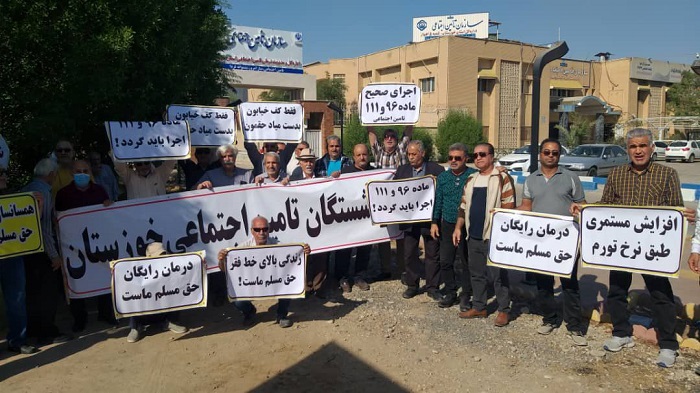
The demonstrations reflect a deepening wave of discontent sweeping the nation, as various sectors of society demand urgent change. In Tehran, retired teachers from the 2022 cohort gathered outside the presidential office on Pasteur Street, symbolically holding 10,000-toman bills to mock the government’s handling of their grievances.
Chanting slogans like, “Ranking is our right—it’s the fruit of our hard work,” they criticized the salary equalization scheme as deceptive and inadequate to address their financial struggles. Nearby, nurses and healthcare workers from Loghman Hospital also protested, demanding fair wages and overdue compensation.
November 16—Tehran, Iran
Protest rally by retired teachers and education sector employees, demanding the implementation of pension adjustment laws and the payment of overdue wages and bonuses.#IranProtestspic.twitter.com/Ezjqy8fTfO— People's Mojahedin Organization of Iran (PMOI/MEK) (@Mojahedineng) November 16, 2024
“What we’ve received is nothing but trickery and lies,” said one teacher, while a nurse lamented, “We’ve waited too long for the promises of fair pay to materialize. “In Shiraz, nurses at Rajai Hospital marked the ninth consecutive day of their strike, calling out poor wages and grueling working conditions.
“We cannot continue to work under these conditions,” said one striking nurse. Despite repeated assurances, the government has yet to address their demands, intensifying frustration within the healthcare sector.
Tabriz, northwest Iran
The brave youth of Iran have written "Down with Khamenei" on the wall of a base of the regime's repressive security forces.#IranProtests pic.twitter.com/HmdwwQbiuU— People's Mojahedin Organization of Iran (PMOI/MEK) (@Mojahedineng) November 13, 2024
Protests extended beyond economic issues, as students voiced their dissatisfaction with infrastructure and safety concerns. On November 13, students at the Arts University of Isfahan rallied against inadequate dormitory conditions, particularly for female students.
Similarly, students at Khajeh Nasir University in Tehran protested a lack of emergency facilities, demanding immediate improvements. In Tabriz, youth opposition was evident through graffiti bearing bold slogans like “Down with Khamenei” on a security forces base.
November 13—Isfahan, central Iran
Students of Arts University of Isfahan rally to protest the poor services of the facilities, especially the dormitory of female students. #IranProtests pic.twitter.com/wCuwNX9inr— People's Mojahedin Organization of Iran (PMOI/MEK) (@Mojahedineng) November 13, 2024
The defiant act underscored the growing disillusionment of Iran’s younger generation with the regime. Meanwhile, in Yasuj, physicians and faculty members protested violence against healthcare workers, including recent attacks on doctors, highlighting a dangerous work environment and demanding action.
These demonstrations coincide with the fifth anniversary of the November 2019 uprising, a poignant reminder of the ongoing resistance against the clerical regime. Resistance Units have actively supported protests, using graffiti and acts of solidarity to highlight the government’s failures and inspire defiance.
PMOI Resistance Units across Iran mark the fifth anniversary of the November 2019 uprising.#PMOI #IranProtests pic.twitter.com/pvsJnbBMLv
— People's Mojahedin Organization of Iran (PMOI/MEK) (@Mojahedineng) November 16, 2024
As Iran’s economic crisis deepens, the voices of workers, students, and professionals grow louder, demanding not only better wages and living conditions but also accountability and systemic reform.