The demonstrations, spanning multiple provinces, highlighted growing discontent with the regime’s inability to address the country’s pressing economic and social challenges. In Shahrekord, western Iran, frustrated customers of the state-run Bonyad-e Maskan housing company staged a dramatic protest by throwing mud at provincial offices. Wielding banners accusing the company of corruption and theft, they demanded justice for the long-delayed delivery of their homes.
Meanwhile, in Ilam, dismissed workers from the Arghavan Petrochemical Company rallied outside the provincial governorate. Their demands centered on policy reforms to prioritize local employment, spotlighting the regime’s neglect of the working class.
December 1—Shahrekord, western Iran
Defrauded customers of the state-run Bonyad-e Maskan housing hold protest rally at the provincial offices of the company, protesting corruption and the non-delivery of their purchased homes.#IranProtests pic.twitter.com/gdU2Cohm5L— People's Mojahedin Organization of Iran (PMOI/MEK) (@Mojahedineng) December 1, 2024
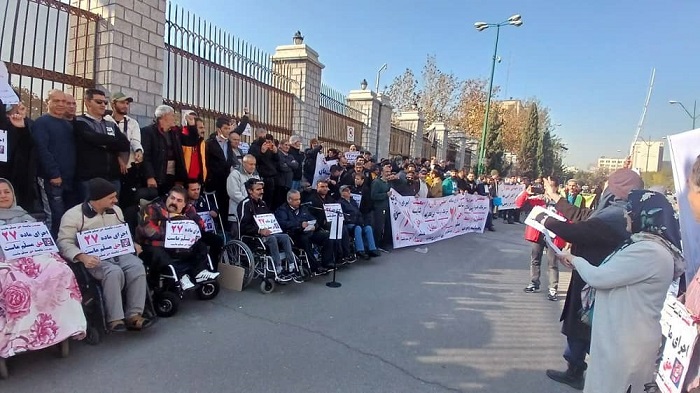
Tehran became a focal point for various protests. Disabled citizens gathered outside the Majlis (parliament), chanting, “Injustice is enough; our tables are empty,” as they urged enforcement of laws supporting those unable to work. Retired teachers, still waiting for 15-month-overdue bonuses, joined the outcry alongside steel industry retirees demanding better pensions and living conditions.
In Khuzestan Province, economic grievances were palpable. In Shush, Social Security retirees demanded higher pensions, chanting, “Under the burden of inflation, the people’s backs are breaking.” In Ahvaz, Golestan Hospital nurses protested low wages, while Social Security retirees condemned both the government and parliament for neglecting public welfare.
December 1—Tehran, Iran
Disabled people hold protest rally in front of the Majlis (parliament), demanding the implementation of the law that requires the government to provide the basic needs of disabled people who can't work.#IranProtestspic.twitter.com/K6kEUKqWjg— People's Mojahedin Organization of Iran (PMOI/MEK) (@Mojahedineng) December 1, 2024
Southern Iran also saw unrest. In Kerman, retired Kerman Coal Company employees rallied against inadequate pensions and poor access to healthcare. In Yasuj, concerns over water shortages sparked protests against a dam construction project.
Further north in Gorgan, small landowners demonstrated against land ownership disputes and corruption. These calls for accountability underscored deep frustration with the regime’s failure to resolve longstanding injustices.
December 1—Shush, southwest Iran
Retirees and pensioners of the Social Security Organization hold protest rally, demanding higher pensions and better living conditions.#IranProtestspic.twitter.com/9AvZ8ervK2— People's Mojahedin Organization of Iran (PMOI/MEK) (@Mojahedineng) December 1, 2024
Amid economic grievances, violence against marginalized communities added to the turmoil. In Bandar Abbas and Fahraj, reports emerged of fatal shootings of Baluch individuals by security forces, including a fuel porter. Such incidents, part of a broader pattern of violence against the Baluch community, have intensified calls for systemic change.
The demonstrations reflect mounting dissatisfaction across Iranian society, from retirees and workers to marginalized ethnic groups. Unified by economic hardship and a lack of governmental accountability, these protests signal an urgent demand for reforms to address systemic issues and uphold citizens’ rights.