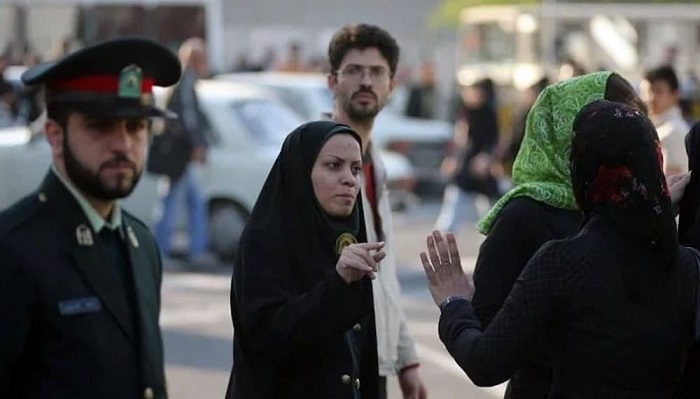
The “Law for Supporting Families by Promoting the Culture of Chastity and Hijab” has sparked fierce debate within the regime’s leadership, reflecting their shared concerns about survival and differing strategies for maintaining control.
Initially set for enforcement on December 13 after parliamentary approval and ratification by the Guardian Council, the law’s implementation has been delayed by internal disputes. The legislation aims to enforce stricter dress codes to suppress dissent and reinforce control over women, but it has faced resistance even among loyalists.
#Iran News in Brief
The clerical regime’s Parliament Research Center has proposed a bill on #hijab, which allows the morality police patrols to enforce financial penalties on those they perceive as violating the dress code.https://t.co/qIAITfXbax pic.twitter.com/woT8JaTLMS— NCRI-FAC (@iran_policy) July 26, 2023
President Masoud Pezeshkian, a staunch ally of Supreme Leader Ali Khamenei, publicly expressed reservations during a December 3 televised interview. While affirming allegiance to Khamenei, Pezeshkian warned of potential societal backlash. “We have discussed this law extensively. As the one responsible for implementing it, I have many questions. Society will not accept this, and implementing it will create dissatisfaction,” he stated. He highlighted enforcement challenges, such as penalizing taxi drivers and restaurant owners for serving unveiled women and questioned the feasibility of such measures.
Hardline factions swiftly criticized Pezeshkian’s comments. MP Qasem Ravanbakhsh accused the president of undermining the regime’s authority, stating, “The president, who has sworn to uphold the Constitution and enforce laws, now questions the law on television.” Pro-regime outlets like Mehr News Agency defended the law, claiming opponents were spreading misinformation and asserting that enforcement mechanisms would be effective.
Facing public backlash over its mandatory #hijab policy, the clerical regime in #Iran orchestrates elaborate festivals to feign popular backing for its oppressive measures. Discover what drives the regime's fear in this revealing expose. pic.twitter.com/OhagqDGBgM
— NCRI-FAC (@iran_policy) May 9, 2024
The internal discord extends to Pezeshkian’s administration. Culture Minister Abbas Salehi admitted that the law remains unfinalized, with ongoing “complementary dialogues” to address its challenges. Government spokesperson Fatemeh Mohajerani also highlighted concerns over societal damage, emphasizing the need for negotiation to minimize harm.
Supporters of the law, such as Hamshahri newspaper, argue it reflects popular will and is rooted in Islamic principles. However, critics, including political advisors like Sakineh Sadat Pad, caution against rushed implementation. Legal and sociological experts warn that punitive enforcement could reignite public anger, echoing the 2022 protests triggered by the morality police’s actions.
What’s Behind #Iran’s Regime Staged Façade to Show Popular Support for #Hijab Crackdownhttps://t.co/u7k63Icjoi
— NCRI-FAC (@iran_policy) May 5, 2024
The regime’s struggle reflects a larger battle to reconcile ideological rigidity with societal pressures. While hardliners view strict enforcement as vital to preserving the regime’s core, moderates fear it will fuel unrest and instability. Supreme Leader Khamenei’s determination to push forward risks intensifying internal and external challenges, potentially defining the regime’s trajectory in the months ahead.