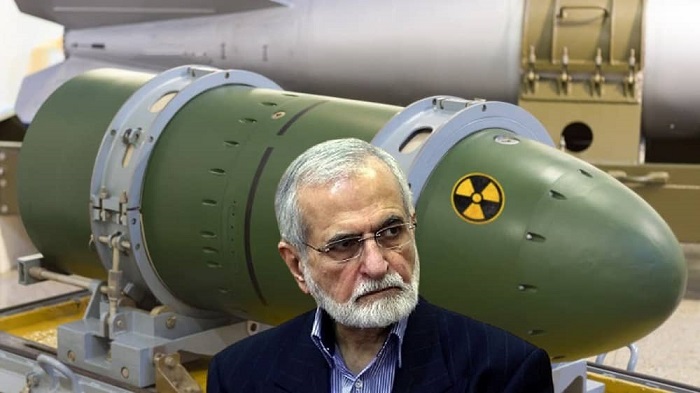
While reiterating Iran’s official stance against nuclear weapons, Kharrazi issued a veiled warning, stating, “If they take actions against us, naturally, we will respond in kind when the time is right.” This ambiguous declaration has heightened concerns about Iran’s potential to leverage its nuclear program in response to mounting international isolation and regional instability.
Kharrazi’s remarks reflected Iran’s longstanding dual approach: engaging in dialogue while resisting external pressures. “We are prepared for both dialogue and countering pressures,” he said. However, critics argue this strategy has historically served as a smokescreen, enabling Tehran to advance its nuclear capabilities while avoiding firm consequences.
The Iranian regime is grappling with significant challenges, including the collapse of its Syrian ally and diminishing regional influence. Kharrazi attempted to minimize these setbacks, attributing recent developments to what he called an “American Israeli plan.” Nonetheless, his acknowledgment of the Syrian army’s lack of resistance highlights Tehran’s waning grip in the region.
NCRI Editorial: The Escalation of #Iran’s Nuclear Ambitions: A Call for Decisive Actionhttps://t.co/0iTb4Lq0Fm
— NCRI-FAC (@iran_policy) December 25, 2024
Iranian officials have often used confrontational rhetoric to deflect scrutiny and maintain internal cohesion. This was evident last month when Foreign Minister Abbas Araqchi threatened to escalate nuclear activities if the International Atomic Energy Agency (IAEA) issued a resolution against Iran. Similarly, parliamentarian Ahmad Naderi suggested pursuing nuclear weapons to “restore balance in the region,” citing Israel’s capabilities as a counterpoint.
For years, Iran has mastered the tactic of nuclear extortion, delaying decisive international actions through the promise of dialogue. Meanwhile, it has enriched uranium to near-weapons-grade levels, restricted inspections, and concealed activities at undeclared sites. Kharrazi’s statements reinforce Tehran’s commitment to this strategy, leaving the international community at a crossroads.
To address this escalating threat, experts advocate for reinstating comprehensive sanctions, enforcing rigorous inspections, and supporting grassroots efforts for democratic change in Iran. While punitive measures can curb Tehran’s nuclear ambitions temporarily, regime change is seen as the only enduring solution to ensure regional stability and global security.
#Iranian Officials Issue Nuclear Threats Amid Growing International Pressure on #Nuclear and Missile Programshttps://t.co/EDRApQRr6S
— NCRI-FAC (@iran_policy) November 18, 2024
As Tehran faces mounting pressure from both domestic unrest and international scrutiny, the coming months will test its ability to navigate a rapidly shifting geopolitical landscape while confronting its growing vulnerabilities.

MEK Iran (follow us on Twitter and Facebook), Maryam Rajavi’s on her site, Twitter & Facebook, NCRI (Twitter & Facebook), and People’s Mojahedin Organization of Iran – MEK IRAN – YouTu