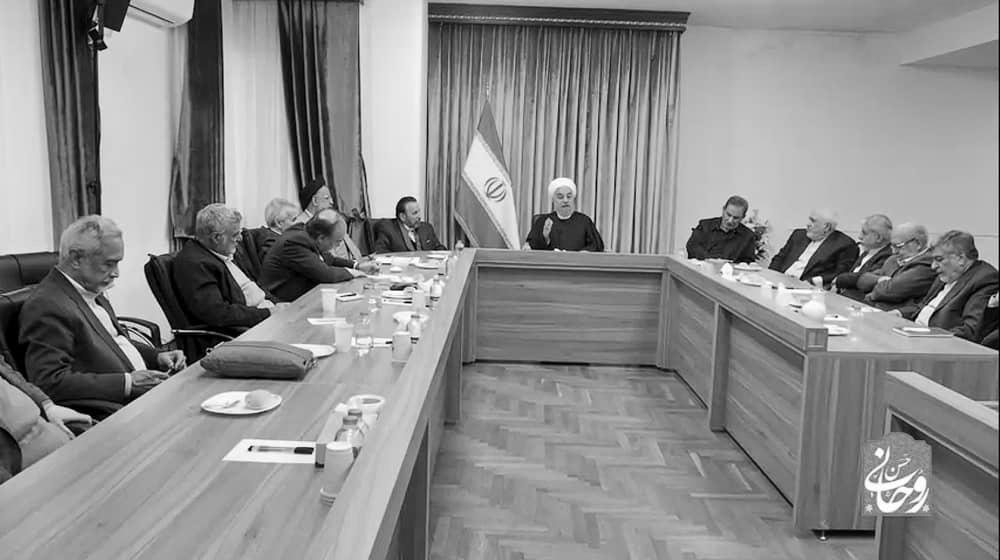
Growing divisions within Iran’s clerical leadership have surfaced as rival factions openly clash over key issues, including negotiations with the United States and compliance with international financial regulations. These internal disputes have undermined Supreme Leader Ali Khamenei’s authority, exposing unprecedented fractures within the regime’s power structure.
Former Iranian President Hassan Rouhani has openly challenged Khamenei’s rigid stance on negotiations with Washington. Rouhani suggested that Khamenei’s opposition is not absolute, stating that the Supreme Leader’s position could shift under different conditions in the coming months. Acknowledging Iran’s mounting economic and security challenges, Rouhani emphasized the urgent need for unity and practical solutions, warning that the regime faces existential threats if left unchecked.
Khamenei’s Survival at Stake in #Iran—Refuses Talks, Doubles Down on Hostilityhttps://t.co/2QEJdEgIXI
— NCRI-FAC (@iran_policy) March 13, 2025
Rouhani also highlighted past U.S.-Iran negotiations, citing instances in Iraq and Afghanistan where Khamenei had overseen and approved diplomatic engagements. He pointed to Iran’s significant financial losses, estimating that U.S. sanctions have cost the country between $700 and $800 billion since the American withdrawal from the 2015 nuclear deal. According to Rouhani, overcoming Iran’s economic crises will be impossible without “constructive engagement with the world.”
These comments come in direct opposition to Khamenei’s repeated rejections of U.S. diplomatic overtures. On March 12, Khamenei dismissed former U.S. President Donald Trump’s call for negotiations, labeling it a “deception” and asserting that such talks would only lead to harsher sanctions. On March 8, he went further, describing negotiations with the U.S. as “irrational, unwise, and dishonorable.”
Why Khamenei Eliminated Hassan Rouhani from Upcoming #Iranian Electionshttps://t.co/Ja5RmzgWRW
— NCRI-FAC (@iran_policy) January 26, 2024
Supporters of Khamenei have echoed his rejectionist stance. In Karaj, Khamenei’s representative, Hosseini Hamedani, warned that “any negotiations with America mean the end of the Islamic Republic.” Similarly, in Arak, Friday Prayer Leader Ghorbanali Dori Najafabadi dismissed talks with the U.S. as a tool of “bullying and coercion.”
Beyond diplomacy, Iran’s stance on the Financial Action Task Force (FATF) has intensified divisions within the regime. A special commission within the Expediency Council reportedly approved Iran’s accession to the Palermo and CFT conventions—critical for removing Iran from the FATF blacklist. However, hours later, council spokesperson Mohsen Dehnavi denied any ongoing discussions, exposing conflicting narratives within Iran’s leadership.
Further complicating the situation, conservative MP Mahmoud Nabavian warned against internal disputes, particularly over hijab legislation, cautioning that such controversies could “inflame the country” and provoke foreign interference.
#Khamenei Rejects U.S. Talks, Fears Concessions Will Crumble His Regime in #Iranhttps://t.co/Ev7k87roJS
— NCRI-FAC (@iran_policy) March 8, 2025
As rival factions battle over Iran’s future, the regime’s internal strife is weakening its grip on power. With economic hardship and public unrest mounting, the Iranian people closely watch as the clerical establishment struggles to maintain control.

MEK Iran (follow us on Twitter and Facebook), Maryam Rajavi’s on her site, Twitter & Facebook, NCRI (Twitter & Facebook), and People’s Mojahedin Organization of Iran – MEK IRAN – YouTu