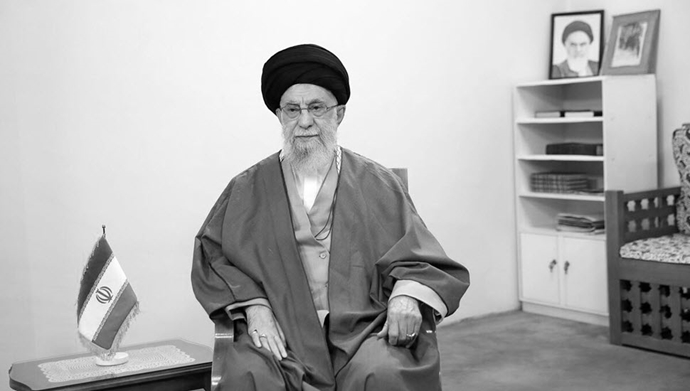
In the Persian calendar year 1403 (March 2024–March 2025), Iran’s ruling regime faced a cascade of political and strategic defeats so undeniable that even Supreme Leader Ali Khamenei was compelled to acknowledge them in his Nowruz (Persian New Year) message—a rare move signaling a deepening crisis within the Islamic Republic.
Khamenei compared the year to 1360 (1981), a turning point marked by the brutal suppression of dissent and the rise of organized opposition led by the People’s Mojahedin of Iran (PMOI/MEK). “The incidents that occurred repeatedly this year were similar to those of the year 1360 and brought hardship and suffering for us,” he admitted, drawing a parallel that, intentionally or not, underscored the growing threat to his regime’s legitimacy.
Among the “bitter events” Khamenei cited were the deaths of President Ebrahim Raisi and Iranian advisors in Syria and Lebanon—developments that, while serious, only scratch the surface of the regime’s deeper turmoil. Notably absent from his speech was the reported fall of Bashar al-Assad in Syria—a major geopolitical blow to Tehran’s ambitions in the region. Assad’s regime, long seen as a critical ally and extension of Iranian influence, had received billions in support and thousands of Iranian military personnel under the banner of “Defenders of the Shrine.” Its sudden collapse not only shook Tehran’s regional strategy but also ignited rare introspection within Iranian media.
Prominent outlets such as Ham-Mihan, Shargh, and Entekhab openly questioned the regime’s decades-long investment in Assad. One MP, Mohammad Manan Raisi, bluntly stated: “If this isn’t divine wrath, then what is?”
Equally damaging was the widespread boycott of Iran’s recent parliamentary and Assembly of Experts elections. Analysts and even regime insiders labeled the turnout the lowest in the regime’s history—a symbolic rejection by the public of the regime’s legitimacy.
Adding fuel to the fire is the resurgence of domestic dissent, with growing anti-regime activities and organized resistance reported across the country. Yet these were conspicuously absent from Khamenei’s address, suggesting a leadership increasingly out of touch with, or fearful of, the scale of public discontent.
As Iran navigates the fallout from 1403, cracks in its domestic and foreign policy foundations continue to widen. Whether the regime can withstand the growing internal and external pressure remains an open—and urgent—question.

MEK Iran (follow us on Twitter and Facebook), Maryam Rajavi’s on her site, Twitter & Facebook, NCRI (Twitter & Facebook), and People’s Mojahedin Organization of Iran – MEK IRAN – YouTu