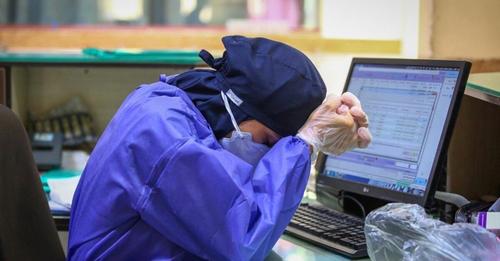
The first incident in this year’s tragic series was the death of Parastou Bakhshi, a young cardiologist at Delfan Hospital. Her suicide was soon followed by the deaths of Dr. Samira Al-Saeedi, an associate professor of rheumatology at Tehran University of Medical Sciences, and Dr. Zahra Maleki, a physician on a medical mission in Jask, both occurring within a week in May.
This troubling trend of physician suicides has been acknowledged publicly since 2018, though it is often reported under the ambiguous term “sudden death.” Since 2019, the medical community has experienced two significant waves of suicides. The second wave, ongoing for the past three years, has seen 13 resident doctors take their own lives, with a particularly intense period in December 2022 when three residents committed suicide in a single week.
Dr. Hadi Yazdani, a medical professional with a doctorate, likened the rising suicides to a “domino effect,” attributing the phenomenon to feelings of helplessness and despair. He suggested that systemic issues within the Ministry of Health, such as the mandatory service law, the uneven distribution of medical staff, and interference from local authorities, contribute significantly to the problem.
Rising Rates of Suicides Among Female Doctors in #Iran
Iranian doctors, grapple with grueling working conditions with shifts, often exceeding 30 hours, and receive a meager monthly salaries ranging of approximately $125 to $172.https://t.co/i9I7W7f8Jq— Women's Committee NCRI (@womenncri) May 6, 2024
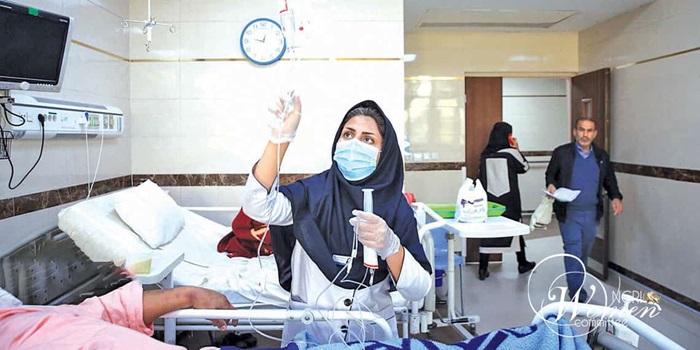
Additionally, the overwhelming workload, insufficient salaries, and lack of job security exacerbate the stress faced by medical staff. Data from the Migration Observatory, cited by Khabar Online, revealed that by mid-2022, 74% of doctors and nurses in Iran expressed a desire to emigrate. Over the past year, more than 4,000 doctors have left the country, indicating a profound dissatisfaction within the medical community.
The spokesperson for Iran’s Medical System Organization has acknowledged the increase in suicides, pointing to high workloads and inadequate compensation as primary factors. They described the issue as “multi-faceted and complex,” noting that resident doctors struggle to afford basic living expenses in Tehran, leading to hopelessness about their future.
Reza Laripour, in a conversation with the state-run ILNA news agency, emphasized that the current economic and social pressures are destroying the expectations and hopes that medical students hold, driving them into a cycle of stress, anxiety, depression, and ultimately, suicide.
The original report by Khabar Online, detailing these suicides, has since been removed, displaying a message that the page no longer exists, which adds to the opacity surrounding this critical issue. The deletion of such reports only underscores the need for transparency and urgent action to address the mental health crisis among Iran’s medical professionals.

MEK Iran (follow us on Twitter and Facebook), Maryam Rajavi’s on her site, Twitter & Facebook, NCRI (Twitter & Facebook), and People’s Mojahedin Organization of Iran – MEK IRAN – YouTu