This manipulation of public perception is not new but has intensified with each wave of Afghan migration. The tactic serves as a deflection from Iran’s pressing internal challenges, including economic hardships, human rights abuses, and mounting political unrest.
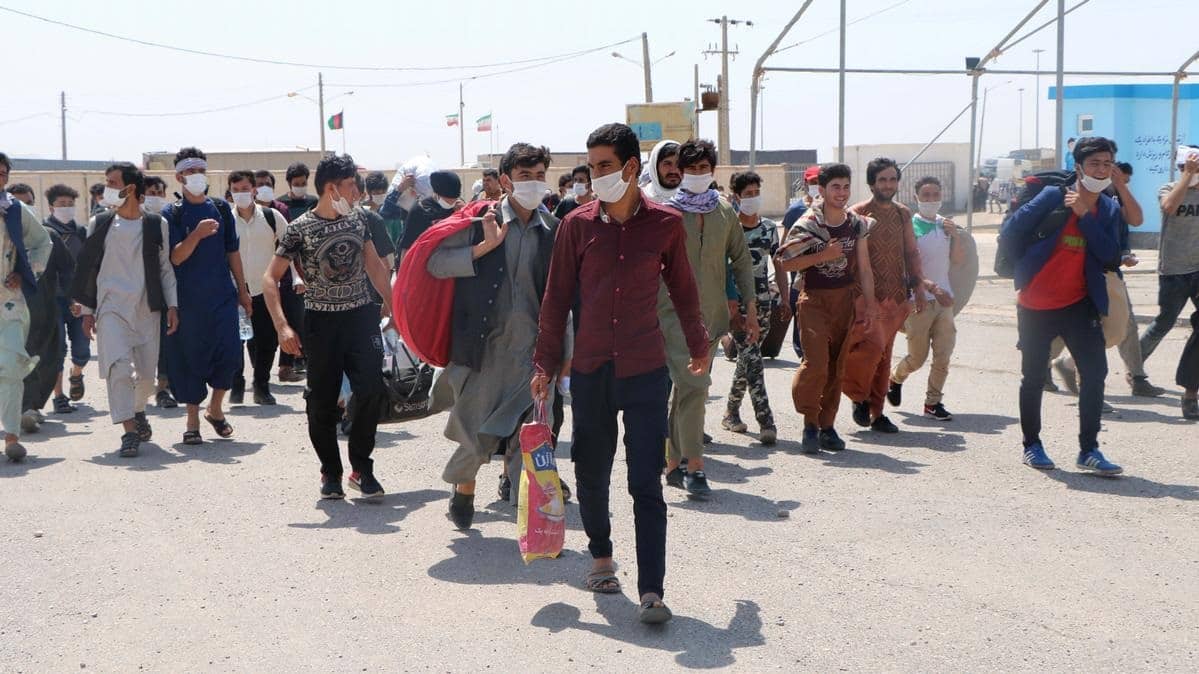
The Afghan refugee crisis in Iran began in 1979 with the Soviet invasion of Afghanistan, leading to the first major influx of Afghan refugees. Successive waves followed the rise of the Taliban in the 1990s, the U.S. invasion of Afghanistan in 2001, and most recently, the Taliban’s return to power in 2021. According to unofficial estimates, between 1 and 1.5 million Afghan refugees currently reside in Iran, a situation that has sparked significant controversy.
#Iran’s Regime Exploits #Afghan Migrants amidst Its Own Criseshttps://t.co/21g1Ao2B8T
— NCRI-FAC (@iran_policy) October 11, 2023
The Iranian regime’s stance on Afghan refugees has been contradictory. While claiming that the issues stem from the illegal entry of refugees and poor management, the regime frequently disseminates misleading and inflammatory information.
One such instance occurred in August 2023 when Davood Zare, Director-General of Health Insurance for Alborz Province, made questionable statements about Afghan refugees and birth rates in the region. His claims suggested that Afghan nationals were responsible for a significant portion of births in the province, sparking concerns about their veracity and intent.
#Iran: Zarif’s Lies To Whitewash the Scandal Over Using Afghan Refugees in Iran as Cannon Fodder in the War in #Syriahttps://t.co/LID75H74jm
— NCRI-FAC (@iran_policy) January 24, 2021
This is just one example of how the Iranian regime has used Afghan refugees as scapegoats. State media have spread rumors blaming Afghan migrants for health crises, including leprosy and cholera outbreaks, despite official denials. These distorted or outright fabricated reports fuel public anxiety and xenophobia, with Afghan refugees often painted as a burden or a threat to society.
However, many argue that this narrative is more about political maneuvering than genuine concern. The regime’s rhetoric escalates whenever it faces increased international scrutiny over human rights violations or domestic unrest. Afghan refugees become pawns in a larger geopolitical game, used as a bargaining tool against international bodies like the United Nations High Commissioner for Refugees (UNHCR).
#Iran Regime Coerces Afghans to Fight and Die in #Syriahttps://t.co/kK0zR811ya pic.twitter.com/7iCa1FB68V
— NCRI-FAC (@iran_policy) July 31, 2018
Despite the regime’s propaganda, the Iranian people have lived peacefully alongside Afghan refugees for decades. Afghan migrants, who often perform labor-intensive jobs for minimal wages, have long contributed to Iranian society. Unfortunately, they now find themselves caught in the crossfire of a political struggle, victims of a regime intent on deflecting blame from its failings.