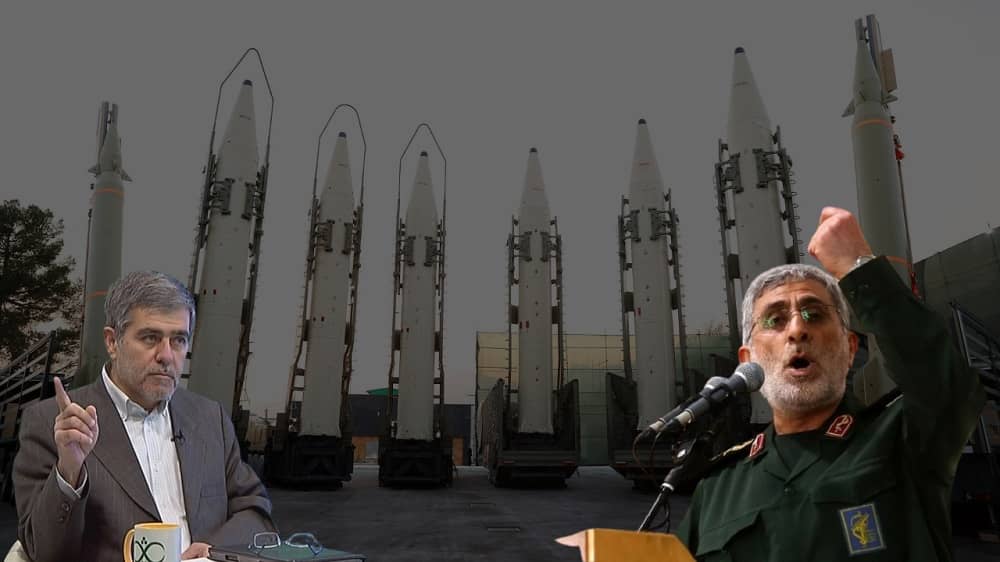
Abbasi’s remarks, made in an interview with the state-run website Rouydad24, underscore a troubling shift in Iran’s nuclear posture.
Abbasi stated, “We do not believe in weapons of mass destruction, but it is unacceptable for those who possess such weapons to misuse their power. Everyone is aware that we can launch satellites, and a country that can launch satellites and place them in specific orbits possesses high standards.” This statement highlights Iran’s advanced technological capabilities, indirectly hinting at its potential nuclear prowess.
In a pointed rebuke to Rafael Grossi, Director General of the International Atomic Energy Agency (IAEA), Abbasi criticized the agency’s perceived lack of independence, suggesting that Iran’s nuclear doctrine is flexible and might evolve. “Although Iran does not believe in weapons of mass destruction, it is unacceptable for those who possess such weapons to misuse their power,” he reiterated.
#Iran News:
Fearing Regional Pressure, Once Again Iran’s Regime Resorts to #Nuclear Bomb Extortionhttps://t.co/LvjE6Ym3dT— NCRI-FAC (@iran_policy) May 9, 2024
Grossi had previously urged Tehran to tone down its nuclear threats in an interview with The Guardian, published on May 14. Despite these warnings, Iranian officials have continued their aggressive rhetoric. Kamal Kharrazi, senior advisor to Supreme Leader Khamenei, and Ahmad Bakhshayesh, a former parliament member, have both hinted at a possible shift in Iran’s nuclear stance. Bakhshayesh even suggested that Iran might already possess nuclear weapons, though this claim remains unverified.
Esmail Qaani, commander of the Quds Force, also issued threats against European countries, accusing France, Germany, and the UK of crimes. His remarks, made during a commemoration ceremony for Mohammad Hadi Haj-Rahimi, a Quds Force commander killed in Syria, underscored Iran’s defiant stance. “The Zionist regime, the United States, and all of the West are too insignificant to stand against the Resistance Front,” Qaani declared, asserting the power of Iran and its allies.
The death of senior commanders in an Israeli attack on April 1 prompted Iran to launch Operation “Vade-e Sadeq” on April 13. This operation involved 331 drones, cruise missiles, and ballistic missiles targeting Israel. However, the attack was largely intercepted and neutralized by Israel and its allies, including the United States, the UK, France, Jordan, Saudi Arabia, and the UAE. Many experts viewed this as a significant military failure for Tehran.
Wary of facing pushback from its warmongering in the #MiddleEastConflict, #Iran's regime has sent another official to play the nuclear extortion card, hinting that its Supreme Leader may reconsider his fatwa and pursue nuclear weapon production. pic.twitter.com/NR14AOpObd
— NCRI-FAC (@iran_policy) April 9, 2024
Qaani’s veiled threats extended to Iran’s neighbors, warning them about over-reliance on U.S. support. This rhetoric reflects Iran’s increasing regional and international isolation and its attempts to compensate through displays of military might and threats.
The Iranian regime’s continued nuclear and missile threats underscore the urgent need for resolute and decisive international action to deter its ambitions. The global community must address these provocations to maintain stability and prevent further escalation in an already volatile region.

MEK Iran (follow us on Twitter and Facebook), Maryam Rajavi’s on her site, Twitter & Facebook, NCRI (Twitter & Facebook), and People’s Mojahedin Organization of Iran – MEK IRAN – YouTu