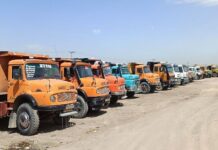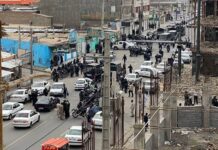
These demonstrations, sparked by economic hardship and professional grievances, are becoming increasingly political as the regime’s inability to address the people’s demands continues to fuel unrest.
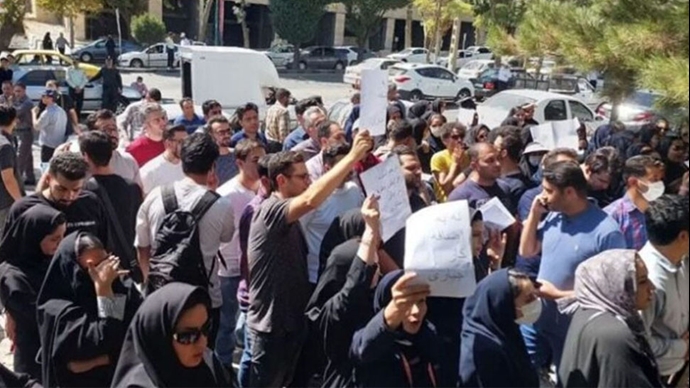
The state-run Eghtesad 24 news website reported on August 30 that Iranian nurses, in particular, have become acutely aware of their rights, rallying under slogans such as “Justice for nurses” and “Stop the exploitation of nursing staff.” These protests have highlighted the increasing unity among nurses, who believe that only through collective action can they achieve fair treatment.
September 7—Isfahan, central Iran
Nurses resume rallies, protesting low wages, unfair tariff laws, poor working conditions, and other problems.#IranProtests pic.twitter.com/TFflvuipyr— People's Mojahedin Organization of Iran (PMOI/MEK) (@Mojahedineng) September 7, 2024
Support from public groups and even segments of the medical community suggests that the nurses’ plight has evolved into a broader social issue.The protests, however, are not limited to healthcare workers. A wave of dissatisfaction has spread across the country, with other groups joining the movement.
Protests by emergency personnel, retirees, oil workers, and even dairy farmers reflect widespread frustration. In Yazd, dairy farmers took to the streets in a dramatic act of protest, pouring out their milk to decry government-set prices that fail to reflect the rising costs of production.
September—Isfahan, central Iran
Retirees of the steel industry hold protest rally, demanding higher pensions and other basic rights.#IranProtestspic.twitter.com/k0Wlbhb4Oe— People's Mojahedin Organization of Iran (PMOI/MEK) (@Mojahedineng) September 1, 2024
The unrest intensified on September 1, when retirees from Tehran, Isfahan, and other cities organized rallies to protest what they described as corrupt regime policies. These retirees, once vital to Iran’s workforce, are now struggling to receive even minimal pension benefits. The frustration culminated in powerful slogans like “Nurses’ livelihood, patients’ health” and “Warmongering is enough, our tables are empty,” reflecting the deep connection between economic grievances and broader political discontent.
The government’s response has been one of repression. Security forces have repeatedly intervened, using force to disperse protests. In Arak, striking workers from the Wagon Pars factory were beaten and arrested for demanding unpaid wages and the reinstatement of dismissed colleagues. Similarly, the protests by nurses and other groups have often been met with arrests and violence.
September—Iran
Workers of the Wagon Pars train and locomotive manufacturer in Arak intend to go to Tehran to continue their protests in front of the presidential palace despite threats and arrests by security forces. pic.twitter.com/WcBQdY9oal— People's Mojahedin Organization of Iran (PMOI/MEK) (@Mojahedineng) September 1, 2024
As protests continue to unfold across the country, it is becoming clear that the people’s demands are no longer confined to professional or economic issues. Many Iranians now see unity and political change as the only viable path to securing their rights. The growing call for freedom, unity, and an end to the regime’s repressive tactics points to a larger movement pushing for deep-rooted political transformation in Iran.