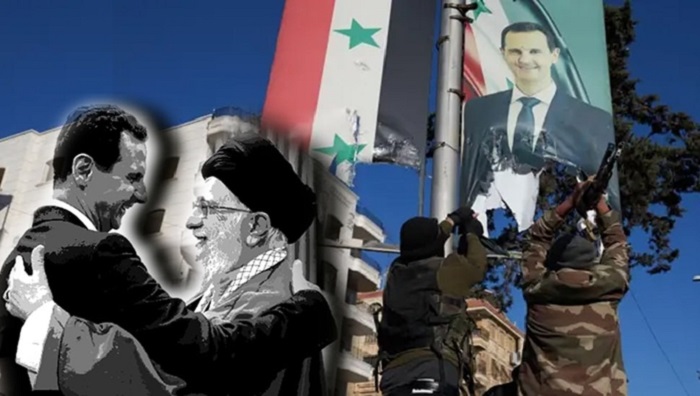
The repercussions of this historic event are profound, as Iranian state media and officials have acknowledged the collapse of their long-standing investments in Syria—a country central to Tehran’s regional strategy.
Ham-Mihan, a state-affiliated Iranian newspaper, grimly noted on December 9 that “all political, economic, and military investments went up in smoke.” Hours before Damascus fell, the state-run Khabar Online website issued a warning, suggesting that the situation threatened Iran itself: “Their goal is to reach Sarpol-e Zahab in western Iran. To prevent the war from reaching Iran, serious actions at a high level must be taken.” The warnings underscored fears of a broader destabilization following Syria’s unraveling.
For decades, the Assad family’s dictatorship in Syria was the linchpin of Iran’s regional influence. From Hafez al-Assad’s support during the Iran-Iraq war to Bashar al-Assad’s alliance with Qassem Soleimani’s Quds Force, Syria has been described as the “tent pole” of Tehran’s strategic depth. Hezbollah leader Hassan Nasrallah quoted Iranian Supreme Leader Ali Khamenei in 2019, stating, “Without Syria, the resistance in Lebanon and Palestine would be marginalized.”
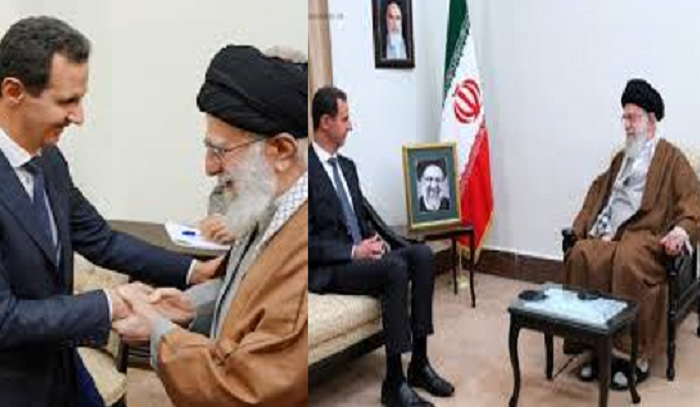
Thousands of members of the Islamic Revolutionary Guard Corps (IRGC) and allied militias were deployed to Syria, underscoring the high stakes Tehran placed on Assad’s survival. The financial and human cost of this intervention was a significant burden on an Iranian populace already struggling with economic hardship.
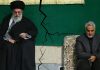
Khamenei has often justified Iran’s costly interventions by framing them as essential to national security. He argued that defending Syrian territory was tantamount to protecting Iranian cities such as Kermanshah and Hamedan. However, the collapse of Assad’s regime exposes the vulnerability of this strategy. Analysts suggest that Tehran’s inability to maintain its “tent pole” in Syria signals a potential weakening of Khamenei’s grip on power in Iran.
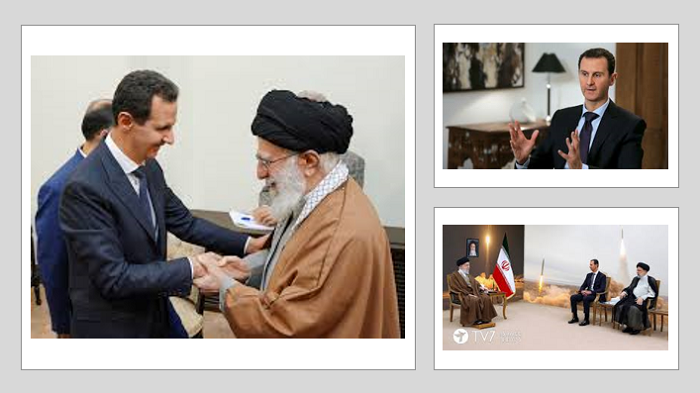
Syrian dissidents and Iranian protesters alike see it as a pivotal moment, signaling the decline of authoritarian regimes in both nations. While Tehran’s leaders scramble to assess the damage, opposition movements in Iran view the development as a beacon of hope for democratic change.

MEK Iran (follow us on Twitter and Facebook), Maryam Rajavi’s on her site, Twitter & Facebook, NCRI (Twitter & Facebook), and People’s Mojahedin Organization of Iran – MEK IRAN – YouTu