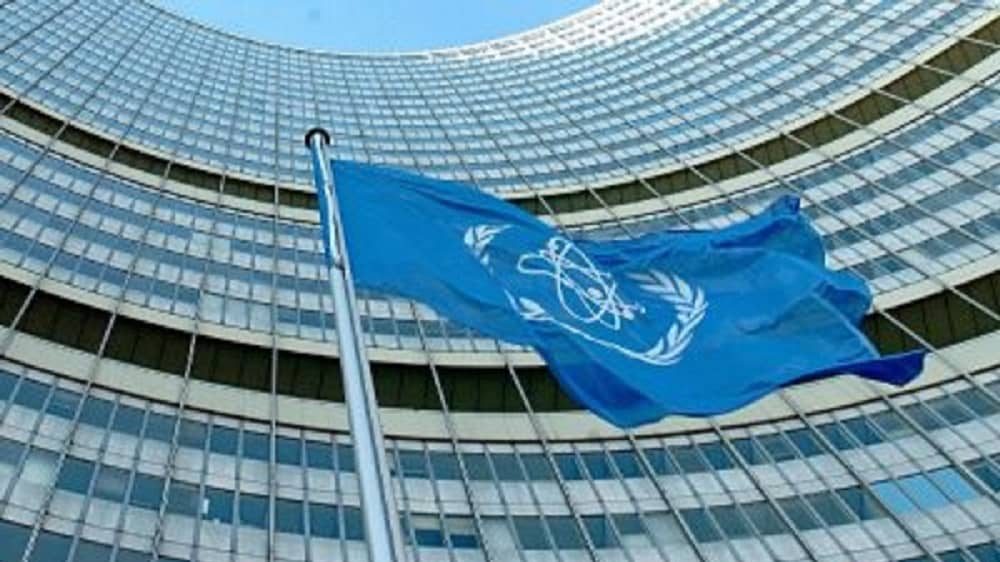
The resolution, supported by 19 member states including the U.S., France, Germany, and Britain, reflects escalating international alarm over Tehran’s nuclear activities and opacity. Notably, Russia, China, and Burkina Faso opposed the resolution, with 12 members abstaining. 
Central to the IAEA’s concerns is Iran’s failure to provide explanations for uranium particles discovered at undeclared sites. A confidential IAEA report earlier this week revealed that Iran has significantly increased its stockpile of uranium enriched to near weapons-grade levels. The IAEA warned that these actions severely impair its ability to verify the peaceful nature of Iran’s nuclear program.
The resolution calls on Tehran to immediately address outstanding questions and enhance transparency. It also requests a comprehensive report on Iran’s nuclear activities by spring 2024, raising the possibility of referring Iran’s case to the UN Security Council if cooperation does not improve. Such a move could trigger the “snapback mechanism,” reinstating international sanctions lifted under the 2015 nuclear deal.
#Iranian Regime’s Posturing During Grossi’s Visit Aims to Avert IAEA Resolution Amid Snapback Mechanism Fearshttps://t.co/EnhA42z2EV
— NCRI-FAC (@iran_policy) November 17, 2024
U.S. Ambassador Laura S.H. Holgate condemned Iran’s nuclear trajectory, highlighting its enrichment of uranium to 60% and deployment of advanced centrifuges. She emphasized that Iran’s stockpile of highly enriched uranium serves no credible peaceful purpose and urged Tehran to cease further enrichment and fully comply with its obligations.
Iran’s recent acceptance of four additional IAEA inspectors was dismissed as insufficient by Holgate and other international actors. “If Iran hopes to build meaningful confidence moving forward, it must fulfill its safeguards obligations entirely,” Holgate stated.
The European Union echoed these concerns, describing Iran’s actions as a growing regional threat. The EU criticized Iran’s accumulation of 60% enriched uranium and removal of IAEA monitoring equipment, which has resulted in a critical “loss of continuity of knowledge” about its nuclear program.
Both the U.S. and EU reaffirmed their commitment to the IAEA’s verification efforts and urged Iran to return to full compliance with the Joint Comprehensive Plan of Action (JCPOA). Restoring transparency measures, such as the Additional Protocol, is seen as vital to rebuilding global trust in Tehran’s nuclear intentions.
With the resolution paving the way for increased scrutiny and potential geopolitical ramifications, the international community waits to see if Tehran will address these long-standing issues or face further isolation.