This exceptional diplomatic protest highlights deep-seated grievances and ethical concerns, marking a pivotal moment in contemporary international relations.
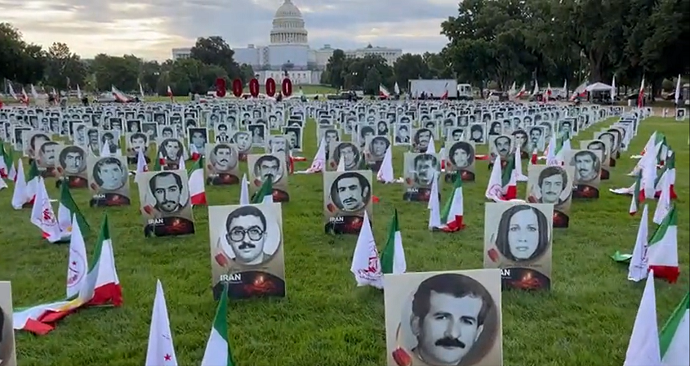
The intensity of condemnation from both the public and their representatives is striking. It reflects a profound rejection of what many perceive as a moral and human disgrace disguised under the guise of diplomatic formalities. This wave of protest is rooted in a long history of awareness and political activism, representing the voices of the 30,000 political prisoners executed in 1988 and the martyrs of recent Iranian uprisings. These voices have now found resonance in European parliaments, the U.S. Congress, and the United Nations, disrupting the usual decorum of diplomatic engagements.
In the U.S., several members of Congress have vehemently condemned the State Department’s condolence statement. Resolution H. RES. 1246, introduced by ten representatives to the House Foreign Affairs Committee, explicitly denounces Raisi, referred to as the “Butcher of Tehran” for his role in the 1988 mass executions.

Senators and members of Congress have also taken to social media, particularly X (formerly Twitter), to express their dismay. They highlight the incongruity of mourning a figure responsible for such atrocities, reflecting the widespread discontent among American lawmakers and their constituents.
During a recent hearing with the Deputy Secretary of State in the Middle East Subcommittee, senior committee member Brad Sherman (D) poignantly criticized the Security Council’s decision to hold a moment of silence for Raisi. He called for a similar moment to honor the victims of Raisi’s brutal regime, underscoring the need for a more just and human-centered approach to international diplomacy.
The protest extends to Europe, where in the French Senate, First Vice President Roger Karoutchi questioned the French ambassador’s participation in the UN’s moment of silence for Raisi. He poignantly asked about the perspective of Iranian women, the democratic opposition, and young Iranians, highlighting the ethical ramifications of such diplomatic actions.
Former U.S. Secretary of State Mike Pompeo, writing for Fox News, echoed these sentiments, urging the Biden administration and the global community to support Iran’s organized opposition. Pompeo stressed that honoring Raisi overlooks his egregious human rights violations and undermines the struggle for justice and freedom in Iran.
This unprecedented international outcry underscores a collective demand for accountability and human dignity in global diplomacy. The protest against Raisi’s posthumous recognition is a clarion call for justice that reverberates beyond borders, driven by the enduring memory of the 30,000 executed and the ongoing fight for human rights in Iran. The movement against diplomatic protocols that condone such figures is poised to continue, seeking to uphold the principles of justice and humanity on the global stage.

MEK Iran (follow us on Twitter and Facebook), Maryam Rajavi’s on her site, Twitter & Facebook, NCRI (Twitter & Facebook), and People’s Mojahedin Organization of Iran – MEK IRAN – YouTu