Former Iranian Interior Minister Abdolreza Rahmani Fazli has issued a stark warning about the nation’s current socio-economic state, describing it as “far more concerning” than in 2019, when a drastic fuel price hike led to deadly protests. His remarks, delivered in a televised interview, come as speculation mounts that Masoud Pezeshkian’s administration may increase fuel prices for the first time in five years.
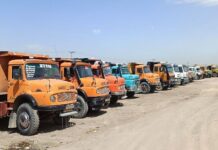
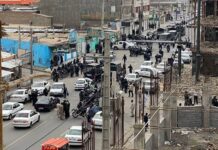
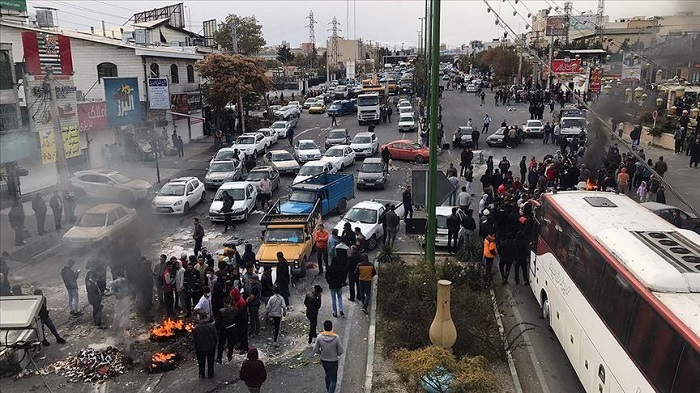
Rahmani Fazli, who oversaw the violent crackdown on the 2019 protests, cautioned the government to carefully consider past experiences before making any decisions. The November 2019 protests erupted following a sudden 200% increase in fuel prices, leading to a brutal suppression by security forces. Reports indicate that approximately 1,500 people were killed, with thousands more arrested and subjected to harsh treatment.
As November 2019 Uprising Anniversary Nears, #Iran’s Regime Lacks Regional Escape Route Amid Brewing Unresthttps://t.co/47ljcBOcCE
— NCRI-FAC (@iran_policy) November 14, 2024
“I am not here to say whether the government should implement this or not,” Rahmani Fazli stated. “But if they decide to do so, they must absolutely use the lessons of 2019 to their full advantage.”
Iran’s economic conditions have worsened since 2019, with inflation skyrocketing and the currency significantly devalued. The former minister highlighted the evolving nature of fuel as not merely an economic issue, but a political and security concern as well. “Back then, neither the currency rate nor inflation was at this level. The level of external threats was different. And, importantly, we had not yet experienced the 2022 protests,” he added.
The clerical regime has refrained from increasing fuel prices since the deadly 2019 protests, but reports suggest that a new four-tier pricing system could be introduced as early as March 2025. Iranian officials, however, are acutely aware of the potential political and social repercussions. Regime insider Mohammad-Kazem Anbarlouee recently lamented the country’s dire economic situation, citing energy shortages, rampant inflation, unemployment, and systemic corruption. His remarks underscore the regime’s struggle to manage resources effectively while maintaining social stability.
3)
Iran: 2019 Uprising, Tehran’s Stance on the #MEK’s Role in the 2019 #Iran Protests#WeStand4FreeIranhttps://t.co/njB5YR8Z6p pic.twitter.com/v8febkpaHp— NCRI-FAC (@iran_policy) November 1, 2020
Adding to concerns, former MP Lotfollah Siahkali warned of the potential economic collapse if the dollar reaches 90,000 tomans. “People have no reserves left to withstand another wave of inflation. The situation is dangerous,” he cautioned. Similarly, analyst Mohammad-Ali Janatkhah described widespread public despair, warning that societal tensions are at a breaking point. “Each person has become a ticking time bomb, ready to explode at any moment,” he said.
Despite ongoing discussions, the Pezeshkian administration has yet to take concrete steps toward implementing a price hike. However, mounting fiscal pressures and Iran’s ballooning budget deficit may force the government to act. Rahmani Fazli’s warning serves as a critical signal: even those who once played a role in suppressing dissent acknowledge the volatility of the current situation. With public discontent at an all-time high, Iran stands at a pivotal moment, risking either deeper economic turmoil or another wave of mass protests and government repression.

MEK Iran (follow us on Twitter and Facebook), Maryam Rajavi’s on her site, Twitter & Facebook, NCRI (Twitter & Facebook), and People’s Mojahedin Organization of Iran – MEK IRAN – YouTu