Iran’s leadership has intensified warnings about what it terms a “psychological war” orchestrated by adversaries, as concerns mount over diminishing morale within its forces following pivotal strategic losses, particularly the regime change in Syria. Supreme Leader Ali Khamenei and senior officials are calling for heightened vigilance against what they describe as enemy propaganda aimed at undermining confidence and fostering internal instability.
On January 9, Hossein Salami, commander-in-chief of the Islamic Revolutionary Guard Corps (IRGC), highlighted the evolving role of psychological operations in modern warfare during a televised military drill in Kermanshah. “The enemy seeks to defeat us with words and sounds,” Salami declared. “Their goal is to erode confidence, sow doubt, and instill unfounded fears. Yet, we are stronger than ever before.” He urged the public and armed forces to resist what he characterized as an assault on “hearts and minds.”
Foreign Minister Abbas Araghchi, echoing these concerns on January 7, pointed to the collapse of Syria’s regime as a cautionary example of psychological warfare’s power. “Syria’s defeat was driven by narratives and media manipulations,” Araghchi asserted, emphasizing that maintaining morale is vital for Iran’s resilience. He reinforced Khamenei’s repeated calls for optimism, warning against the corrosive effects of enemy propaganda.
#Khamenei Targets U.S. in Speech to Mask #Iranian Regime’s Strategic Weaknesshttps://t.co/so3c1hhMdx
— NCRI-FAC (@iran_policy) January 8, 2025
Khamenei, addressing his forces for the fifth time since the fall of Syria, stressed the need to dismantle the “illusion of enemy strength.” “The enemy aims to portray us as weak and themselves as invincible,” he said. “We must strengthen our thoughts and public opinion to resist this manipulation.”
Despite these reassurances, officials have implicitly acknowledged the profound impact of losing Syria, previously referred to by regime insiders as Iran’s “35th province.” The strategic loss has shaken Iran’s leadership, which is now focused on bolstering the morale of its forces to avert further disintegration.
Heshmatollah Qanbari, head of the Coordination Council for Propaganda, underscored the risks of destabilizing rhetoric. Speaking on state television on January 4, he warned, “Words that spread despair are more dangerous than bombs.” He urged officials to avoid statements that could pressure decision-making bodies or exacerbate societal instability.
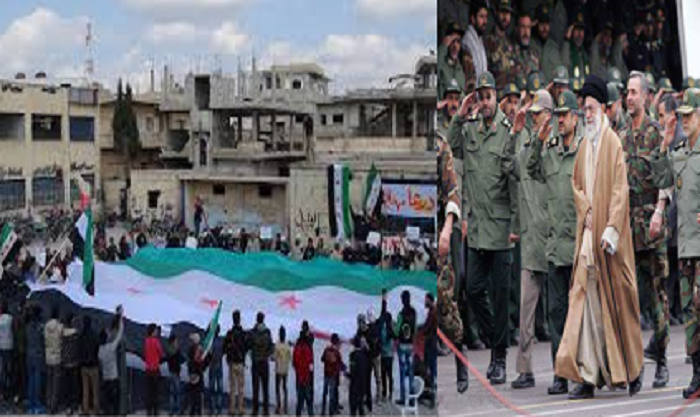
With morale waning and external pressures mounting, the clerical regime’s survival increasingly depends on reversing the psychological toll of recent failures. As Iran’s leadership confronts this existential challenge, the battle for “hearts and minds” may ultimately determine its future.

MEK Iran (follow us on Twitter and Facebook), Maryam Rajavi’s on her site, Twitter & Facebook, NCRI (Twitter & Facebook), and People’s Mojahedin Organization of Iran – MEK IRAN – YouTu