Their demands for better living conditions, fair wages, and an end to systemic corruption have escalated into a widespread movement that the Iranian regime has met with repression and denial. Despite state media acknowledging the unprecedented scale of these protests, the government continues to respond with force.
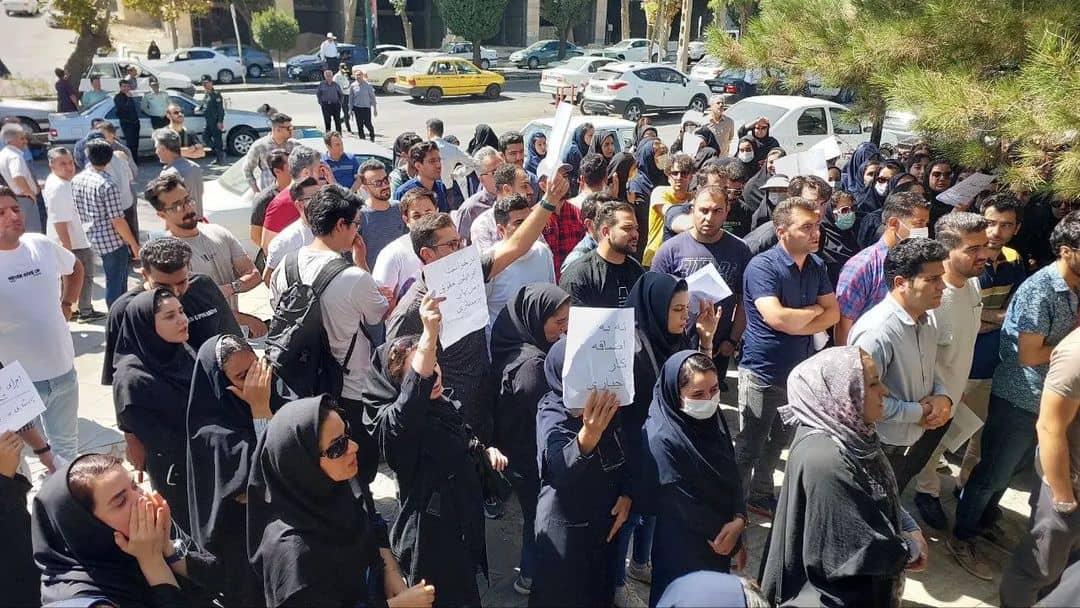
In Arak, two nurses were arrested during peaceful protests outside Amir al-Momenin Hospital, where healthcare workers gathered to demand higher pay, improved working conditions, and an end to mandatory overtime. These protests are part of a broader national movement, reflecting widespread dissatisfaction within the healthcare sector.
In Mashhad, nurses from hospitals like Imam Reza, Hasheminejad, Shariati, and Ibn Sina persisted in their demonstrations despite violent crackdowns by security forces. Videos circulating online show guards attacking protesters, yet the nurses remain defiant, chanting slogans such as “From Shiraz to Mashhad, strike, strike!” and “Nurses die, but they do not accept humiliation.”
August 20—Hamedan, western Iran
Nurses of Hamedan hospitals continue protests rallies, demanding higher wages, better working conditions, and other basic needs.#IranProtests pic.twitter.com/DWNKjqOSKH— People's Mojahedin Organization of Iran (PMOI/MEK) (@Mojahedineng) August 20, 2024
The regime’s reaction has been both repressive and dismissive. Abbas Ebadi, Deputy Minister of Health, acknowledged the severity of the situation, stating on Tuesday, “The reality is that we are facing serious challenges in the nursing sector that are on the brink of boiling over into a crisis.” Despite this, the government has largely ignored the nurses’ demands, with security forces continuing to use violence to suppress the protests.
According to Setareh Sobh newspaper, nurses across 50 hospitals are involved in the strikes, signaling a significant and widespread challenge to the regime’s authority.
Retirees in Kermanshah also took to the streets today, demanding higher pensions and better living conditions.
August 20—Mashhad, northeast Iran
Nurses in Mashhad resume their protest rallies, which began nearly two weeks ago to demand better pay and work conditions.
Protesters chanting, "From Shiraz to Mashhad, strike, strike!"#IranProtestspic.twitter.com/0a2Tb2WN3R— People's Mojahedin Organization of Iran (PMOI/MEK) (@Mojahedineng) August 20, 2024
These protests, primarily involving former employees of the Telecommunications Company of Iran and the Social Security Organization, underscored the growing economic strain on retirees, who expressed their frustrations with chants criticizing the regime’s economic policies.
The agricultural sector has been similarly affected by Iran’s ongoing economic crisis. Sadif Badri, a member of the regime’s parliament, revealed that the government has failed to pay its debts to wheat farmers while simultaneously doubling the price of fertilizer. He warned that more than fifty percent of payments owed to farmers remain unpaid, threatening the country’s self-sufficiency in wheat production.
Security forces in Arak arrested two of the nurses who were protesting yesterday. The peaceful protesters are demanding basic needs, including higher pay and better working conditions.#Iran #IranProtests pic.twitter.com/jgAU3NggzN
— People's Mojahedin Organization of Iran (PMOI/MEK) (@Mojahedineng) August 20, 2024
Additionally, political prisoners in 18 prisons across Iran launched a hunger strike as part of the “No to Executions” campaign, protesting the regime’s increasing use of the death penalty. The strike, now in its 30th week, highlights the prisoners’ opposition to the execution of over 310 individuals this year, including 16 women, and calls for an end to the regime’s violent crackdowns on dissent.

MEK Iran (follow us on Twitter and Facebook), Maryam Rajavi’s on her site, Twitter & Facebook, NCRI (Twitter & Facebook), and People’s Mojahedin Organization of Iran – MEK IRAN – YouTu