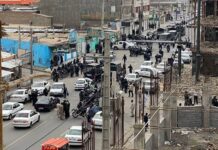
From the capital, Tehran, to cities such as Isfahan and Yasuj, demonstrators from various sectors took to the streets, voicing their frustrations and demanding change. These protests follow the recent election of President Massoud Pezeshkian, highlighting the public’s growing disillusionment with the government’s ability to address their problems.
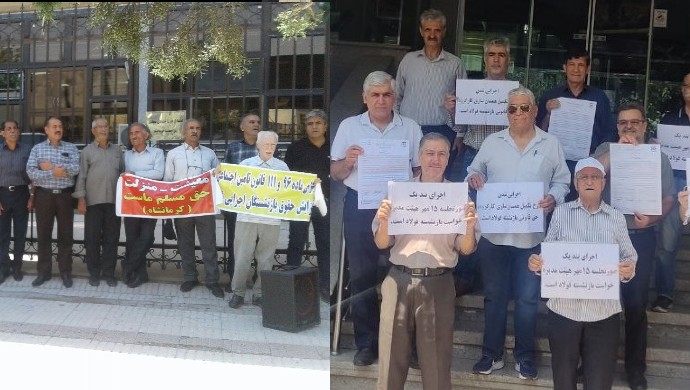
In Isfahan and Tehran, steel industry retirees rallied to demand better pensions amidst soaring living costs. According to the regime’s laws, the government must adjust pensions to match living costs. However, as inflation and prices continue to rise, pensions have not kept pace, leaving retirees struggling.
July 14—Tehran, #Iran
Retirees of the steel industry hold protest rally, demanding higher pensions and other basic rights.#IranProtests pic.twitter.com/aMjJi6nmLV— People's Mojahedin Organization of Iran (PMOI/MEK) (@Mojahedineng) July 14, 2024
“Shout for your rights!” protesters chanted in Isfahan, criticizing the regime for claiming to follow Islamic guidance while failing to support its people. “We will only obtain our rights in the streets,” they declared.
In Shush and Kermanshah, retirees from the Social Security Organization protested, denouncing the government’s incompetence, demanding higher pensions, and fulfilling basic needs. In Kermanshah, protesters also called for the release of Sharifeh Mohammadi, a labor activist sentenced to death by the regime.
July 14—Yasuj, southwest #Iran
Protests by residents of towns that are suffering from water shortages.#IranProtestspic.twitter.com/dziC6Hi8YS— People's Mojahedin Organization of Iran (PMOI/MEK) (@Mojahedineng) July 14, 2024
“Sharifeh Mohammadi must be released,” they chanted, emphasizing the regime’s failure to uphold its legal responsibilities amid rampant inflation and a depreciating rial.
In Yasuj, residents from surrounding towns rallied against water shortages due to the regime’s poor resource management. Recent weeks have seen similar protests across the country, criticizing destructive policies that have led to inadequate access to water and electricity.
July 14—Shush, southwest #Iran
Retirees of the Social Security Organization hold rally, demanding higher pensions and other basic needs. They also call for the release of Sharifeh Mohammadi, an activist sentenced to death by the regime.#IranProtestspic.twitter.com/ziEitKREB9— People's Mojahedin Organization of Iran (PMOI/MEK) (@Mojahedineng) July 14, 2024
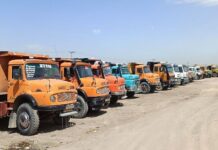
Meanwhile, oil workers continue their strikes across the country, with 123 companies and over 24,000 workers participating since late June. The strikers demand a 35% salary increase to match the 45% inflation rate, along with a work schedule of 14 days on and 14 days off, and the removal of contractors.
As Iran’s economic crisis deepens, the regime faces mounting pressure from its citizens, who are increasingly willing to take to the streets to demand their basic rights and needs.
July 13—#Iran
24th day of nationwide strike by contract workers of the oil sector. Strikes have spread to 123 companies across the country and includes 24,000 workers.
The workers demand the immediate implementation of a 35% salary increase at all wage levels and including the… pic.twitter.com/IRcHNDrDHj— People's Mojahedin Organization of Iran (PMOI/MEK) (@Mojahedineng) July 13, 2024
The ongoing protests suggest that the regime’s hold on power may be weakening as Iranians persistently voice their discontent and call for meaningful change.

MEK Iran (follow us on Twitter and Facebook), Maryam Rajavi’s on her site, Twitter & Facebook, NCRI (Twitter & Facebook), and People’s Mojahedin Organization of Iran – MEK IRAN – YouTu