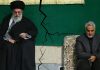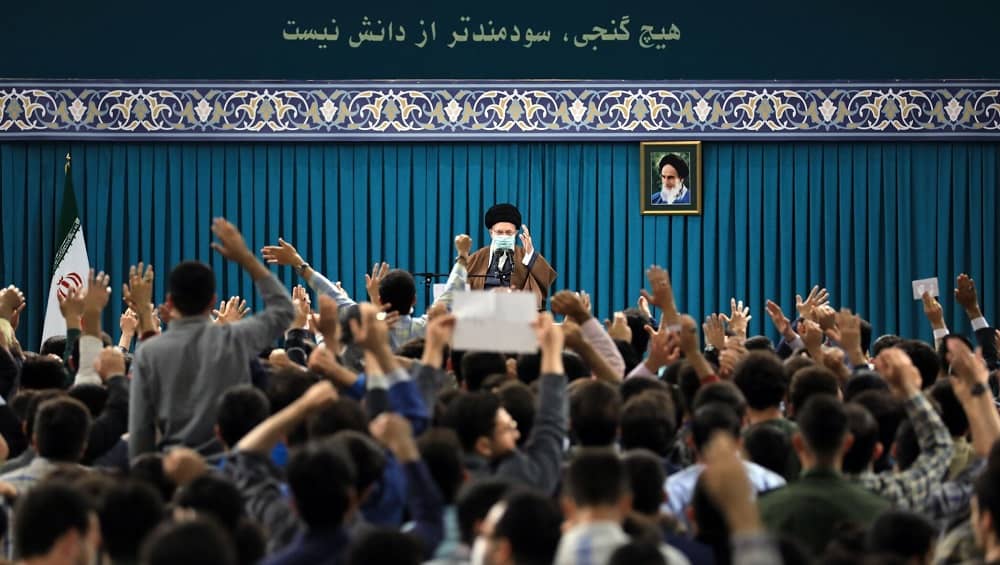
In a speech on March 12, Iran’s Supreme Leader Ali Khamenei categorically rejected U.S. President Donald Trump’s offer for negotiations, further cementing his regime’s defiant stance against Western diplomacy. Labeling Trump’s overture as a “deception of global public opinion,” Khamenei insisted that Iran would not engage in talks under pressure, warning that military confrontation is not a “one-sided issue.”
The speech, delivered before a carefully selected audience of regime loyalists, appeared calculated to project strength amid mounting international and domestic pressure. A slogan behind Khamenei read, “There’s no treasure more profiting than knowledge,” a possible veiled reference to Iran’s nuclear ambitions, underscoring Tehran’s unwillingness to bow to global demands for disarmament.
Khamenei’s rhetoric reflected deep-seated fears within his regime that diplomatic engagement could undermine its survival mechanisms. He dismissed Trump’s offer outright, asserting, “Negotiation with this U.S. administration will not lift sanctions. It will only make the knots of the sanctions tighter and increase the pressure.” He also rebuffed U.S. military threats, stating, “If an action is taken, we will decisively respond.”
🚨 Khamenei rejects President Trump's offer of negotiations.
Amidst fears of a resurgent uprising within Iran and with staggering losses in Syria and Lebanon, Khamenei clings desperately to his nuclear ambitions.
CC: @MikeWaltz47 @StevenCheung @SecRubio @tedcruz @RichardGrenell pic.twitter.com/qvxSqThDBB
— M. Hanif Jazayeri (@HanifJazayeri) March 13, 2025
The Supreme Leader’s comments came in response to Trump’s recent interview with Fox Business, in which he revealed that Washington had sent a letter to Khamenei expressing willingness to negotiate over Iran’s nuclear program. Trump warned that Iran had “two choices: negotiate or face war.”
Despite Khamenei’s public dismissal, Iranian officials confirmed just hours after his speech that the Trump administration had indeed delivered a letter via an intermediary. Abbas Araghchi, Iran’s Deputy Foreign Minister, announced that the letter had been received through Anwar Gargash, the diplomatic advisor to the President of the United Arab Emirates.
Khamenei, however, characterized Washington’s stance as an attempt to manipulate global perception. “This means that we [the U.S.] are open to negotiation, that we want talks and peace, but Iran refuses,” he said, questioning America’s credibility in honoring agreements. He also took aim at Western nations more broadly, accusing them of hypocrisy and domination, claiming, “The world’s bullies say that everyone must submit to us and put our interests above their own. Iran is the only country that has decisively rejected this.”
#Khamenei Rejects U.S. Talks, Fears Concessions Will Crumble His Regime in #Iranhttps://t.co/Ev7k87roJS
— NCRI-FAC (@iran_policy) March 8, 2025
The Iranian regime’s persistent defiance comes at a time of growing economic strain and internal dissent. With international sanctions tightening and domestic unrest simmering, Khamenei’s reluctance to engage diplomatically may reflect not strength, but a fear that negotiations could unravel the repressive framework that sustains his rule. As economic pressure intensifies, internal divisions within the regime may widen, further challenging Khamenei’s grip on power.

MEK Iran (follow us on Twitter and Facebook), Maryam Rajavi’s on her site, Twitter & Facebook, NCRI (Twitter & Facebook), and People’s Mojahedin Organization of Iran – MEK IRAN – YouTu